Douglas County judge opts to seal rather than redact more arrest affidavits, keeping them entirely from public

photo by: Contributed
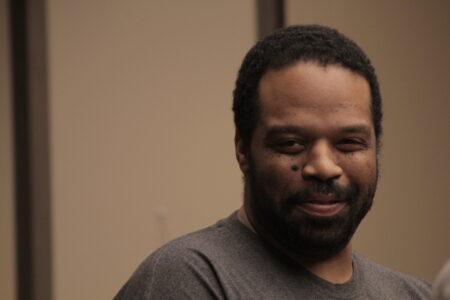
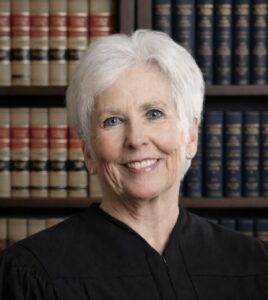
Judge Stacey Donovan
A Douglas County judge has ordered that more documents pertaining to arrests be entirely kept from public view.
Judge Stacey Donovan in recent days has completely sealed the arrest affidavits in two criminal cases after having also recently completely sealed the affidavit for a man accused of killing a local actor and a man accused of assaulting a woman with a baseball bat.
Under state law, judges have the option of sealing an arrest affidavit entirely or simply redacting sensitive parts of the document.
An arrest affidavit is a sworn document by law enforcement officials outlining why they believe probable cause exists to deprive a person of his liberty and to charge him with a crime.
The state law dealing with affidavits lists numerous reasons for a judge to redact or seal an affidavit, including, among others, safety, privacy and interference with an investigation.
The most recent cases where Donovan sealed affidavits involve Mark Strand and Jeremy Willis.
In the case of Strand, a former Lawrence landlord who is facing three counts of rape and five counts of aggravated indecent liberties with a child, Donovan sealed the affidavit because she said releasing it “could jeopardize the physical, mental or emotional safety or well-being of a victim or witness.”
In the case of Willis, who is accused of multiple counts of aggravated battery while driving under the influence and fleeing police, she said the same, but added to the list of those whose well-being could be affected “confidential source or undercover agent.” She also said that telling the public why police believe they had probable cause to arrest Willis could “cause the destruction of evidence.”
In a recent case, a different Douglas County judge found reason to entirely redact 10 of 14 pages but nevertheless released the affidavit as such for the public to examine.
Earlier this month, Donovan sealed the arrest affidavit for a man who was accused of aggravated assault with a deadly weapon and domestic battery. She did not provide a reason for the seal.
She also sealed, without explanation, the arrest affidavit of a man who is accused of killing local actor Louise ImMasche while recklessly driving.
In some of the cases, such as Willis’ and Strand’s, Donovan’s order makes reference to requests by the state or defense when there is nothing in the public record indicating that the state or defense has weighed in on the request for disclosure. The Journal-World has inquired why this is the case and was previously told that when parties file a document under seal it can be the case that not only is the document not visible to the public but the fact that it was even filed is also invisible.
In a case last November, Donovan sealed not only the arrest affidavit of repeat felon William Pope, but also allowed his plea agreement with the state to be hidden. The Douglas County District Attorney’s Office cut a plea deal with Pope, who was accused of trying to rob a woman at gunpoint at a liquor store last year. The DA’s office agreed that there would be “no finding” that a firearm was used and dropped two felony charges; the office also didn’t object to Pope’s GPS monitor being removed in the months prior to his sentencing and recommended that he be given probation. Nothing about the plea deal would be known, however, if the Journal-World had not happened to be physically present at Pope’s hearing.
Pope is a felon many times over. According to the Kansas Department of Corrections, he has convictions for theft and burglary in Osage County in 2012; for forgery in Anderson County in 2003; for burglary and aggravated assault in Shawnee County in 2012 and 2013; for robbery in Franklin County in 2013; and for robbery in Douglas County in 2006.
Public Safety
Douglas County judge opts to seal rather than redact more arrest affidavits, keeping them entirely from public
Document challenges claim that baby’s heart valves were donated, potentially lending support to natural causes, not abuse, as cause of death
Dealer who was accused in woman’s heroin death sentenced to nearly 8 years for drug crimes
Woman pleads to misdemeanor in case originally charged as felony child abuse
Public invited to retirement ceremony for Judge Sally Pokorny in April