

Leader of Kansas’ law enforcement training center trusts juries to deliver justice in Minnesota shootings
Most law enforcement organizations not speaking out on specifics of Pretti shooting
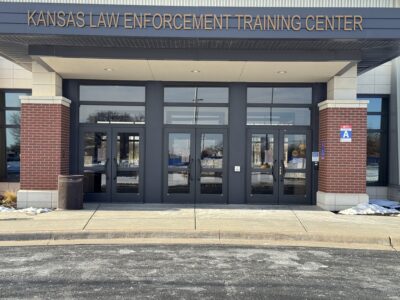
The headquarters of the Kansas Law Enforcement Training Center, operated by the University of Kansas at a site outside of Hutchinson, is pictured on Jan. 28, 2026.
The shooting of Alex Pretti moved quickly.
It started with a law enforcement officer shoving a seemingly unarmed female protestor to the ground. About 30 seconds later, it ended with — video evidence shows — two law enforcement officers firing multiple rounds into Pretti, who already had been shot and was lying disabled on the street.
But in the days that have followed the Jan. 24 actions by U.S. Border Patrol agents in Minneapolis, the aftermath has moved more slowly. One action that hasn’t happened in the days since is a clear, nationwide statement from law enforcement experts that the way the Border Patrol officers handled the incident was an egregious violation of accepted law enforcement procedures.
While law enforcement experts largely have done nothing to defend the actions of the Border Patrol agents, there also hasn’t been anything resembling a nationwide chorus from those experts about how the scenes from the Minneapolis street — caught on video from multiple angles — appear to be broadly out of line with accepted standards and protocols taught by law enforcement agencies across the country.
The Journal-World last week traveled about 200 miles to a spot just outside of Hutchinson to the Kansas Law Enforcement Training Center, which is operated by the University of Kansas and trains the vast majority of law enforcement officers in the state. There, a question was posed to its director: How do you respond to the many Americans who have seen the actions on this video and declared “this can’t be an example of good law enforcement procedure?”
“The public’s reaction is understandable,” Darin Beck, director of police training and vice provost of the KU training center, said in a written response to the question.
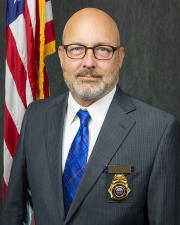
photo by: KLETC
Darin Beck, director of police training and Vice Provost for the University of Kansas’ and its Kansas Law Enforcement Training Center, is pictured.
But for members of the public who are looking for a more full-throated denouncement of what they and millions of others have now seen on those videos, that time hasn’t yet come at the Kansas Law Enforcement Training Center. Beck, and other officials at the center who were interviewed by the Journal-World, largely were reluctant to comment on any specific actions that show up in the video.
Beck, who asked to conduct most of the interview in writing, did say “effective policing is rooted in procedural justice — fairness, transparency, neutrality, and respect — so any action that appears inconsistent with these principles naturally raises concern.”
But he also stopped short of labeling any of the specific actions on video, but rather said standards do vary and that “law enforcement is not a single, uniform system.”
Read More LJWorld Coverage
• A look at what Kansas law says about police and the use of deadly force
“Local, county, state and federal agencies operate under different missions, levels of community engagement, and expectations, meaning a national-level enforcement action may not reflect the values of local policing,” Beck wrote.
When asked whether there is any lessons that students at the Kansas Law Enforcement Training Center can learn from the Pretti videos, Beck said there were, but did not dive into any of the specific actions on the video.
“KLETC emphasizes to students that they represent far more than themselves — they embody their agency, their community and their entire profession, and their communication and conduct, especially in stressful situations, have a direct and lasting influence on public trust,” Beck wrote. “Because officers should assume that everything they do may be subject to public scrutiny, this awareness reinforces the importance of exercising restraint, maintaining professionalism, and relying on training that is grounded in sound data and best practices.”
Nationally, there have been some former law enforcement officials publicly call out or at least raise specific questions about the actions of the officers involved in the Pretti shooting. For example, a Washington Post article quoted six experts who questioned the need for the original interaction with the female protestor, the quick use of chemical irritants, the number of officers who were needed to restrain Pretti, and importantly the need to fire their weapons at Pretti after he already had been wounded and was disabled in the street.
One of the experts in that Jan. 27 article went so far as to say that federal immigration officers have been “egregiously deviating from professional norms of policing.” But the expert, Seth Stoughton, is merely a University of South Carolina law professor and former police officer who studies police officer misconduct. He’s not a leader of one of the national policing organizations, which have largely not issued any specific statements about the Pretti shooting.
In the hours following the shooting of Pretti, for instance, the International Association of Chiefs of Police issued a statement asking the White House to bring together local, state and federal law enforcement leaders to identify a “constructive path forward.” That statement, though, never specifically mentioned the Pretti incident nor any of the particular actions associated with it.
At the KLETC, Beck said he does think it is important for the broader law enforcement community to speak about the Pretti incident. Leaders have a “responsibility to speak up when public confidence is shaken,” Beck said in his response to questions. He said during those times leaders should reaffirm “the standards and expectations of the profession.” But he also said the timing of such statements is important.
“At the same time, leaders must navigate the delicate balance between maintaining public trust through transparency and protecting the fairness and reliability of an ongoing investigative process,” Beck wrote.
Such a strategy likely will leave members of the public who want a public denouncement from law enforcement leaders in waiting mode, as it relates to the Pretti case.
But in a brief verbal interview with the Journal-World, Beck said he doesn’t think they’ll be waiting forever.
“I would say, justice can be slow, but it usually prevails,” Beck said. “What comes quickly are opinions from people like politicians and pundits that don’t have all the information.When it gets to a jury — and it very likely will in both of these cases, whether that is a civil jury or a criminal jury — I’m confidant that officers will be held accountable or exonerated as appropriate.
“I trust juries because juries are the people.”
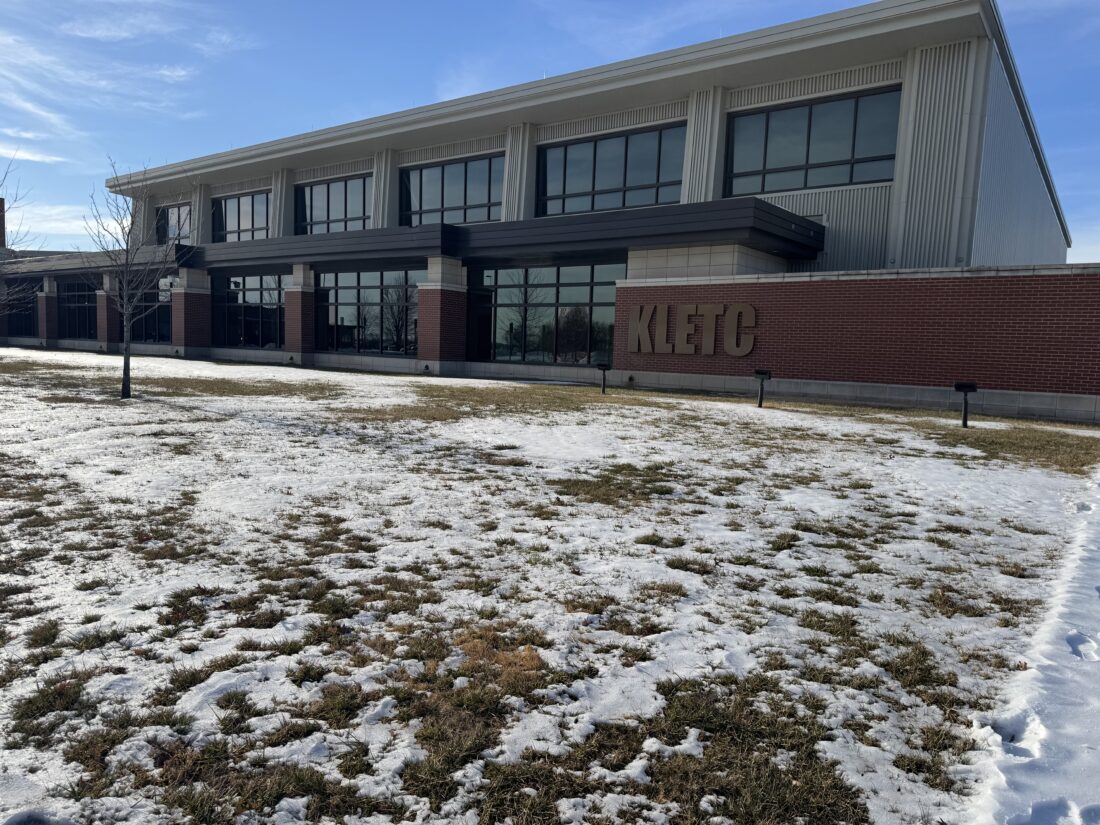
photo by: Chad Lawhorn/Journal-World
The Kansas Law Enforcement Training Center is pictured on Jan. 28, 2026.
State Government
Bill would make clergy mandated reporters
TOPEKA — Kansas ordained clergy would be mandated reporters of child abuse under a bill proposed Monday in the ...
Sharice Davids prepares to tour areas of Kansas far beyond her House district
TOPEKA — U.S. Rep. Sharice Davids says she’s embarking on a four-city sweep — all locations outside her ...

A look at what Kansas law says about police and the use of deadly force
‘Forfeited the right to look the other way’; lessons from a class teaching the next generation of police officers
Leader of Kansas’ law enforcement training center trusts juries to deliver justice in Minnesota shootings
Chiefs deal criticized by both parties over ‘tax giveaways for billionaires’
In a crowded hearing in Topeka last week, Kansas lawmakers drilled a lawyer for the Kansas City Chiefs on the deal ...