

‘Forfeited the right to look the other way’; lessons from a class teaching the next generation of police officers
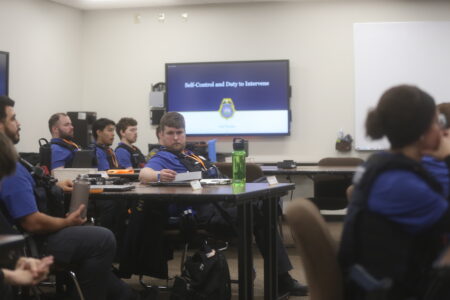
photo by: Chad Lawhorn/Journal-World
Members of a basic training class at the Kansas Law Enforcement Training Center are pictured on Jan. 28, 2026.
The students had just watched a video of a man getting beaten over the head with a baton, tased five times, and paramedics ultimately retrieving his unconscious body from a pool of his own blood.
Police officers had delivered the beating, and the classroom was full of young adults hoping to soon become police officers.
Those watching the video inside the classroom of the Kansas Law Enforcement Training Center didn’t come to precise agreement about how the scene made them feel. Disgusted, embarrassed, angry, disappointed, and sad were among the words the students shouted out in response to their instructor.
But there was agreement about what the scene needed: Sergeant Coffee
Come to find out, Sgt. Coffee is an indispensable member of every police force in America, even though he or she doesn’t exist in flesh and blood. Instead, Sgt. Coffee is a code name taught to police officers. If for any reason, you need to pull your partner away from a scene or incident, say something along the lines of “Sgt. Coffee needs to speak to you.” If all works as planned, your partner retreats back to the squad car, and whatever situation was going awry has a chance to be reset.
In the 2011 incident in Fullerton, Calif. that KLETC students had just watched on video, Sgt. Coffee never made an appearance. The incident started innocently enough as officers questioned a homeless man in the area where car burglaries had just been reported. While he was sitting on the ground, an officer instructed him to stick his feet straight out and touch his knees. The man was good at doing one or the other, but struggled to do both.
“Now, you see my fists?” the officer asks after that scene unfolds a few times.
“Yeah, what about them?” the suspect answers.
“They are getting ready to (expletive) you up.”
Watch the Video
Click here to see the video of a 2011 arrest in Fullerton, Calif. that led to the death of a suspect who was beaten.
Students in the classroom said they had a set of words come to their mind when they heard the officer utter those words.
“Even just a tap on the shoulder, and ‘remember what we are doing. Like, chill out,'” one student said of words that would have been appropriate for the offending officer’s partner to say at that moment.
That’s when the class began talking about Sgt. Coffee, and how that simple, easy-to-remember name can be one of the more important items to bring to an intense scene.
In real life, the partner never did step in. The incident escalated to the point where six officers were on top of the suspect, Kelly Thomas. He was tased multiple times, suffered multiple blows to the head, all while yelling in pain that he was sorry and that he couldn’t get his hands behind his back in the manner that police had instructed him.
By the end of the night, Thomas was in a coma, and five days later he was dead.
KLETC instructor Nef Torres told the class that it didn’t have to end that way.
“Sometimes it is just ‘hey, there’s a call for you. Let me jump in here,'” Torres said by way of example. “Some form of maybe diverting him away from that path.”
But Torres — a 23-year police force veteran who became a cop because he “wanted to see what life really looked like, and not what somebody told me it looked like” — shared a piece of uncomfortable reality about days when a simple tap on the shoulder is not going to cut it.
“Other times, it may be literally standing between two people and protecting the citizens from my partner,” Torres said.
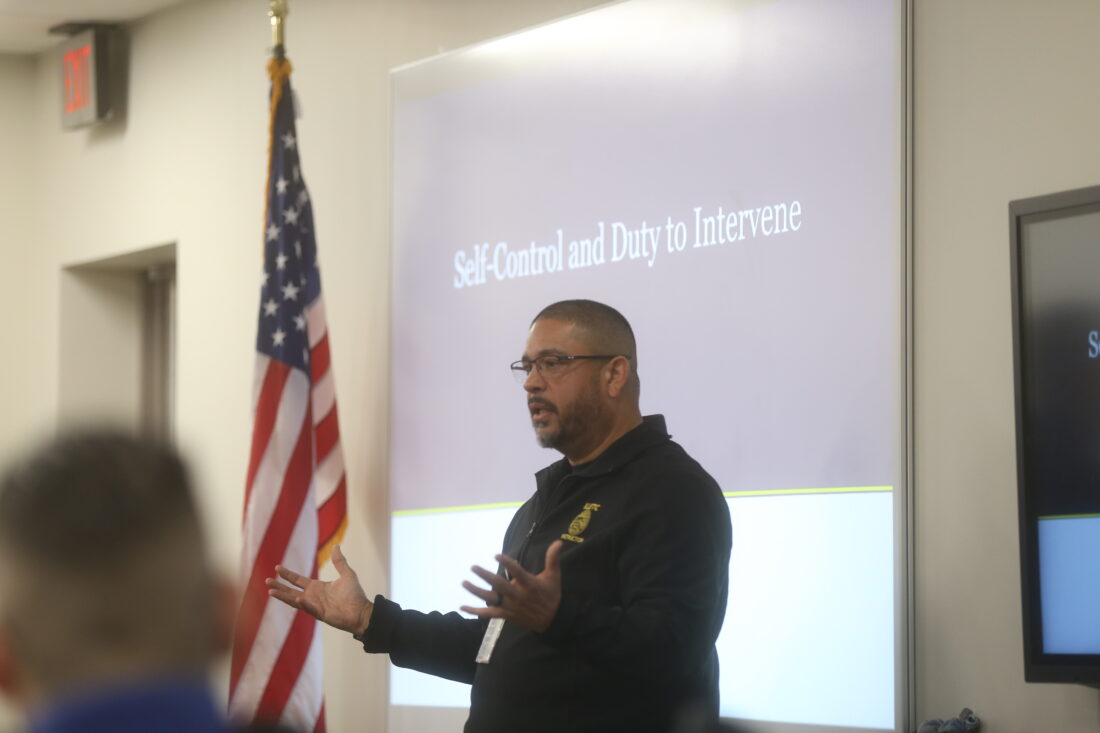
photo by: Chad Lawhorn/Journal-World
Senior Instructor of Police Nef Torres is pictured at the Kansas Law Enforcement Training Center on Jan. 28, 2026.
•••
In the days following the Jan. 24 shooting death of Alex Pretti by members of the U.S. Border Patrol in Minneapolis, the Journal-World traveled the 200 miles to the Kansas Law Enforcement Training Center just outside of Hutchinson. Operated by the University of Kansas, it trains the vast majority of law enforcement officers in the state.
KLETC leaders allowed a Journal-World reporter to sit in on a class filled with students in their fourth of 14 weeks worth of basic training. Torres, the instructor, told the students at the very beginning that this class — titled “Self-Control and Duty to Intervene” — was going to “sting.”
“That hurts, that stings,” Torres said of the topic. “The fact that we have to have a conversation about protecting the public from us, is a very direct indication that there are things going on out there that don’t need to happen. Things that are going on out there that are wrong.”
Read More LJWorld Coverage
• A look at what Kansas law says about police and the use of deadly force
Police sometimes are criticized for not speaking publicly about police misconduct. Indeed, there weren’t any takers at KLETC this week to go over the Pretti video and offer opinions about what went wrong.
Torres acknowledged that the Pretti video may someday be a teaching tool in his class, but now is not the right time. But there was no such reticence to call out bad behavior by officers as Torres showed the 2011 video. In a subsequent interview, Torres said it is critical that the students understand that police officers make bad decisions.
“The toughest concept is that sometimes cops do the wrong things,” Torres said of the lesson his students, who are often in their early 20s, struggle with the most.
So, in the classroom, Torres makes a point to not sugarcoat the subject because “as a police officer there is not a whole lot of sugarcoating that occurs when you are working on the street.”
“One day, you are going to be the boss, leading people,” Torres said. “And the things that we see going on out there, they have to stop, and we need them to stop now.”
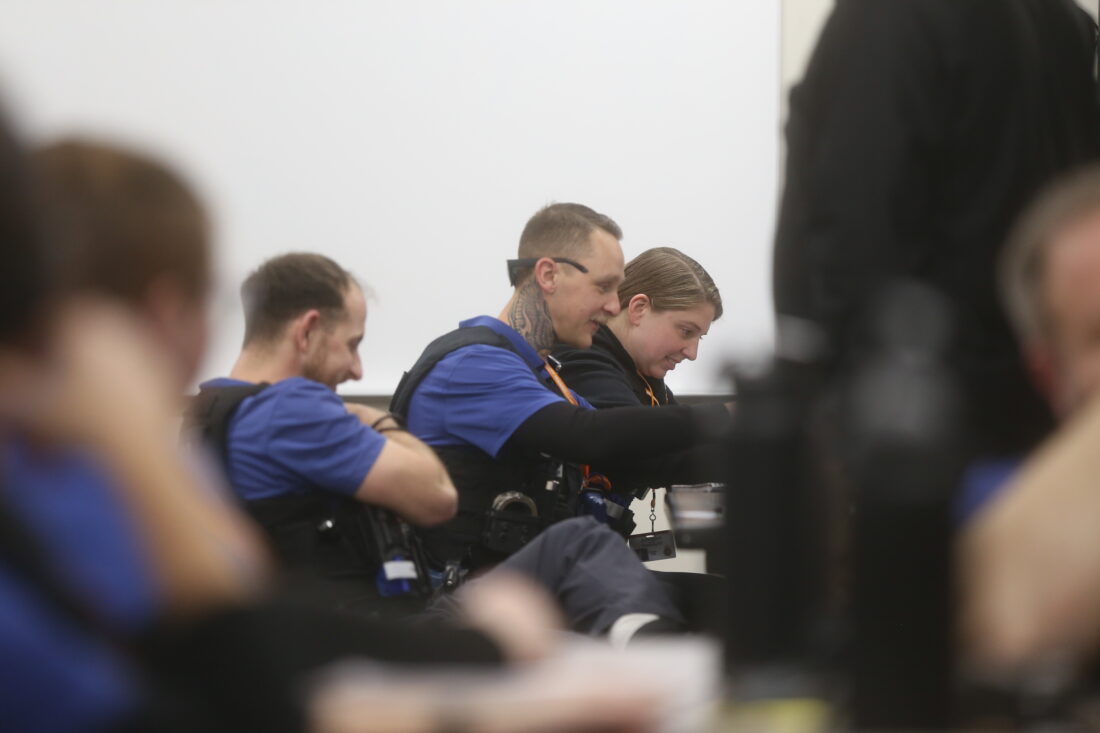
Students are pictured at the Kansas Law Enforcement Training Center on Jan. 26, 2026
•••
Not only did the class go over the Kelly Thomas video frame by frame, Torres assigned roles to each table of students. One table was to view the incident through the eyes of the officers at the scene. Another was to view the scene from the eyes of the public. Another as mid-level managers of the police department, and another as the police chief and community leaders.
The students at the table assigned to be the officers at the scene tackled their assignment reluctantly. They didn’t want to offer any justification for why the officers acted as they did. Then, one student understood. He had to sell this like he’s the officer who is in hot water.
So, he highlighted how resistive the suspect was. How strong he was. How normal attempts to get him to put his hands behind his back weren’t successful. Torres nods and says, “sell it,” and then he summarizes.
“What you are describing is fighting Superman,” Torres said.
It is an explanation that has rung out in many a debriefing room. But this classroom wasn’t having it.
The other students noted, besides the obvious stuff — “you see my fists” — that there were other subtle clues that this incident was headed down a bad path from the beginning. For one, at the very beginning of the conversation, the police officer rested his hand atop his holstered firearm, despite there being no signs that the suspect was armed or agitated. Even if the officer didn’t mean anything by the action, the students surmised that it meant a lot to Thomas.
“Don’t tell me crazy things,” Torres said in mock disbelief. “So, what you are saying is that you may intend one thing and I can perceive it differently? Holy cow.”
At another point, the students noted that the officers, during the scrum that occurred while officers were on top of Thomas on the ground, were yelling contradicting instructions. One would yell for him to put his hands behind his back, while another was yelling for him to not move.
“Whoa, we would give instructions that would contradict?” Torres feigned again.
Another student raised a question that surely was on the mind of many. “Did no one stop and think, like ‘do we all have to be on top of this one guy?'” as approximately six officers were involved in the scrum.
In the past week, that is a question that has reverberated from Minnesota and echoed across the country. Torres asked another one.
“How does this keep happening?”
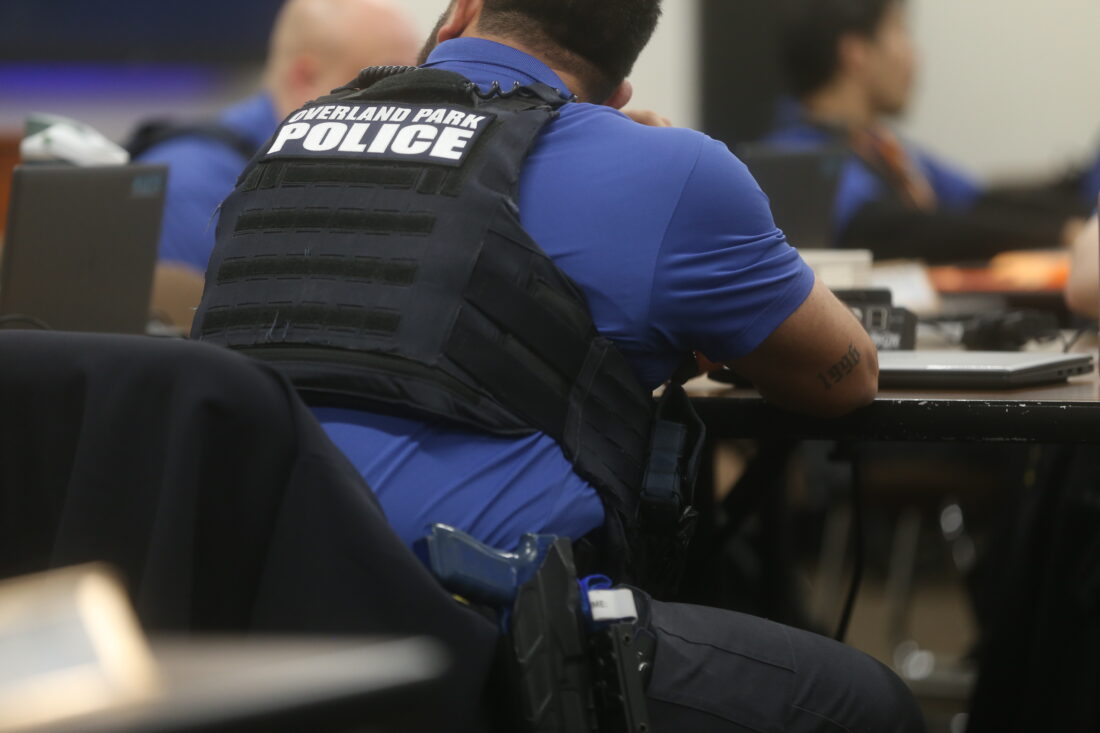
photo by: Chad Lawhorn/Journal-World
A student in basic training at the Kansas Law Enforcement Training Center is pictured on Jan. 28, 2026.
•••
One answer the class discussed is that a mob mentality can infect police officers like anyone else. Another answer, they said, though, is that good officers don’t step in often enough.
They don’t bring Sgt. Coffee to the scene.
Stepping in — the duty to intervene, as it is technically called — is an easy enough concept to get your arms around, but it can be a tough action to actually take when the time comes, Torres said.
He then showed a video that wasn’t designed to make it seem any easier.
The video shows a young female officer grabbing the belt of an officer who was becoming overly aggressive with a citizen. The officer she grabbed was her sergeant, who responded by spinning, grabbing her by her throat and pinning her against a patrol car.
The class was asked to put themselves in the position of the female officer. Was it right to stop the sergeant? Yes. Would they have stopped the sergeant even knowing what his reaction was going to be? Yes.
“The group’s decision was, I still need to be able to fall asleep at night,” Torres said of the class discussion. “When I put my head on the pillow, I need to be able to fall asleep.”
That’s right, Torres said, even if the aftermath may not feel right.
“You just have to do the right thing, and it may not always play out in your favor,” Torres told the class.
The class nodded in agreement, but summarized it in a different way.
“What they took away from this and what they said at the end,” Torres said of the class “is that what you are telling me is that when I decided to wear these clothes, I forfeited the right to look the other way.”
At the end of the day, that also ended up being the answer to the question that hung over the visit to this law enforcement training center. As Americans see the videos from Minneapolis over and over again, they would like to hear something from the law enforcement community that makes them feel better about the state of the world and the state of that profession.
For a restless nation, the fact the next generation of law enforcement wants to sleep well might be the best answer currently available.
“I’ve learned to really, really care about this generation,” Torres said. “They do several things really, really, really well that I wish I did as well when I came through the academy. I have high hopes for this generation of officers.”
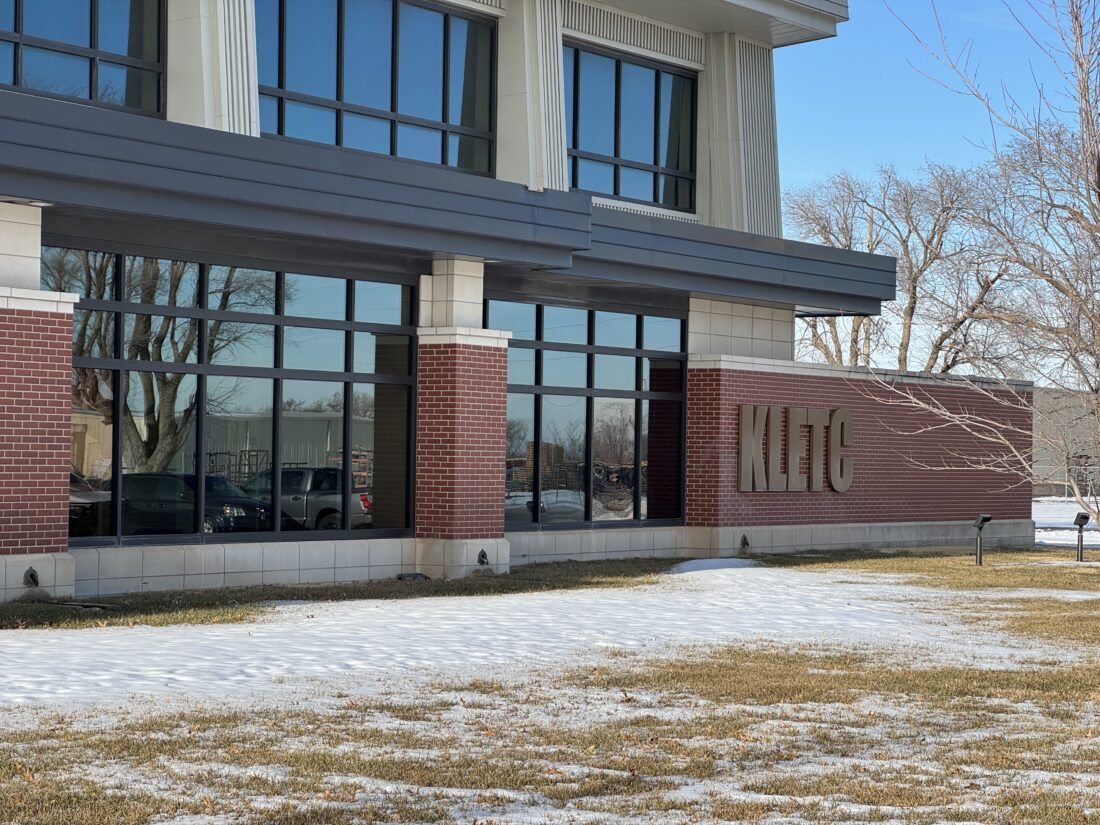
photo by: Chad Lawhorn/Journal-World
The University of Kansas operates the Kansas Law Enforcement Training Center, which is located just outside of Hutchinson. The center trains the vast majority of all law enforcement officers in the state.
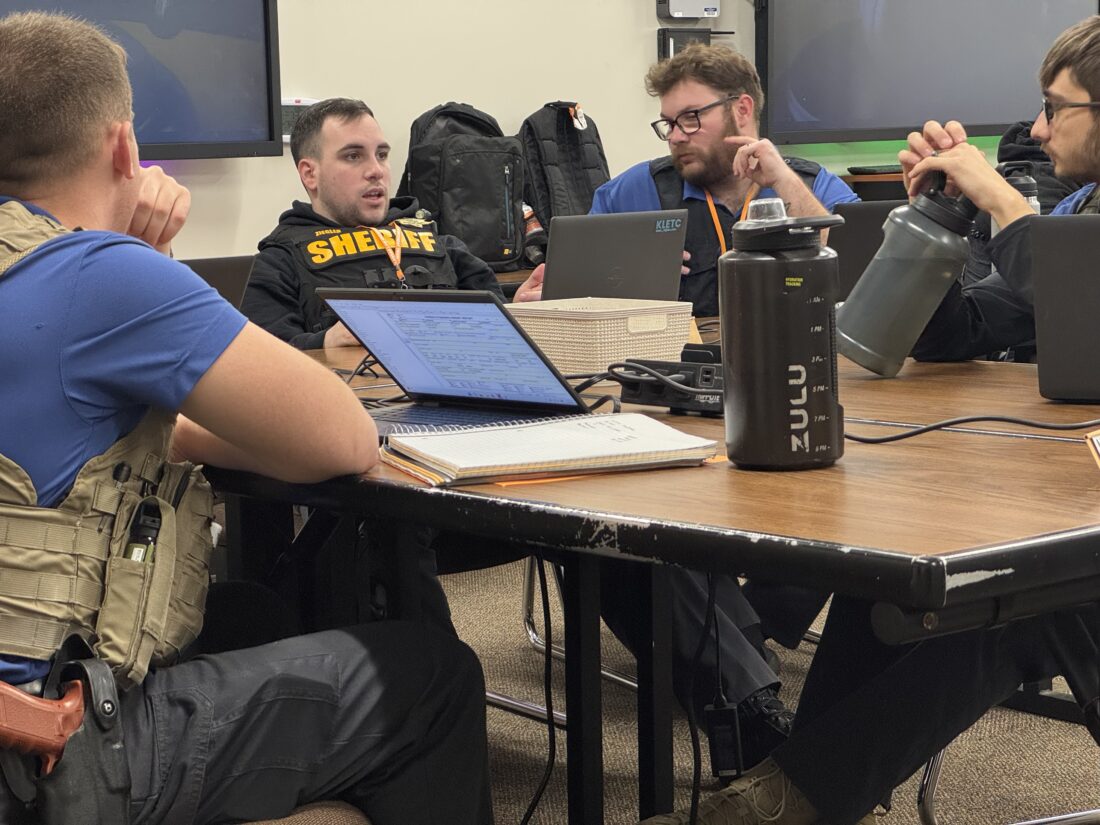
photo by: Chad Lawhorn/Journal-World
Students discuss a topic at the Kansas Law Enforcement Training Center on Jan. 28, 2026.
State Government
Bill would make clergy mandated reporters
TOPEKA — Kansas ordained clergy would be mandated reporters of child abuse under a bill proposed Monday in the ...
Sharice Davids prepares to tour areas of Kansas far beyond her House district
TOPEKA — U.S. Rep. Sharice Davids says she’s embarking on a four-city sweep — all locations outside her ...

A look at what Kansas law says about police and the use of deadly force
‘Forfeited the right to look the other way’; lessons from a class teaching the next generation of police officers
Leader of Kansas’ law enforcement training center trusts juries to deliver justice in Minnesota shootings
Chiefs deal criticized by both parties over ‘tax giveaways for billionaires’
In a crowded hearing in Topeka last week, Kansas lawmakers drilled a lawyer for the Kansas City Chiefs on the deal ...