Law enforcement leaders criticize federal agents’ conduct, ask for understanding on reticence
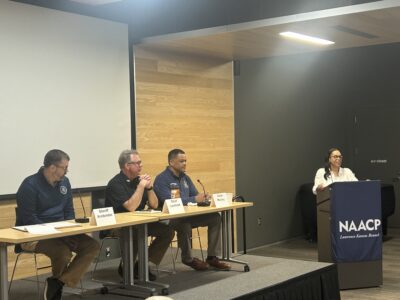
photo by: Bremen Keasey/Journal-World
Local law enforcement leaders criticized federal immigration enforcement during a forum Saturday April 4, 2026 discussing policing issues. From left, Douglas County Sheriff Jay Armbrister, Lawrence Police Chief Rich Lockhart and University of Kansas Police Chief Nelson Mosley. The panel was introduced by Chaconie Edwards, the chair of the Lawrence NAACP's political action committee.
During a forum discussing local law enforcement topics Saturday afternoon, Lawrence Police Chief Rich Lockhart made it clear how he felt about the unrest early in the year in Minneapolis.
“Renee Good and Alex Pretti were murdered (by federal agents),” Lockhart told the crowd of around 70 people at the Lawrence Public Library.
Lockhart said that he felt the conduct of federal agents and ICE agents in Minneapolis during the immigration enforcement surge in January was “not professional policing” — highlighting the use of tear gas on peaceful protestors and the covering of faces by officers. But Lockhart — as well as Douglas County Sheriff Jay Armbrister and University of Kansas Police Chief Nelson Mosley, who all spoke during the event — said that speaking out against key issues can bring unwanted spotlight, which can lead to retaliation from other authorities.
“The reason (law enforcement leaders) aren’t real vocal about these things is we as a community would get punished for advertising our viewpoints,” Lockhart said.
The law enforcement leaders were speaking during an event hosted by the local chapter of the NAACP, where the three officials responded to prepared questions based on community feedback and surveys. While the leaders touched on questions like responding to mental health crises and hiring and training practices, the key focus during the talk was about how the agencies have had to deal with ICE — with the leaders talking about the balance of protecting the community while having to be careful to not bring more retaliatory focus to the community.
Mosley said that when ICE agents have come to the KU campus, his department “doesn’t get a warning or anything.” Most of the time when they have received calls about ICE or federal activity, “we’re probably catching up to what’s going on” and “by the time we get there, they are gone.” He said that his officers have worked to try and educate the students on campus on what they can or can’t do in observing the activity so they remain safe.
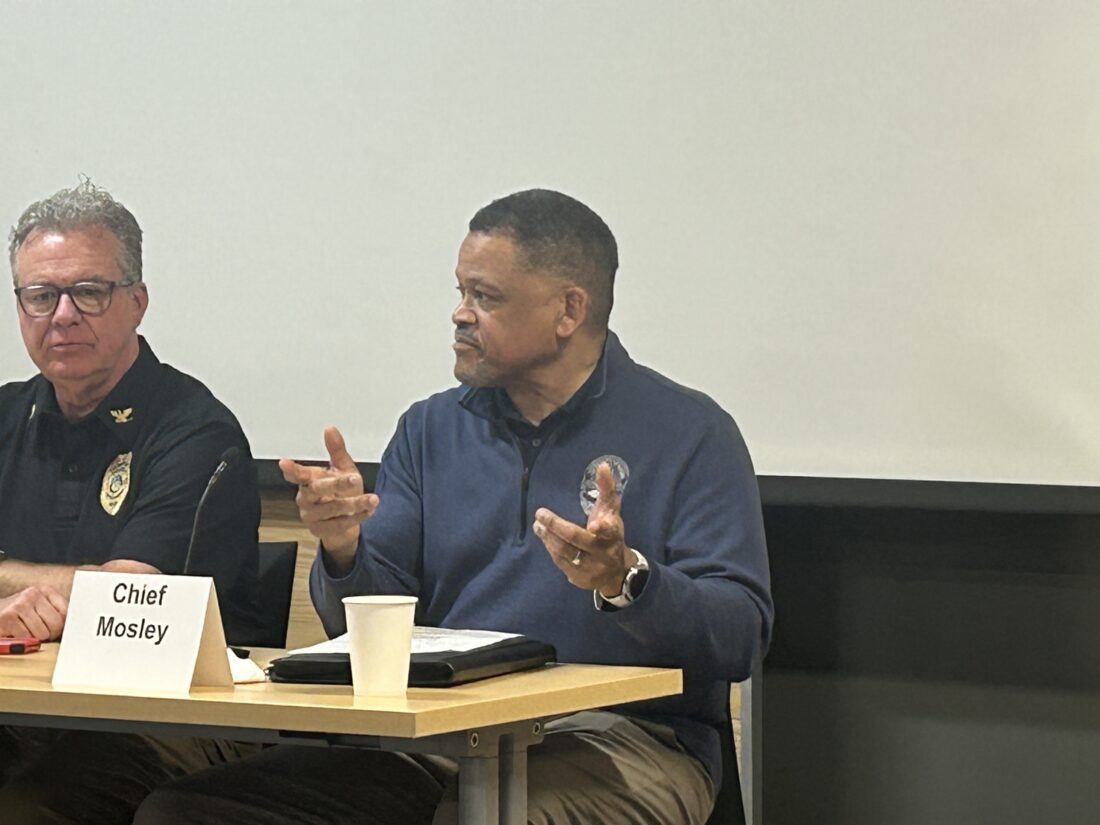
photo by: Bremen Keasey/Journal-World
University of Kansas Police Chief Nelson Mosley speaking during a forum hosted by the NAACP about law enforcement issues.
Armbrister said that he has been angered by the “lack of empathy and humanity” he’s seen from federal agents deployed to cities across the country. Armbrister previously criticized ICE’s tactics in February when federal officers were active in Lawrence during February, saying the officers “swoop(ed)” in and created “chaos.”
Armbrister said the Sheriff’s Office “absolutely will not” work with ICE if they contacted the office about conducting a sweep; however, if ICE or other federal immigration agents place an ICE request on someone who is being held in custody at the Douglas County Jail and has “proper paperwork,” the office will allow them to be released to the federal authorities if they arrive within 48 hours to pick up that individual.
That had previously been the case, and Armbrister said most of the previous years, the federal agents would only pick up at most a handful of people. But this year, Armbrister said federal agents have picked up “closer to 15 people.” He acknowledged he doesn’t expect the public to agree with him on that aspect, but Armbrister made clear they won’t “intersect with ICE on the streets.”
Armbrister also said he hopes people understand his feelings about the immigration forces and that the Sheriff’s Office wants to be “allies” with the community. But if he “stands on his desk and screams” about the action of federal officers, all it will do is “draw the eye of Sauron” to the community, he said. Armbrister fears speaking out too much can bring negative impact from the state and federal levels. He said he was threatened with federal funding being pulled from the entire community and is worried being more public about concerns will only “make things worse.”
“Please don’t take silence as complicity,” Armbrister said. “I don’t want people dragged out of their home because I got mad.”
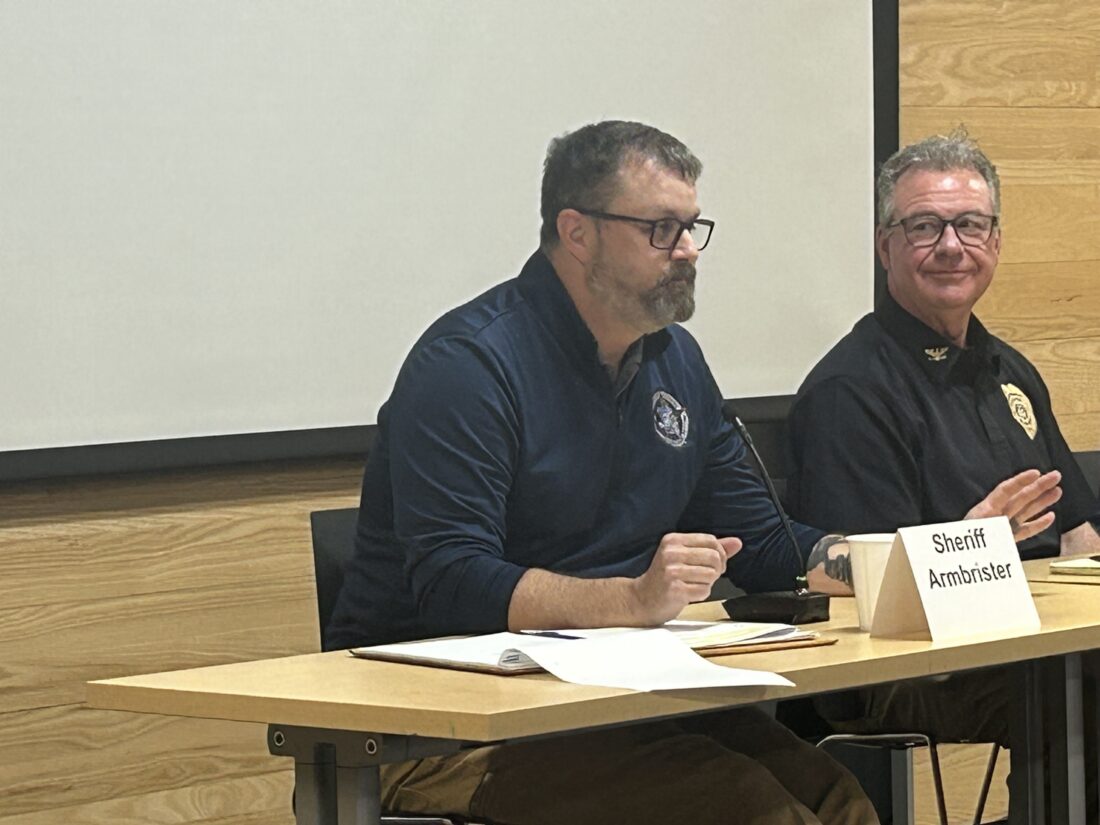
photo by: Bremen Keasey/Journal-World
Douglas County Sheriff Jay Armbrister speaking during a forum hosted by the NAACP about law enforcement issues.
Lockhart also made it clear that the LPD would not do any immigration enforcement because “immigration is not a crime,” a line that received an applause from the crowd. Lockhart also echoed Armbrister’s fears about how speaking out about the concerns can lead to antagonistic responses from other authorities. Lockhart mentioned how when the city passed a plastic bag ban, the state legislature said “(you) can’t do that. A similar thing happened regarding a local ordinance passed in 2020 that provided protections for undocumented immigrants, but state lawmakers similarly passed a law telling Lawrence “you can’t do that.”
In a recent example, Lockhart noted SB 244, which requires all Kansans to use the bathroom of their biological sex at birth in all government buildings, could lead to $25,000 fines levied at the City of Lawrence. Lockhart said his department is “not the bathroom police,” but also said they would need to “be careful” so the city and community is not punished.
The threat of retaliation is something on the minds of the law enforcement leaders which has led them to be less vocal, but Lockhart said “(their) silence is not complicity or agreement.” He hopes that the community can trust the leaders “feel the same as you do” about these issues, and he wants to be clear the goal of law enforcement leaders in the community is to look out for everyone.
“We love our people here,” Lockhart said. “We are going to protect you as much as we can and work together.”
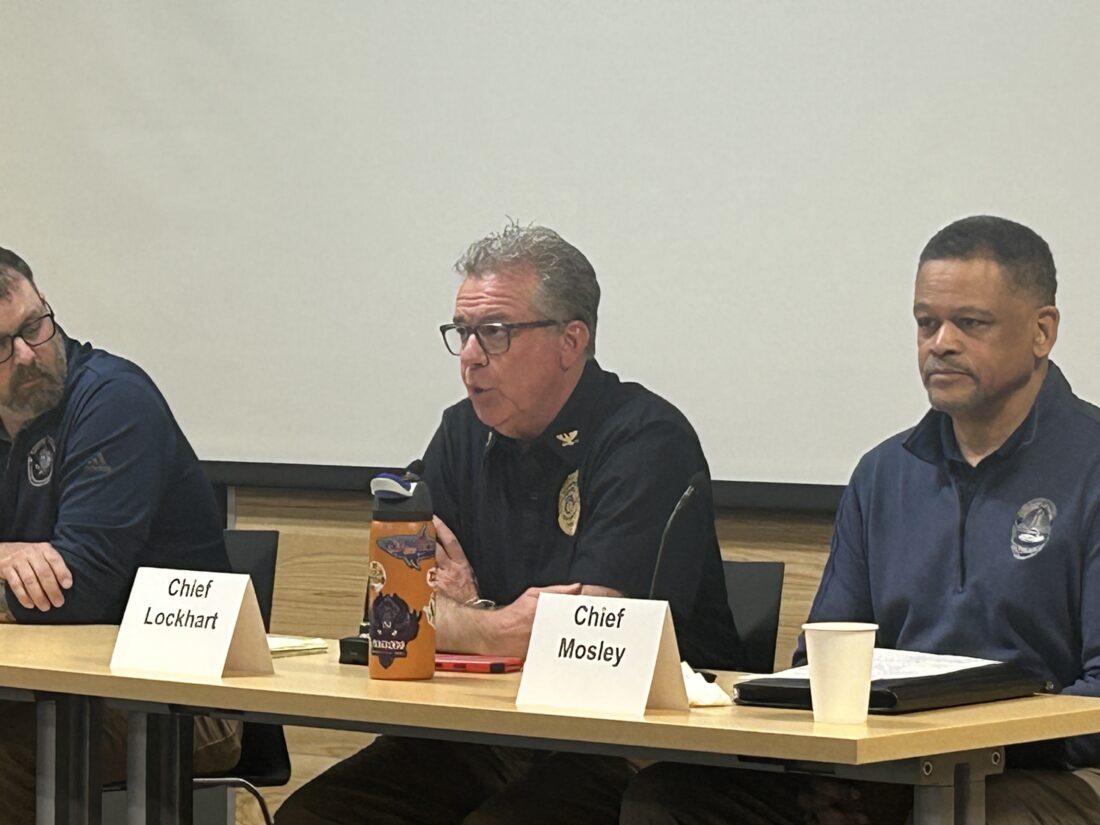
Lawrence Police Chief Rich Lockhart speaking during a forum hosted by the NAACP about law enforcement issues.
Public Safety
Law enforcement leaders criticize federal agents’ conduct, ask for understanding on reticence
Defendant in double-homicide case from 2022 will not be immune from prosecution based on claim of self-defense
Teen who took and shared nude photo of special needs student at Free State High found guilty of misdemeanor in plea deal
Hundreds of residents urging Douglas County sheriff to oppose ICE bill; Armbrister says law would not boost ICE locally
Nonprofit plans a full slate of events for Sexual Assault Awareness Month, including trivia, art auction, vigil for survivors