KU working to become a leader in training next generation of national intelligence officers
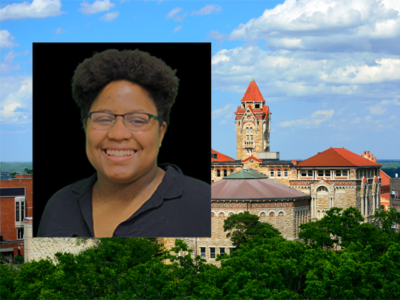
Recent KU graduate Jaleah Cullors earned a minor through the university's Intelligence Community Center program.
Picturing a recent University of Kansas graduate with a set of headphones on isn’t hard to do.
After all, how many dorm rooms or campus benches or corners of the library are populated by students with headphones doing everything from playing an online video game to listening to music?
But after graduation, life’s tunes have been known to change. Now picture that young KU graduate listening to Chinese — or, with the way the world is going these days, perhaps Russian — and taking copious notes.
She hears a sentence or two that makes her scribble on her notepad even more furiously. She decides this is information that her employer’s customers need to know, and she sets the wheels in motion to get it to them.
Those customers are people like the director of the CIA, the chairman of the Joint Chiefs of Staff or perhaps the president of the United States.
“Those are the customers in the intelligence community,” said Mike Denning, KU’s director of Graduate Military Programs.
And yes, there really are people walking down the hill today as part of KU commencement exercises who may be the next generation of intelligence officers who walk into the Oval Office with a piece of information that will change the world.
While not a national secret, it is a bit of an unintentional KU secret that the university is in the business of training people who want a career in the intelligence community. Since 2017, KU has been home to one of a few dozen federally funded centers devoted to training students interested in a career in intelligence.
They are known as Intelligence Community Centers for Academic Excellence and they are funded by the federal office of the Director of National Intelligence. This last school year, about 120 students from KU and participating community colleges in Dodge City and Seward County were in the program with chances to earn a certificate or a minor in the study of national intelligence.
Many of them share a common goal: They want to serve their country. A job in the national intelligence community isn’t quite like serving in the military or AmeriCorps, but they are betting it can be quite important.
“I have always wanted to contribute to something bigger than myself,” said Jaleah Cullors, a recent political science and global and international studies graduate who also received a minor through the IC Center program. “And national security, as the name implies, is about protecting hundreds of millions of people.”
photo by: Chad Lawhorn/Journal-World
KU’s Graduate Military Programs helped the university attract a federal grant to create the Intelligence Community Center for Academic Excellence at KU in 2017.
Security through diversity
It wasn’t that long ago that Cullors, an Overland Park resident who graduated in December, didn’t have an inkling that she wanted a career in national intelligence. She just knew what she liked, but didn’t have much of an idea of what she was going to do with those interests.
“I was interested in human rights and international affairs, but I didn’t know how to make all of those interests into a career,” Cullors said.
But in a sophomore class, Cullors heard a presentation by Ashley Urban, program coordinator of the Intelligence Community Center at KU. Urban said she has a few messages she delivers to students. One of the more common ones is that the national intelligence community is about a lot more than the CIA or FBI or the other alphabet agencies that you read about in spy novels. The national intelligence community is considered to have 16 agencies, and it includes some not-so-obvious ones like the departments of Treasury and Energy.
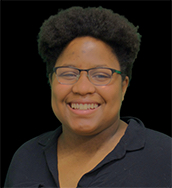
photo by: Submitted photo
Jaleah Cullors
The other thing she tells students is that the intelligence community is looking for all types of majors. Political science is a popular one, but a love of political theory is definitely not a requirement.
“Some agencies have zoologists on their intelligence teams,” said Carl Taylor, KU’s director of KU Global Operations and Security, who helped write the grant that landed KU the IC Center in 2017.
But even more than diversity in degrees, the national intelligence community is looking for a diversity of people. Increasing the diversity of the intelligence community — which is predominately white — is one of the main reasons the office of the Director of Intelligence started funding centers on college campuses in 2005.
KU won its $1.5 million in grant funding — which expires at the end of this school year — by creating a program to attract Hispanic students, among other minority groups. It works with Dodge City Community College, Seward Community College and previously had worked with Donnelly College in Kansas City, Kansas, to attract Hispanics to the program.
“One of the unofficial mottos of the intelligence community is being able to speak truth to power,” said Denning, who also helped write the grant to attract the KU center in 2017. “And diversity is a critical component to know what truth is.”
Denning, who is an instructor in the IC Center program, said you don’t have to look further than today’s headlines to see what can happen when countries don’t have people who speak truth to power.
“Look at the failure of Russia and the lack of diversity of thought when it came to Ukraine,” he said. “That is exactly what we are trying to avoid.”
Why KU?
Cullors is eager to add diversity to the intelligence community’s ranks. She is a Black woman and a member of the LGBTQ+ community. She’s also a proud Jayhawk and thinks KU has a real chance to gain a reputation as a top school for people who want to get into the intelligence industry.
“I know it may not be the first school to come to mind,” Cullors said, as many East Coast schools closer to Washington, D.C., have been more prevalent in intelligence circles.
But Cullors said the intelligence community also needs to hear viewpoints from rural America, and a university like KU could help provide students with those perspectives.
Denning and Taylor agree. Plus, they think KU has long had some attributes that could make it ripe to become an intelligence community leader. Location is one. KU is near Fort Leavenworth, which is already known as the “intellectual capital of the Army” thanks to housing the United States Army Command and General Staff College, where many of the Army’s top leaders go to study. Denning said KU and Fort Leavenworth already share some faculty and have close relations, which could be useful given the military’s role in the national intelligence industry.
But language may be another big advantage for KU. The university is already one of only eight schools designated as a Department of Defense Language Training Center. It is probably an added benefit to KU, given today’s world, that the university has a particular expertise in Russian and Central and Eastern European Studies. KU has been training foreign area officers for Soviet-era countries for more than 50 years. Those foreign area officers often are assigned to embassy positions, and their duties often include intelligence work, Denning said.
KU has enough interest in becoming a leader in training intelligence officials that the university is keeping the IC Center going despite the federal grant funding expiring. The university’s political science department will oversee the program, which previously was under Denning’s department.
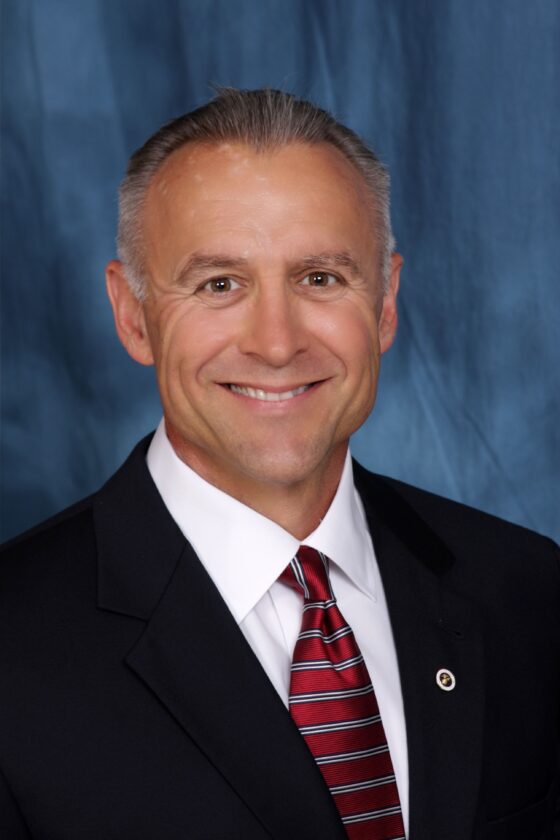
photo by: Courtesy: University of Kansas
Mike Denning
Denning and Taylor expect the center to do more than simply survive. They already are working on new grant proposals that would seek to connect STEM majors to careers in national intelligence.
There is a bigger idea too. Both men expressed interest in creating an undergraduate degree in intelligence, making KU one of the few institutions to grant such a degree. Any degree program would have to win approval from the Kansas Board of Regents, along with clearing several other hurdles.
Taylor is betting the changing geopolitical scene — one where countries are aggressively seeking to change the world order — will allow the idea of the university training future intelligence leaders to get serious consideration.
“The nation needs it,” he said. “It is a critical need to find the best and brightest to go into these roles.”
Get it right
Taylor knows the job is critical because he did it for 30 years in both the military and government agencies before coming to KU, where one of his titles is chief security officer.
He has no doubt that KU graduates like Cullors can find themselves in critical situations in the national intelligence community very soon. When asked whether it was actually realistic that a recent graduate and junior intelligence officer could be the person who first catches a critical piece of information, he answered without hesitation.
“It is absolutely realistic,” he said.
Junior intelligence officers often are on the front lines of a different type of battle. They are battles that involve satellite images or intercepted audio or increasingly technical information like computer codes.
At 33 years old, Taylor was part of a terrorism warning division assigned to the Pentagon. There were five members on the team to ensure 24-hour coverage. Taylor had drawn the night shift, when he had detected something. His job was to brief the chief intelligence officer of the Joint Chiefs of Staff — the top generals in America — who can command the president’s ear at a moment’s notice.
“You know they are going to make force decisions and counter-terrorism decisions based on the information that I’m going to tell them,” Taylor recalled. “It is very sobering when you think of that. When you come off that shift, you are thinking, ‘I sure hope I got that right.'”
Sobering, but perhaps increasingly appealing. Taylor said he saw firsthand while serving in the government as a counter-terrorism expert a trend after 9/11.
“I did see a whole young generation of people who said I need to do something here, and I need to serve,” Taylor said. “Whether it is four years, 10 years or 30 years, they wanted to serve.”
As the world enters a new cycle, Taylor thinks another service surge is possible.
Expect Cullors to be part of it. After not knowing what she would do with a political science degree a few years ago, she now is headed off to the University of California-San Diego for a graduate degree in public policy. She already has interned at the Council on Foreign Relations and is completing an internship at the Center for Strategic and International Studies, in part thanks to her participation in the KU Intelligence Community program.
She now has a clear career plan.
“Eventually, I know I want to become a counter-terrorism analyst in one of the intelligence agencies,” she said.
She also has a pretty specific career goal.
“A long-term goal,” she said, “is to brief the president on a national security matter.”
KU

Turnstile rocks KU campus as Day on the Hill returns after two-decade absence

UPDATE: Closure of Hilltop childcare center is final, but the building seems likely to stay
KU to lead national effort to address special education needs and tackle industry’s pressing concerns
Opinion: KU faculty, staff should be nervous about the new spending rules proposed for college athletics
KU enrollment grows for third straight year, achieving a new record