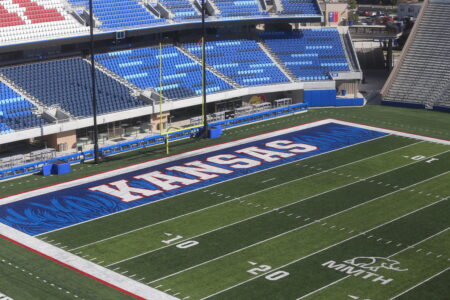
Chancellor expects KU to see an enrollment boost next year thanks to National Championship

photo by: Courtesy: City of Lawrence/Helix
The University of Kansas’ all-time high for enrollment came during the fall semester of 2008. KU officials are convinced it is no coincidence that was the first enrollment period following KU’s National Championship in men’s basketball.
In case you haven’t heard, there’s a new National Championship trophy on campus, and that has Chancellor Douglas Girod optimistic there will be lots of new students on campus come next fall.
“We know just playing on a national stage for the last five weeks, and at the highest level, gives us a level of marketing, if you will, that you could never get by any other mechanism,” Girod told the Journal-World in a brief interview recently. “We absolutely do expect that we are going to see a bump as a result of that.”
Whether this most recent championship, though, will result in a new record enrollment total for KU is questionable. Girod stopped short of predicting that would be the case. Rather, he said the university “would love to see 10% to 15% growth” in enrollment.
“We know we have the capacity to handle it,” Girod said of classroom space and other such campus infrastructure. Recent reports generally have shown that KU, like most state universities in Kansas, has an excess of building space to serve its current enrollment.
A 10% growth in enrollment would lead to an all-time enrollment record at KU. The 2008 record stands at 30,102 students, according to data from the Kansas Board of Regents. KU’s most recent fall enrollment stood at 27,685 students, according to the university.
But past data does raise questions about whether a 10% bump in enrollment is realistic. KU’s enrollment didn’t increase nearly that much in 2008. Rather, numbers from the Regents show combined enrollment at KU and its medical center grew by 2.8%, or nearly 850 students. On a percentage basis, KU’s medical school in Kansas City saw a bigger boost than KU’s Lawrence campus. Medical school enrollment increased by a little more than 6%.
That 2008 enrollment growth also came after KU received large amounts of national attention due to its football team, which won the Orange Bowl in January of 2008.
But the biggest difference between 2008 and now is in demographics. Fewer high school graduates are choosing to attend college now than in 2008. In 2008, about 54% of Kansas high school graduates were attending an in-state public university. In 2020 — the latest figures available from the Regents — the attendance rate had fallen to just less than 45%.
“The dynamics are so different now than they have been,” Girod said.
Regardless, Girod said he expected the extra attention created by the National Championship would coincide well with changes the university already is making in its student recruitment process. As part of its strategic plan, KU is developing a new “tuition pricing/discount strategy” in an effort to boost enrollment. KU hasn’t finalized that strategy, but Provost Barbara Bichelmeyer has said it likely would include ways to ensure KU is making its best scholarship offers to prospective students early in their selection process and in more coordinated ways between the general university and individual schools and departments at KU.
The most visible sign of KU’s new recruitment strategy is perhaps a new Jayhawk Welcome Center under construction at the KU Alumni Center, which is on the main campus near the Kansas Union.
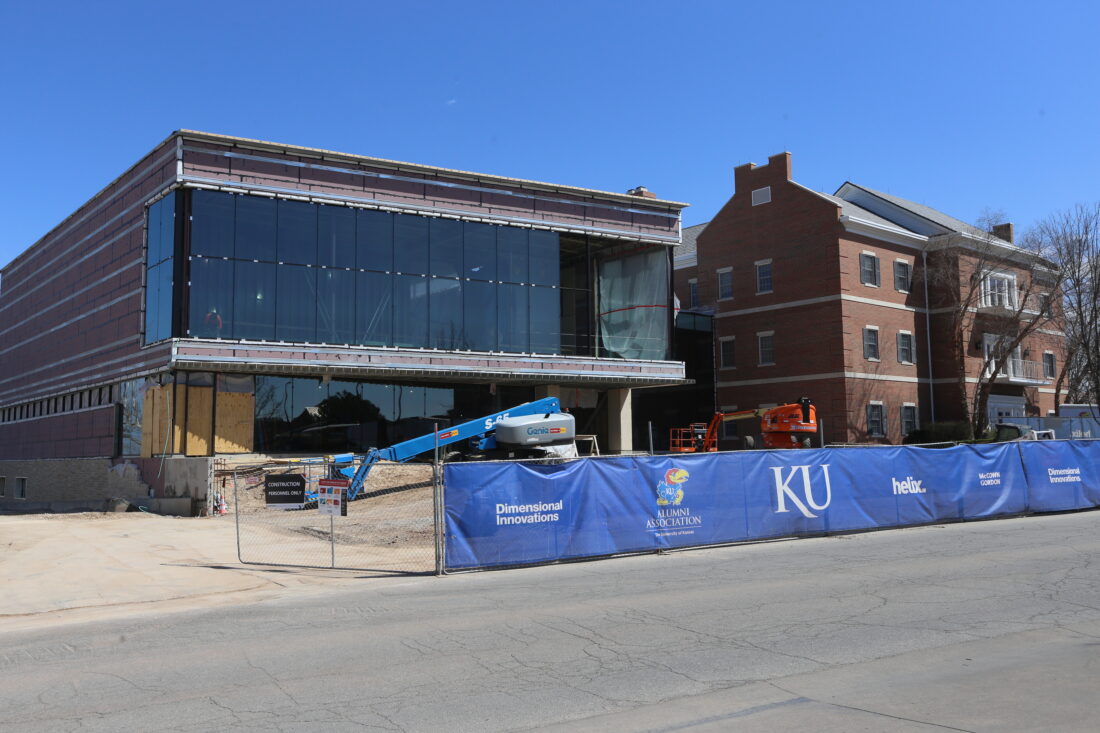
photo by: Chad Lawhorn/Journal-World
Construction work on the Jayhawk Welcome Center on the University of Kansas campus is shown on April 11, 2022.
The Journal-World reported in March 2021 that the center was expected to have a price tag of $21 million, funded through private donors. The approximately 30,000-square foot center will have a heavy emphasis on digital storytelling about the history and traditions of the university, plus two new event spaces for banquets and other functions.
“The best thing we can do is to get people here, because they love it once they are here,” Girod said. “We have some new eyes and new interest now. We just have to make sure we get them here.”
Here’s a look at KU enrollment over the years:
2005: KU: 26,934; Med Center: 2,690.
2008: KU: 26,999; Med Center: 3,103.
2010: KU: 26,266; Med Center: 3,196.
2015: KU: 24,708; Med Center: 3,383.
2020: KU: 23,964; Med Center: 3,655.
2021: KU: 23,958; Med Center: 3,727.
KU
KU professors, middle school band director, radio personality among this year’s Phoenix Award honorees: ‘It’s a cool mix’
Hilltop childcare center has been losing money for at least two years, records show

Turnstile rocks KU campus as Day on the Hill returns after two-decade absence
UPDATE: Closure of Hilltop childcare center is final, but the building seems likely to stay
KU to lead national effort to address special education needs and tackle industry’s pressing concerns