Rising fuel prices put further strain on local food banks already reeling from federal cuts
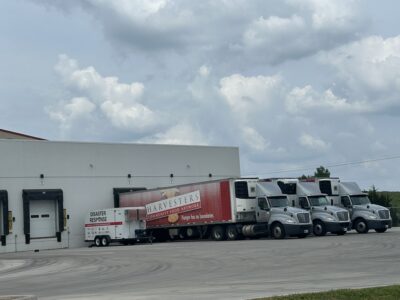
photo by: Bremen Keasey/Journal-World
Trucks for Harvesters Community Food Network sit at the loading dock at the food bank's Lawrence warehouse, 1220 Timberedge Road, on May 27, 2026.
First there was a dramatic drop in federal funding for food programs, and now local food banks are feeling the squeeze of high gas prices.
Fuel prices have risen significantly since the U.S. began bombing Iran on Feb. 28. In Kansas, the average price per gallon of diesel gasoline, as of May 27, sat at just over $5. Last year, the average price per gallon was $3.26, according to AAA’s national fuel price survey. Those prices are affecting Harvesters Community Food Network, which transports food across a 27-county service area in northeast Kansas and northwest Missouri.
Elizabeth Keever, the chief resource officer for Harvesters Community Food Network, said the organization drives around 640,000 miles to distribute food to its more than 900 partners, so rising prices make a “huge difference” in costs for local distribution. The organization has also seen the freight costs of transporting food into its network for distribution increase. For example, Keever said, a shipment of eggs from Missouri doubled from $750 to $1,500, while another recent shipment from Arizona went from $3,500 to $5,000. Total transportation and freight costs have gone up for Harvesters by 33% this year, Keever said.
To make things worse, in the past five years, average food prices have risen by 30%, she said. This year, the organization is seeing the full impact of cuts from 2025’s “Big Beautiful Bill,” which slashed nutritional programs like the Supplemental Nutrition Assistance Program, also known as SNAP.
“To be perfectly frank, the timing cannot be worse,” Keever said, noting that food networks are seeing increased demand now along with an increased cost of business. “(It’s) getting harder and harder every single day for families we serve and our partner organizations.”

photo by: Contributed
Elizabeth Keever
Keever said Harvesters saw a “significant reduction” in its capacity to get food because of changes to federal programs providing less overall funding. She estimated that the food bank would distribute 3 million pounds less of food per year.
The “Big Beautiful Bill” cut federal spending to SNAP by $295 billion over the next five years, according to the Congressional Budget Office. As the Journal-World reported, the CBO estimated participation in SNAP might drop by more than 3 million people nationwide with the bill’s passage; a separate report from the Center for American Progress think tank estimated around 43,000 Kansans could lose some or all of their benefits because of the legislation.
Keever said Harvesters saw a 7% reduction in SNAP participation by Kansas residents in January 2026 compared with last year. The food system, she said, “cannot fully absorb the impact of the cuts” to the program since for every one meal food banks provide, SNAP funding generally can provide nine.
Food banks have seen an increase in people experiencing food insecurity. Last year, Harvesters saw about a 10% increase in demand across its network, according to Keever.
“Our agencies are continuing to see a growing number of people at our doors,” Keever said.
Rising fuel costs are exacerbating the situation. Keever said Harvesters primarily relies on charitable giving, so they don’t have a “blank check” to procure unlimited amounts of food. That means “the more money that goes to fuel, the less food that ends up on shelves,” she said.
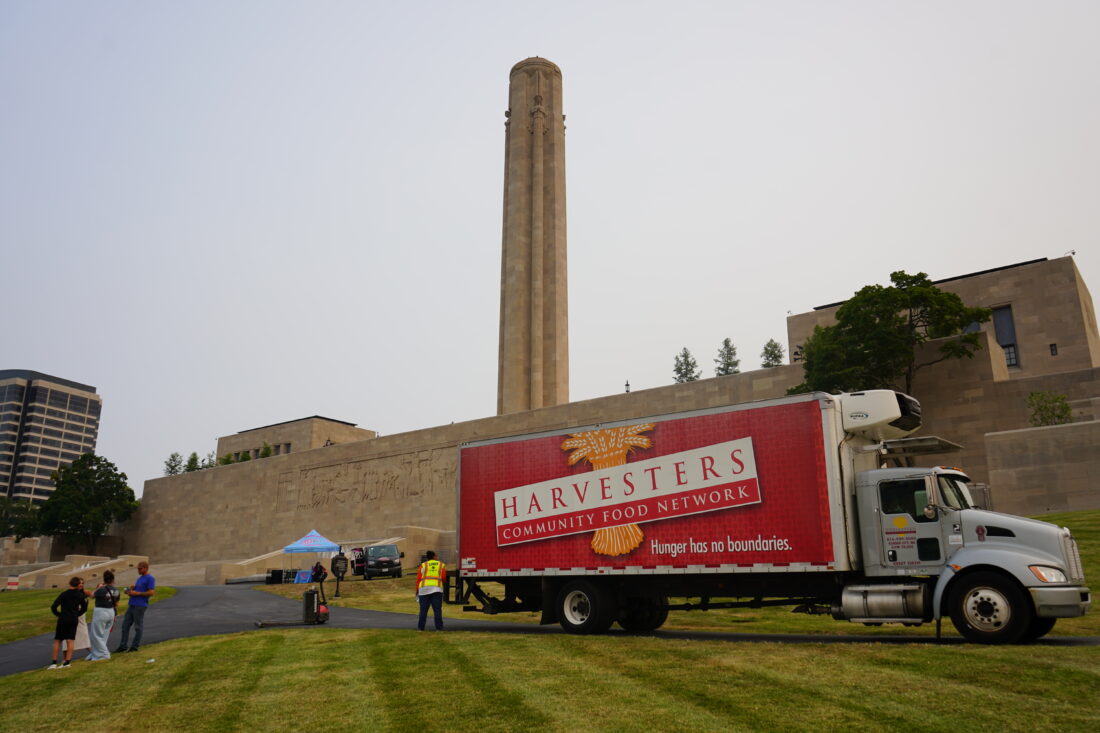
photo by: Contributed
A Harvesters Community Food Network truck sits near the National WWI Museum and Memorial in Kansas City, Missouri.
Despite the precarious situation, Keever said some new supporters have stepped up — people who were never previously involved in food donation but who felt a call to action in the wake of federal cuts.
“We have a lot more allies in this fight, who are ready and willing to do the work,” Keever said, while acknowledging that “we still have a lot to overcome.”
Other News
‘This is for all of us’: Midco Prairie, an oasis of native plants in downtown Lawrence, opens to the public
Douglas County commissioners express interest in fireworks sales dates that include a weekend

Douglas County commissioners to discuss whether to increase the number of days fireworks can be sold in the county
Lawrence’s first bike lanes with physical barriers are installed on Ninth Street

Data center company plans up to $1,000 a year in tax, utility credits for De Soto households