

Lawrence ordinance bans conversion therapy; U.S. Supreme Court in 8-1 ruling declares a similar law unconstitutional
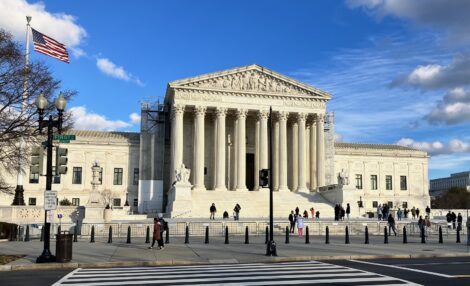
photo by: Kim Callahan/Journal-World
The U.S. Supreme Court is pictured Feb. 17, 2024, in Washington, D.C.
Five years ago, the City of Lawrence adopted an ordinance banning so-called conversion therapy, but on Tuesday the U.S. Supreme Court ruled 8 to 1 in a Colorado case that such bans violate the U.S. Constitution.
Conversion therapy generally aims to change a person’s sexual orientation or gender identity. Usually it takes the form of “converting” a gay person into one who identifies as heterosexual — a practice that most health care professionals, including the American Academy of Child and Adolescent Psychiatry, deem detrimental to a person’s mental health, especially a child’s.
Some of those who spoke against the practice when Lawrence adopted its ban in 2021 even called it “abusive” and “torture,” but the Supreme Court said that a ban as applied to talk therapy was an “egregious assault” on the First Amendment, deeming it a speech regulation that is not content neutral.
Justice Ketanji Brown Jackson was the lone dissenter, arguing that harmful medical treatment is still harmful even if it consists only of speech. She described the court’s ruling as “playing with fire” and said it would put Americans at grave risk. Jackson distinguished “professional medical speech” as a narrow category of speech that should be subject to some state regulation.
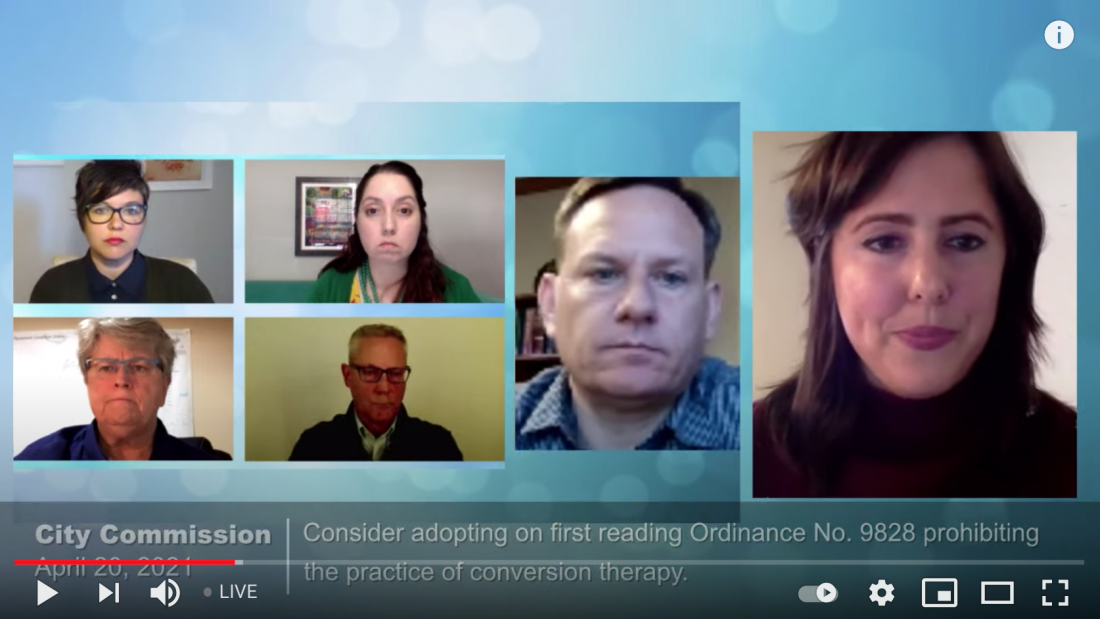
photo by: City of Lawrence
Assistant City Attorney Maria Garcia, far right, discusses Ordinance 9828 with members of the City Commission.
The Lawrence ordinance specifically applies to licensed counselors and does not include nonlicensed religious counselors.
The case the high court ruled on came out of Colorado, which adopted a law in 2019 prohibiting licensed counselors from engaging in “conversion therapy” with minors. The plaintiff, a licensed therapist named Kaley Chiles who provides only “talk therapy,” challenged the law based on the First Amendment. Lower federal courts had denied her claim, saying the ban was more about regulating professional conduct and that it regulated speech only incidentally — a characterization rejected by a majority on the Supreme Court.
Bans like Colorado’s are common, with about 20 states — though not Kansas — having adopted similar legislation in recent years. Many cities, like Lawrence and Roeland Park, the first to do so in Kansas, also have bans on conversion therapy.
At the time that Lawrence passed its ordinance, it heard from numerous individuals in the community, including Michael Airhart, a representative of Born Perfect, a national campaign of survivors of conversion therapy. Airhart said that conversion therapy did not do what it claimed to do and usually just produced years of “self-directed shame.”
On Tuesday, Janis Guyot, the president of PFLAG Lawrence, whose mission is to support, educate and advocate for the LGBTQ community, said it was “very sad” that not “even our Supreme Court” is protecting vulnerable people.
Guyot, echoing a statement by Brian Bond, the CEO of PFLAG National, said the court’s decision didn’t change the fact that conversion therapy is harmful and unethical.
“Families should be able to rely on valid, best practice mental health support, and LGBTQ+ youth should not be subjected to a dangerous and discredited practice that promotes shame, confusion, and spiritual disconnection,” Bond said in a news release Tuesday. “Creating loving, supportive, and safe communities is a key part of the LGBTQ+ journey, and PFLAG advocates and supporters will continue to defend every LGBTQ+ person’s freedom to thrive.”
The Journal-World has reached out to the City of Lawrence regarding the impact of the Supreme Court’s ruling on the local ordinance.
Other News
Lawrence ordinance bans conversion therapy; U.S. Supreme Court in 8-1 ruling declares a similar law unconstitutional
Jungle House and Squishington’s in downtown Lawrence closing up shop for good today

Theatre Lawrence’s upcoming season to feature ‘On Golden Pond,’ ‘Pirates!’ and more
Rural growth is outpacing infrastructure capacity in Douglas County, stakeholders warn
Bert Nash and health department use Douglas County funding to expand HIV, hepatitis testing for uninsured patients
