Lawrence architect hopes ‘pre-fab’ construction kits can be newest affordable housing option
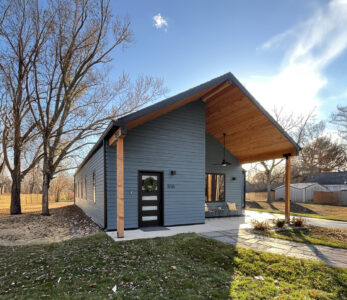
photo by: Contributed
A finished home built in North Lawrence by Lawrence-based CT Design and Development. The home was built as a "pre-fab kit" using a three-step process from Buildsmart, and Connor Treanor, a principal architect with CT Design, thinks those kits can serve as great options for accessory dwelling units or other housing options in Lawrence.
When it comes to affordable housing in Lawrence, city leaders are thinking bigger, as in allowing taller buildings that can house more living units per square foot.
But leaders also are thinking smaller, with changes to a development codes that will allow people to essentially build a small home — planners call them accessory dwelling units — in their yards.
Thus far, city officials are still waiting on the big surge in housing. As the Journal-World reported, Lawrence set a new record low for single-family home construction in 2025, with just 36 single family building permits issued. That was the second year in a row that Lawrence set a record low for single-family housing starts.
A Lawrence-based architect is hoping that he has something that will help boost those numbers: A kit.
Connor Treanor, a principal architect with Lawrence-based CT Design and Development, recently acquired a company called BuildSmart, which makes three key products for building materials. Using those building materials, Treanor has also created through that company a series of “pre-designed” building kits for single-family homes or ADUs.
So far, Treanor said the activity level for the pre-fabricated accessory dwelling units has followed the general trend of the Lawrence housing market — it has been kind of slow. But Treanor said some of that may be because Lawrence residents don’t yet have an understanding that building a small home in their backyards might be a legal option in their neighborhoods.
The changes to Lawrence’s Land Development Code allows accessory dwelling units to be built in any residential district. Previously ADU could only be built in more dense residential areas. Additionally, the code now allows property owners to build an ADU from scratch, or convert part of their existing property — like a garage — into a dwelling unit.
Treanor also said his BuildSmart company is still trying to build a name for itself in the world of accessory dwelling units. Prior to the purchase, the company’s reputation primarily had been as a builder of “passive homes,” a type of housing structure that uses very little energy and most often was being purchased by upper income clients. The company is continuing with that business, and hopes to make it more widely available to all types of buyers.
The kits for accessory dwelling units are step in that direction.
“We want to take that level of quality and precision you get from pre-fabbing these things indoors and bring it to a market where anybody can afford it,” Treanor said.
Treanor said the kits that the company offers range in size from 400-square-feet to 2,000-square-feet, meaning all the options could fit on an average lot in Lawrence. He said the pre-fab kits are up to the property owner’s imagination or needs.
(They) can really be whatever you want it to be,” Treanor said.
The process of getting one of the pre-fab kits built is also quicker than building in a traditional manner where all the work is done on the building site itself, Treanor said. While the standard planning work of getting city permits and design approvals is basically the same as traditional home construction, the savings come from being able to build the homes themselves inside of a warehouse-like building that, unlike a building site, is protected from the elements. The kit process also allows for a number of other efficiencies in putting the components together.
“We take a lot of the guess work out of it,” Treanor said.
Treanor said the construction process generally takes “between four to six weeks” once a customer would order a kit, and most of that is waiting for the windows to arrive.
The costs also are much lower. Treanor said it is hard to give an average estimate of a comparison between the pre-fab kits and traditional “stick built” houses because construction pricing is “wild right now.” However, the costs for the BuildSmart packages, which include the foundation, exterior walls, interior walls and windows, run between just above $30,000 to under $90,000, according to the company’s website.
Treanor has also been working to use some of the pre-fab kits with other local groups that are seeking to address housing needs. He said the company has been working with Tenants to Homeowners to build some of the pre-fab tiny homes on some lots the group owns in North Lawrence. Treanor said that he hopes these kits can be a model for adding a new type of housing into the city at lower costs.
“We’d love to do more projects in Lawrence,” Treanor said.
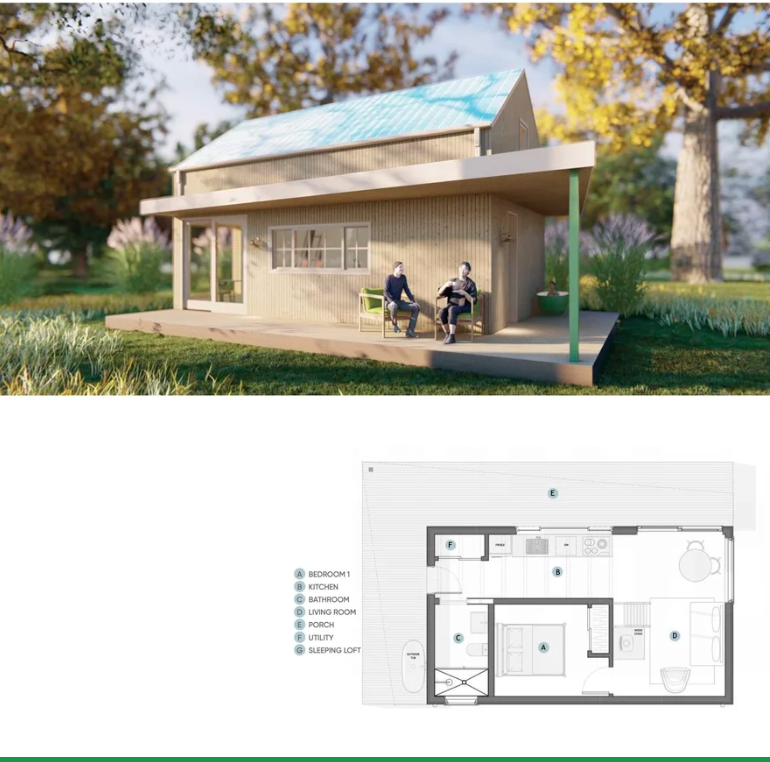
photo by: BuildSmart
A BuildSmart brochure shows the company’s Hazel model, which features 600 square feet of living space, including one bedroom and a sleeping loft.
Other News

PHOTOS: Lawrence No Kings Rally

Four Lawrence High School students win gold medals at national art competition
Lawrence architect hopes ‘pre-fab’ construction kits can be newest affordable housing option

Watkins Museum to host traveling exhibition featuring photographs, narratives of the Underground Railroad

U.S. Army Corps of Engineers cuts services, adds fees at Clinton Lake amid hiring freeze, rising costs