KU expert details how attacks in Iran led to rising gas prices across the country in recent weeks
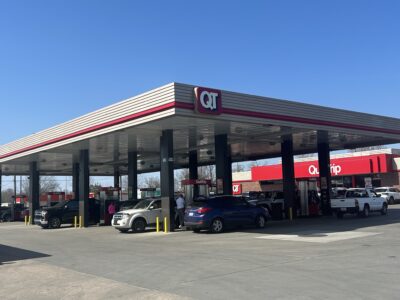
photo by: Bremen Keasey/Journal-World
Motorists fueling up atthe QuickTrip gas station in Lawrence at 1020 E. 23rd St. Average gas prices have risen to over $3.00 per gallon nationally since the U.S.'s attack on Iran, and a KU professor explained the conflict could keep the prices high.
As conflict in Iran continues into its second week, Lawrence residents are starting to see the impact of the bombings at the pump with rising gas prices, which could get worse if the fighting continues.
Since the U.S. launched bombing operations against Iran on Feb. 28, the price of crude oil has surged from around $70 per barrel to at times over $100 per barrel, according to AP reports, and those have led to higher prices at the pump across the country. Nationally, the average price for a gallon of regular gasoline was up to $3.539, according to AAA’s national fuel price survey. That’s up about 55 cents pricier than the national average on Feb. 26.
It’s a similar story in Kansas. Although prices are lower than the national average, the statewide average for a gallon of regular is $2.962 — up about a quarter per gallon from last week’s average of $2.698. In Douglas County, the average price for regular gasoline was up to $2.983 per gallon, according to AAA data. The Journal-World found several gas stations in Lawrence where the price per gallon was over $3 on Tuesday afternoon.
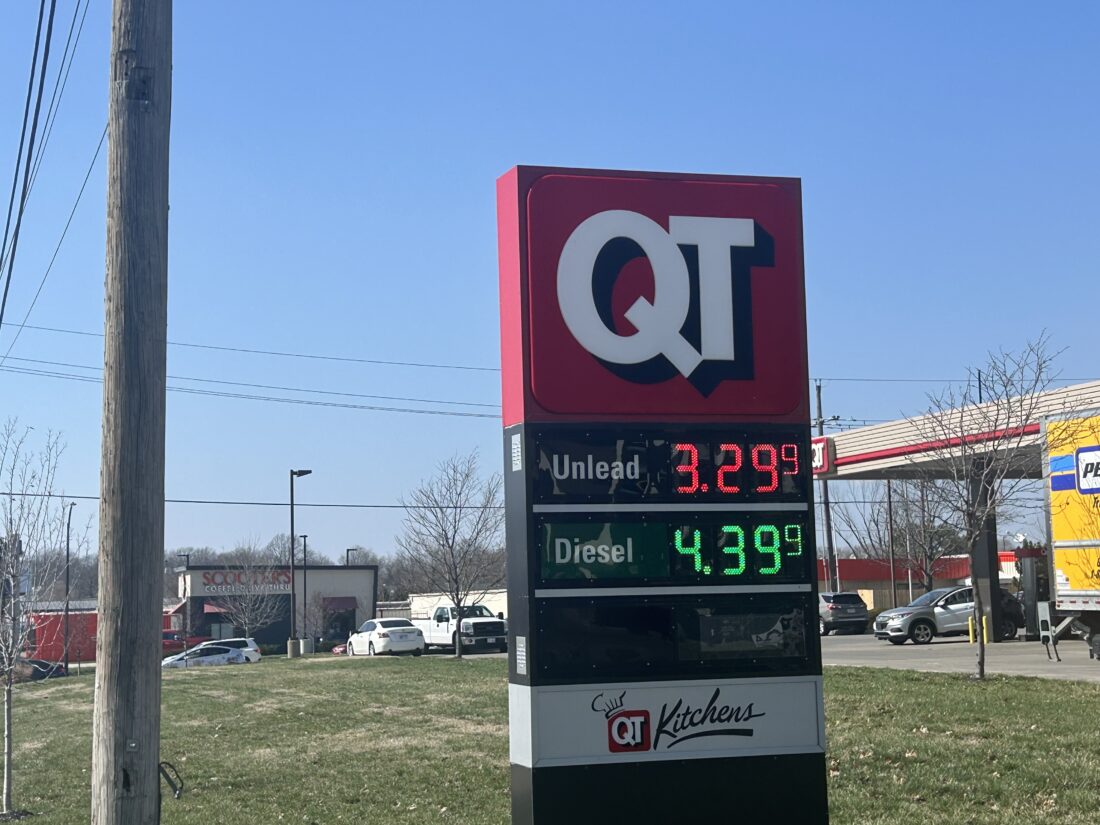
photo by: Bremen Keasey/Journal-World
The QuickTrip gas station in Lawrence at 1020 E. 23rd St. listing the price for a gallon of regular gasoline at $3.29 on March 10, 2026. Average gas prices have risen across the country since the U.S.’s attack on Iran, and a KU professor explained the conflict could keep the prices high.
So how does the conflict in Iran create the increased gas prices? Mazhar Arikan, an Associate Professor at the KU School of Business, told the Journal-World that there are four main components of the retail price of gasoline: the price of crude oil, refining costs and profits, distribution and marketing costs and taxes.
Arikan said the crude oil component makes up about half the retail price. Generally, since one barrel of crude oil contains 42 gallons, a $1 change to the price of crude oil corresponds to about a 2.4 cent per gallon change to the retail price, according to Arikan. Although that is a useful estimation, he noted that formula for costs “is not perfectly one-for-one” because wholesale or distribution conditions can lead to local fluctuations.
Another key factor for the increased prices is the disruption of the supply chain. The fighting disrupted shipments of oil through the Strait of Hormuz — a narrow waterway controlled by Iran that connects the Persian Gulf to the Arabian Sea. Arikan said the strait is “a major bottleneck in the global oil delivery network” and an important route for some of the U.S.’s supply of crude oil. He noted about 7% of U.S. crude oil imports came from Persian Gulf countries through the Strait of Hormuz in 2024.
The current conflict creates more risk to shipping the oil, so shipments are being delayed or rerouted, which takes more time and costs more money, Arikan said. Additionally, the insurance and shipping rates increase because of the added risks. Arikan said those supply chain concerns can create higher prices even if the supply remains the same.
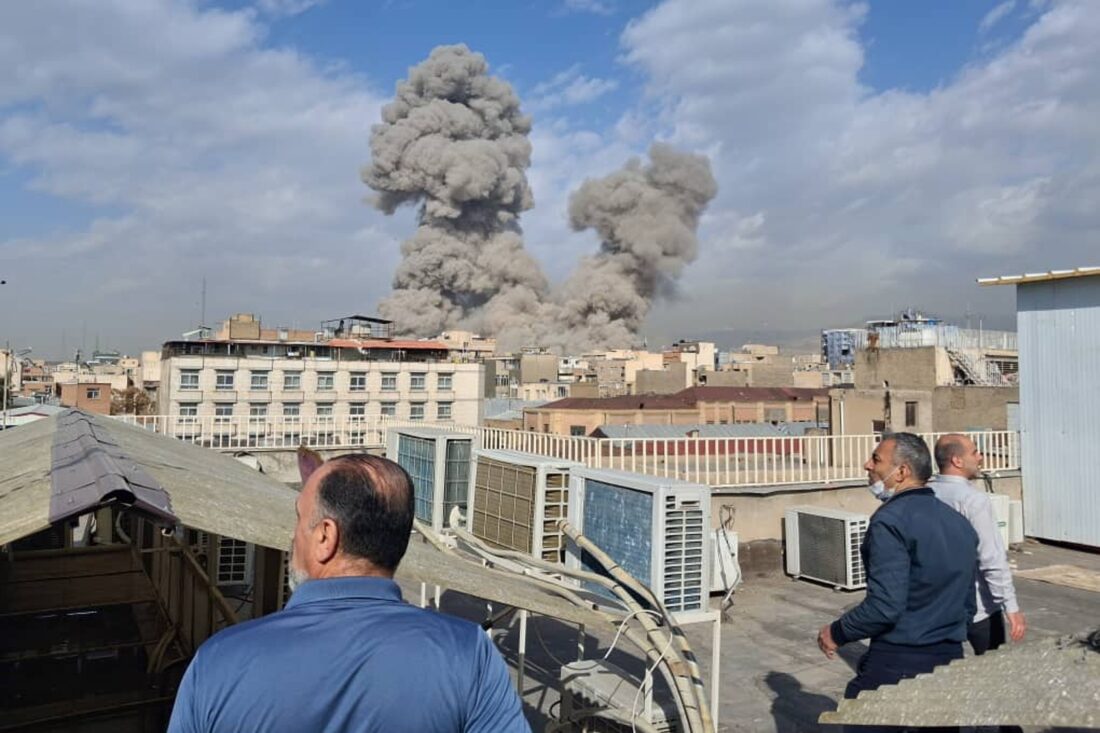
People watch as smoke rises on the skyline after an explosion in Tehran, Iran, Saturday, Feb. 28, 2026.(AP Photo)
“Even if the same amount of oil is being produced, it’s effectively ‘less available’ because it’s harder and more expensive to deliver,” Arikan said.
From a supply chain lens, Arikan said there are “only a few levers” the U.S. government can use to bring down prices. It could either add more supply, reduce bottlenecks in the U.S. fuel delivery network, or reduce demand. Arikan said the U.S. could opt to release oil from the Strategic Petroleum Reserve (SPR), with the government last doing this in 2022.
If there are still disruptions due to the fighting in Iran, Arikan said that consumers could see higher prices for airline tickets, increased home energy costs and higher food-related expenses due to rising crude prices.
Over the next few months, if conditions don’t change and the shipping network “remains risky,” consumers would be facing higher average prices, Arikan said. Costs could ease if supply chains find ways to adapt, either by rerouting shipments or shifting supply from other sources, but those changes take time to come into effect.
“Supply chains can adjust, but usually not quickly,” Arikan said.
No matter what happens, gas prices are already higher across many major metro areas in the state compared to last year, according to the AAA data. A year ago today in Lawrence, the average price was $2.886 per gallon — about a 10 cent increase. Here’s a look at the data for the average price today versus last year across the other metro areas that AAA tracks.
Kansas City, Kan.: $2.994 in 2026; $2.831 in 2025; about 11 cents more expensive
Manhattan: $2.962 in 2026; $2.822 in 2025; about 14 cents more expensive
Topeka: $2.920 in 2026; $2.769 in 2025; about 15 cents more expensive
Wichita: $3.015 in 2026; $2.828 in 2025; about 19 cents more expensive
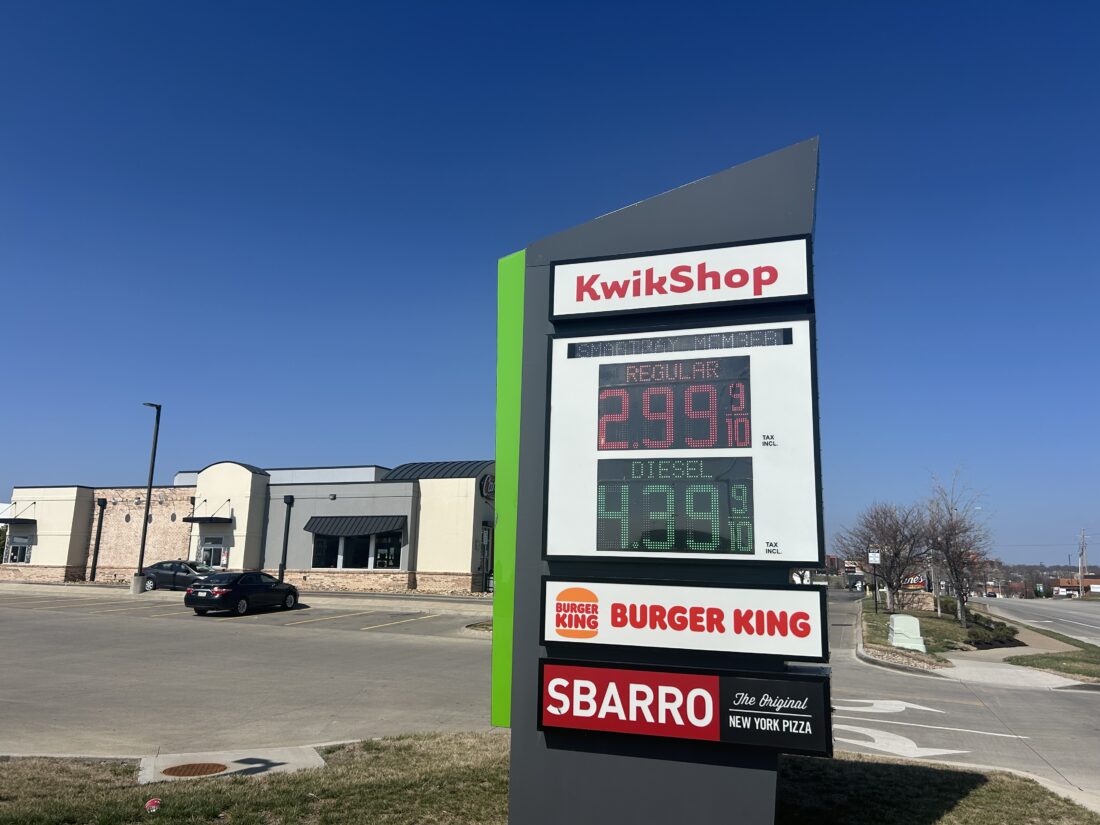
photo by: Bremen Keasey/Journal-World
The KwikShop gas station in Lawrence at 2100 W. 25th St. listing the price for a gallon of regular gasoline at $2.99 on March 10, 2026. Average gas prices across the state have increased sharply in the past week, going from $2.698 to $2.962 in the past week in Kansas.
Other News
KU expert details how attacks in Iran led to rising gas prices across the country in recent weeks
Ballard Center receives $1M gift to bolster living wages and new tuition model

Bert Nash Community Mental Health Center to host panel on women’s mental health

Theatre Lawrence’s production of ‘The Cottage’ is a little bit Noel Coward, a little bit John Cleese
Burn ban in effect for Douglas County; severe weather expected Tuesday afternoon and evening
A burn ban has been issued for Douglas County because of a "very high" fire danger index. According to the ...