Haskell Foundation announces creation of fellowship program that aims to advance clean energy development for tribal communities
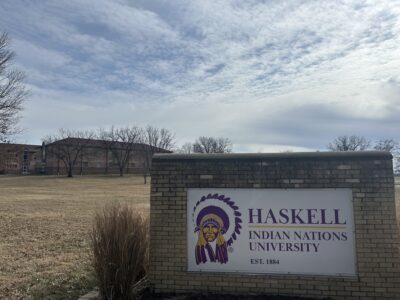
photo by: Bremen Keasey/Journal-World
The campus of Haskell Indian Nations University seen on Feb. 13, 2026.
The Haskell Foundation announced a new fellowship program that combines Indigenous knowledge and training from other disciplines that aims to train future leaders in clean energy development to better serve tribal communities.
The foundation announced Tuesday in a press release the creation of the Tribal Energy Leaders Fellowship — a partnership of both the Haskell Foundation and the Alliance for Tribal Clean Energy that hopes to “advance energy sovereignty and confront long-standing inequities on Tribal lands,” according to a press release.
The 10-week program will be housed at Haskell Indian Nations University and feature faculty from Harvard University, the Massachusetts Institute of Technology and the University of Nevada-Las Vegas. The program will provide its fellows with specialized training in areas like renewable energy technologies, financial modeling, federal grants, environmental impact assessment and Tribal governance, according to a press release.
The program is “grounded in Indigenous Knowledge Systems” and informed by research institutions, and the fellowship program will prepare participants to design new projects that generate economic opportunity and strengthen community resilience in ways that can help Tribal communities.
Alex Red Corn, the acting president of HINU, said in a release he is excited the Haskell Foundation was able to build this relationship with the Alliance for Tribal Clean Energy and hopes the partnership is something that can grow in the future.
“We see this as a great opportunity to expand how we serve Indian Country through professional and workforce development programming,” Red Corn said.

photo by: Contributed
Alex Red Corn, the acting president for Haskell Indian Nations University.
Chéri Smith, the founder and CEO of the Alliance for Tribal Clean Energy said in the press release that energy development was something that “happened to Tribal Nations, rather than being led by them.” She developed the alliance and the fellowship program as a way to “(shift) that dynamic” to prepare Tribal leaders so energy solutions benefit their communities and “the decisions reflect the values, priorities and long-term vision of their people.”
The fellowship will receive instruction from a multidisciplinary faculty — including experts in fields like renewable energy systems, environmental studies with a Native-focus and gaming operations. Ramon Sanchez, the Alliance’s Chief Knowledge and Innovation Officer, believes this will set the program apart by bringing together institutions that are rarely partnered together.
“When faculty from Haskell, Harvard, MIT and UNLV sit alongside tribal energy leaders and the entire experience is grounded in Indigenous Knowledge Systems, we create something no single institution could achieve alone,” Sanchez said in a release.
Fellows in the program would receive free tuition, travel assistance, access to a professional network of energy experts and Tribal leaders and ongoing mentorship. Interested applicants must apply for the program by Friday, March 14. If you have any questions, contact Angela Lucas at angela@tribalcleanenergy.org.
Other News

Lawrence High School to host its annual formal wear drive to make prom accessible for students
Haskell Foundation announces creation of fellowship program that aims to advance clean energy development for tribal communities

Iranians in Lawrence area express relief, joy at ayatollah’s demise, hope intervention leads to democracy
‘Every kid can bring something to the table’ for Eudora’s Scholars Bowl team, which just won its 3rd straight state title

A ‘blood moon’ will arrive just before dawn in Lawrence, but clouds are expected to get in the way of viewers