Iranians in Lawrence area express relief, joy at ayatollah’s demise, hope intervention leads to democracy
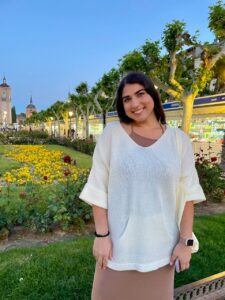
photo by: Contributed
Mercedeh Tavacoli is an Iranian American woman who grew up in the Lawrence area. Her parents are both Iranian immigrants, and all of her extended family lives in Iran.
Iranians in the Lawrence area expressed a mixture of joy, relief, anxiety and fear after learning that the longtime brutal dictator of their homeland had been assassinated over the weekend.
“We are happy, but it is bittersweet,” one University of Kansas student said of her and her family back in Tehran. The student requested to use a pseudonym, Saba, out of fear for her and her family’s safety. The government traditionally has gone to great lengths to punish dissent, and it also regularly silences communication by blacking out the internet, as it did over the weekend and during the recent uprisings that left thousands dead.
Despite the blackout, Saba was able to have brief contact with a friend inside Iran over the weekend who said that she was “terrified” but safe. Uncertainty reigned, the friend said, as people stayed mostly indoors after initial celebrations. Her relatives are trying constantly to obtain access to satellite links “to figure out what is going on,” Saba said.
Iran’s supreme leader, Ayatollah Ali Khamenei — the Shia cleric who had ruled the country since 1989 — and much of his inner circle were slain Saturday in a joint U.S. and Israeli missile barrage.
A downfall that was only dreamed of in previous decades began to appear more and more imminent, Saba said, as the U.S. ramped up its military presence near Iran, so it was not exactly a shock that the theocratic leadership was finally toppled, but it was still somewhat surreal.
“We love our country,” Saba said, and while the thought of destructive bombing was upsetting, it was “a necessary step.”
“This is the only option that remained,” she said, noting that attempts at peaceful reform — in 2009, 2019, 2022 and this year — had gone nowhere. “We couldn’t change (the ayatollah) or his inner circle” without “help from the international community.”
Just days before the ayatollah was killed, Iranian KU students held a memorial for the thousands of people murdered by his regime. Two of those participants, who wished to remain anonymous, told the Journal-World what they would like to see with regime change: democratic elections, a secular government that does not prefer one religion over another, freedom of thought and speech, and equal rights for women and other marginalized groups.
Mercedeh Tavacoli, a 27-year-old Iranian American who was born in Kansas to a mother from Isfahan and a father from Abadan, said all of her extended family lives in Iran, and contact with them has been scarce. At the time of the first explosion in Tehran, she anticipated that the internet would be shut down, and it was.
“They are trying to silence and censor people as much as possible,” she said of Iran’s interim leaders.
Tavacoli was last in Iran in 2022 about a month before the death of 22-year-old Mahsa Amini, who was reportedly beaten to death by police for the “moral crime” of not having her hair properly hidden. That incident sparked the “Women, Life, Freedom” movement in Iran, which gained a mass following but, like several previous movements, failed to produce reforms by the hardline government.
This time feels very different, Tavacoli said.
“I definitely feel more optimism that Iranians are reaching what they’ve been fighting for,” she said, describing the weekend’s overthrow of the government as a “lifeline.”
“Finally, someone is seeing us and hearing us,” she said, expressing the hope that the weekend’s attacks would be a “targeted and humane intervention,” not a long-term war.
It would be wrong to downplay the anxiety that lives side by side with the hope, she said, but the demise of Khamenei “unlocked the fearlessness and courageousness in a form we’ve never seen.”
Azzie Amani-Taleshi, 47, moved to the United States as a child, graduated from KU and now lives in Overland Park. She travels to Iran frequently and has had thoughts of someday retiring there.
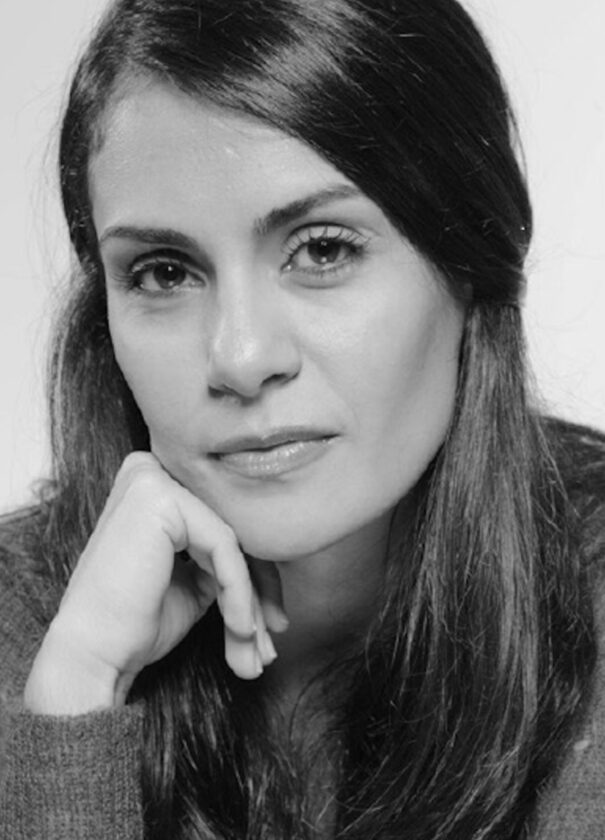
photo by: Contributed
Azzie Amani-Taleshi, a KU alumna, moved to the United States from Iran as a child.
She said the weekend’s developments made her feel a combination of joy and grief — joy because Iranians have been asking the world for this kind of support for 47 years, since Ayatollah Ruhollah Khomeini founded the Islamic Republic in 1979; grief because she wished Khamenei had been captured alive so that he would be forced to face the people “impacted by his tyranny and criminality.”
The overwhelming majority of Iranians, she said — “comfortably more than 80%” — did not support the “dark” theocracy that has clouded Iran for nearly five decades. The struggle, she said, has not been about politics but about fundamental human rights.
Like many of her country people, she had grown weary of Western media depictions of Iranians through the ayatollah’s lens. A highly educated and cultured populace was commonly portrayed as “barbarians” decrying the “Great Satan” of the United States.
In second grade, she said, she was pushed by authorities to stomp on the American flag, but she jumped over it instead.
“Even kids know what’s right,” she said. When asked why she refused to perform the hateful gesture, she told her teacher “because one day we may go to America.”
In praising her fellow Iranians for standing against the government, against all odds, she said “there needs to be a new word for courage.”
The people who have taken to the streets did so knowing that “bullets and slaughter and jailing” would be the most likely outcome, she said, but they did it anyway. In her own family, two people were killed in the recent protests.
No matter how events unfold in coming days, Iranians are ready for “a future full of light,” she said. When a measure of calm prevails, she, like many in Iran, hopes that Reza Pahlavi, the exiled crown prince and an avowed secularist, can help transition Iran to a democratic form of government, whether that’s a constitutional republic like the United States or a constitutional monarchy “like Sweden.”
Above all, she and Saba and Mercedeh all said that they hoped the experiences, desires and voices of “real Iranians” would become the touchstone for things to come.
Other News
Iranians in Lawrence area express relief, joy at ayatollah’s demise, hope intervention leads to democracy
‘Every kid can bring something to the table’ for Eudora’s Scholars Bowl team, which just won its 3rd straight state title

A ‘blood moon’ will arrive just before dawn in Lawrence, but clouds are expected to get in the way of viewers

Annual Kansas Craft Brewers Expo featuring 38 state breweries to be held this weekend
Former police officer on the front lines of Jan. 6 tells large Lawrence crowd to protest, make noise and film it all