

Nearly 22,000 Kansans lost SNAP benefits after ‘Big Beautiful Bill’ passed, and food banks are worried for them
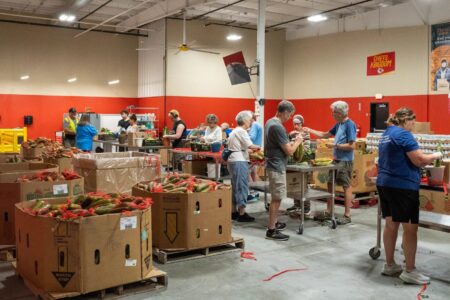
photo by: Zane Irwin, Kansas News Service
At the Harvesters food bank distribution center in Lawrence, Kansas, volunteers pack produce destined for a local food pantry.
During debate over the budget reconciliation law that became known as the “One Big Beautiful Bill,” Douglas County advocates warned that proposed drastic cuts to the Supplemental Nutrition Assistance Program would seriously harm people facing hunger.
Those fears seem to have come true, according to a report from the Center for Budget and Policy Priorities (CBPP), a national nonpartisan research and policy institute. Since the legislation, known formally as HR1 was enacted in July 2025, nearly 22,000 Kansans — including nearly 10,000 children — lost nutrition assistance from SNAP.
Elizabeth Keever, the chief resource officer for Harvesters Community Food Network, said the cuts mean about 12% fewer people are receiving nutritional assistance from SNAP from last year. In 2025, 5,015 people were enrolled and receiving SNAP benefits in Douglas County, according to data from Harvesters. It estimates that now 4,413 people are receiving SNAP benefits, a decrease of 602 people.
The cuts to SNAP ripple through the whole system, according to Keever. It reduces economic potential, stresses the charitable food system and means people can lose out on other nutritional assistance.
“People facing hunger will fall through the cracks,” Keever said.
The “Big Beautiful Bill” cut federal spending to SNAP by $295 billion over the next five years, according to the Congressional Budget Office. Those cuts, which were put into effect last July, came from shifting the burden of the costs onto state governments and expanding work requirements for certain SNAP participants.
Keever said some of the changes that would stem from the legislation mean that the full scale of the harm is “yet to come,” but the current impact of 22,000 Kansans losing SNAP benefits is already incredibly concerning.
For the most vulnerable Americans, food assistance like SNAP was something that was “always there” since the introduction of the “food stamps” program in 1939. The reduction of SNAP benefits means that more people will turn to food banks, something Keever said the food system is not really built for.
“The charitable food system was not created to accommodate the entire need for those who are facing hunger,” Keever said.

photo by: Contributed
Elizabeth Keever
Keever said that for every meal that Harvesters or other food banks provide, SNAP benefits can provide nine, making it “a highly efficient way to address immediate hunger.” Much of that is because of the direct funding and the efficiency of the program. People enrolled in SNAP would receive funds directly on a government issued electronic benefit transfer card where they can spend it at any grocery store that accepts that type of card.
Keever said that for every dollar spent by SNAP recipients in the community, somewhere between “$1.50 and $1.80” is generated in economic return. She also said studies have shown for each SNAP dollar invested in children, it returns an estimated $62 in value for future benefits to society, based on the fact young children who receive SNAP are more likely to have improved health outcomes. Keever said those statistics are “pretty miraculous,” so seeing around 10,000 children will not receive that assistance is devastating.
“It is really unfortunate there are 10,000 fewer Kansas children today from when this bill was enacted who receive those benefits,” Keever said.
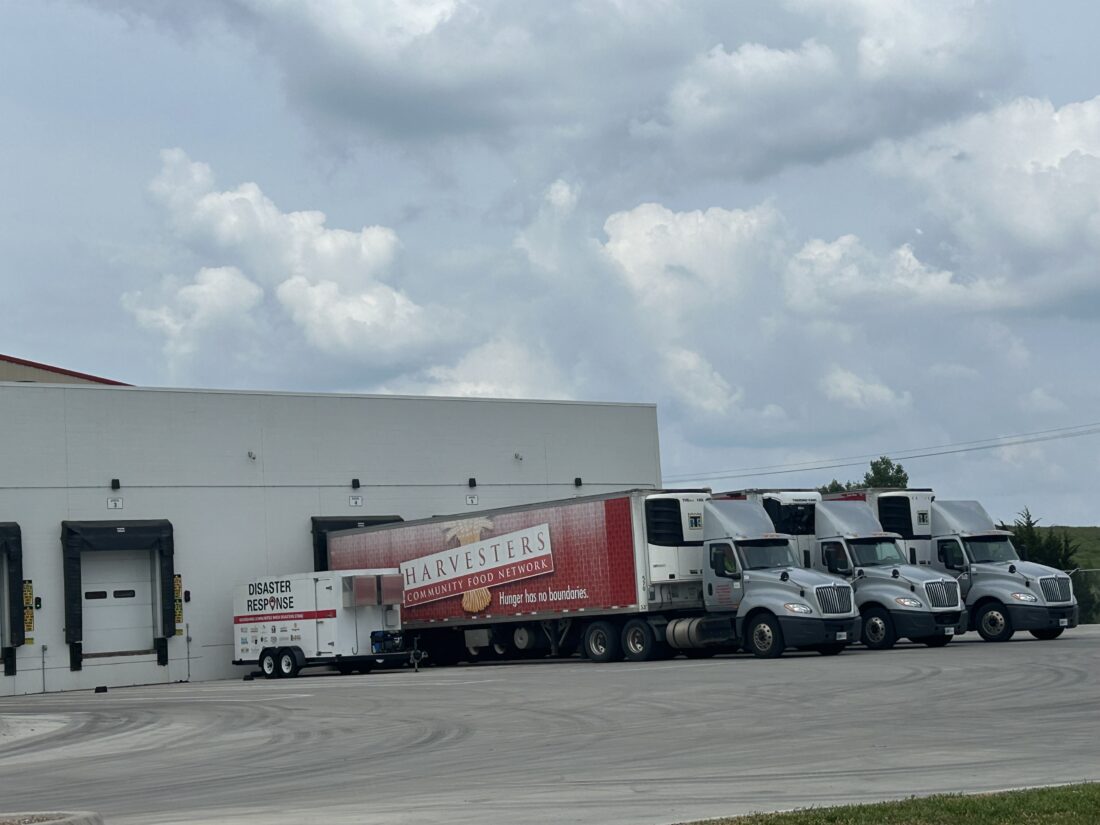
photo by: Bremen Keasey/Journal-World
Trucks for Harvesters Community Food Network sit at the loading dock at the food bank’s Lawrence warehouse, 1220 Timberedge Road, on May 27, 2026.
The loss of SNAP benefits also means people could lose out on other assistance.
Keever said that when people enroll in the program in Kansas, it automatically enrolls them in other downstream benefits for people in need, like the WIC nutrition program and free school meals. For people who were kicked off the SNAP program, they now don’t have access to those programs automatically like before.
“You might have kids missing out on school meals and being kicked off (other) programs because of the linkage,” Keever said.
It means more individuals will face onerous application processes to receive benefits they might previously have had. In Kansas, the application for the SNAP program is combined with the Medicaid application and is about 30 pages long, making it “really challenging to get through,” according to Keever. For families already facing financial challenges, Keever said it can be really taxing to tackle the “administrative burden” of applying to many individual applications, especially when they all have different eligibility thresholds or qualifications.
“It puts more barriers on people who need (barriers) the least,” Keever said.
This comes when food banks are already facing pressure due to rising prices, especially for gasoline. Harvesters has seen transportation and freight costs go up by 33% this year, according to Keever, and other cuts to federal funding have meant the food bank would distribute an estimated 3 million pounds less of food per year.
But the rising food and gas prices combined with reduced government assistance also meant more people turn to food banks. Keever said Harvesters’ partner organizations across the 27 counties in northeastern Kansas and northwestern Missouri have seen a “growing number of people at our doors” in the past year. In addition, the Lawrence food bank Just Food shared in a newsletter that 204 new individuals signed up to use its services for the first time in the month of May alone.
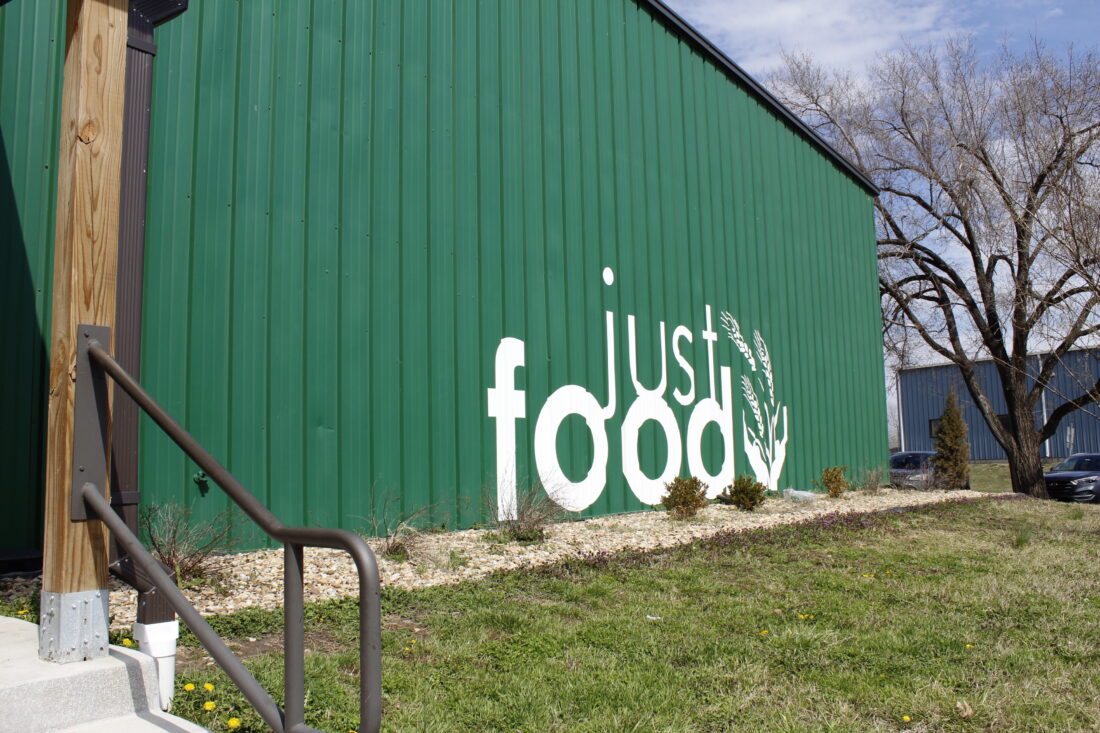
photo by: Austin Hornbostel/Journal-World
Just Food’s home at 1000 E. 11th St. is pictured Friday, March 24, 2023.
Despite the precarious situation, Keever said Harvesters and other organizations have seen more people step up with their “time, money and voice” to support their communities in response to the cuts.
“The reality is, we want to make sure our neighbors don’t go hungry,” Keever said.
One way that Keever hopes people can get involved in the fight is through urging that legislators take action to support programs like SNAP. Currently, Congress is looking to craft a new Farm Bill, where changes to SNAP could be included. Keever said one version of the legislation was passed by the U.S. House of Representatives and was sent to the Senate. She hopes that people ask Congress to look at the harms caused by the passage of HR1 and “roll back” some of the negative impacts to ensure people facing hunger are supported.
“There are opportunities to delay some of the (worst impacts of HR1),” Keever said. “We are really urging people to use their voice to let (Congress) know how important SNAP is and what a vital lifeline it is for families.”
Other News

‘One of a kind’: Sale at the Lawrence Arts Center will find new homes for late musician’s unique custom guitars

Go, See, Do: KU homecoming, Halloween happenings and other events

Student-run coffee shop opens at Community Connections at Pinckney, teacher receives surprise $1,000 award

‘This is for all of us’: Midco Prairie, an oasis of native plants in downtown Lawrence, opens to the public
Douglas County commissioners express interest in fireworks sales dates that include a weekend
