Incumbent U.S. representative seeks reelection as challengers make their case in Kansas’ 1st district race

photo by: Kim Callahan/Journal-World
The Douglas County elections office at 711 W. 23rd St. is pictured Monday, Oct. 31, 2022.
The incumbent U.S. representative from Kansas will face a Republican challenger in the primary, while two Democrats are competing for a spot in the general election.
U.S. Representative Tracey Mann, a Republican, is seeking reelection, and he will be competing against Craig Musser, a Republican, in the primary. Two Democrats – Lauren Reinhold and Colin McRoberts – will also be competing in the primary to face off against the winning Republican candidate in the general election.
Kansas is divided into four congressional districts, and Districts 1 and 2 are up for election this year. Congressional District 1 includes the City of Lawrence, while most of the rest of Douglas County falls within Congressional District 2. That means some Douglas County voters will vote for who they want to represent them in the U.S. House District 1, while others will vote for District 2.
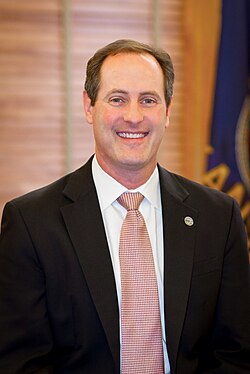
Tracey Mann
TRACEY MANN
Mann is in the fifth generation of his family to grow up on his family farm just south of Quinter. Mann attended Kansas State University and studied agricultural economics, and he was elected student body president. He and his family built their home in Salina, where he worked in commercial real estate while serving on the Kansas Chamber of Commerce and Kansas Agriculture and Rural Leadership. Before beginning to serve on District 1, he served at the 50th Lieutenant Governor of Kansas.
Mann said Kansas families are looking for relief from high costs caused by reckless federal spending from the Biden Administration. He supports cutting wasteful spending, expanding tax relief and lowering energy costs by supporting policies that boost domestic energy production.
“Last summer, I voted for the largest tax cut in American history,” Mann said. ” … That legislation also included funding for the farm safety net, which our farmers rely on, and invested in rural health care through the creation of the Rural Health Transformation Program.”
Mann said the state is home to over 60,000 farms and ranches, and they are the “heartbeat” of Kansas. He said during his time in Congress, agriculture’s success would be his biggest priority as well as getting the next five-year Farm Bill signed into law.
Mann added that he voted to pass legislation that would allow for the sale of year-round E15 nationwide to give additional choices to people at the gas pump and stimulate demand for Kansas farmers.
“There is still work to do to get each of these passed in the Senate and signed into law,” Mann said. “But I will continue advocating around the clock to get these priorities across the finish line.”
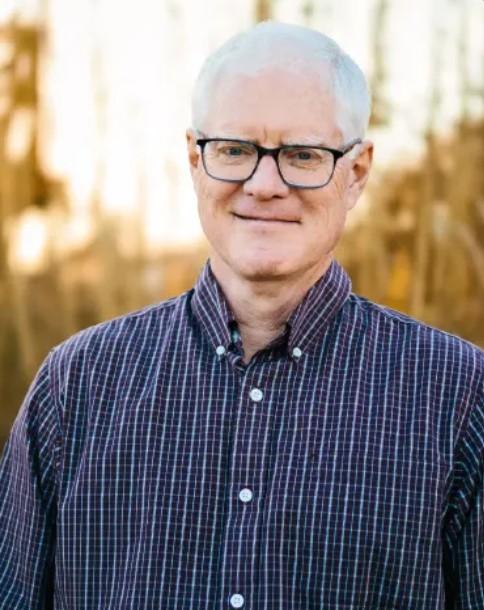
Craig Musser
CRAIG MUSSER
Musser attended Shippensburg State College in Shippensburg, Pennsylvania, to earn a bachelor of science in physics, then attended Bucknell University in Lewisburg, Pennsylvania, to earn a bachelor of science in chemical engineering. He also earned a master’s degree in business administration from Frostburg University in Frostburg, Maryland, and a master’s degree in safety from Eastern Kentucky University in Richmond, Kentucky. Musser has worked as a field manager and consultant cleaning up environmental sites that included Superfund locations. He has also held many engineering, maintenance management and safety positions at an army depot, a mining operation, a vinyl siding facility, a couple specialty chemical manufacturers and agricultural related plants.
Musser said the saying “America first” can’t just be a saying for political reasons. He said the tariffs must be drastically reduced to protect American businesses, encourage trade and reduce the cost of goods.
In addition, Musser said healthcare is another issue that needs to be addressed. He said preventative medicine is critical in controlling costs.
“It drives us to a healthier population,” Musser said. “It provides a revenue base for healthcare facilities. We already pay for this indirectly.”
Musser also said grocery costs will begin to stabilize once the economy stabilizes, and that access to groceries themselves is a more difficult issue.
“Access through transportation availability or having a grocery store in rural communities and urban areas is needed,” Musser said. “Therefore, supporting delivery services could be an answer. Changing zoning requirements for “dollar” stores to add fresh groceries could be an answer, but they need to stay viable. Tying Kansas Farm to Plate type program to help with food deserts could be an answer.”
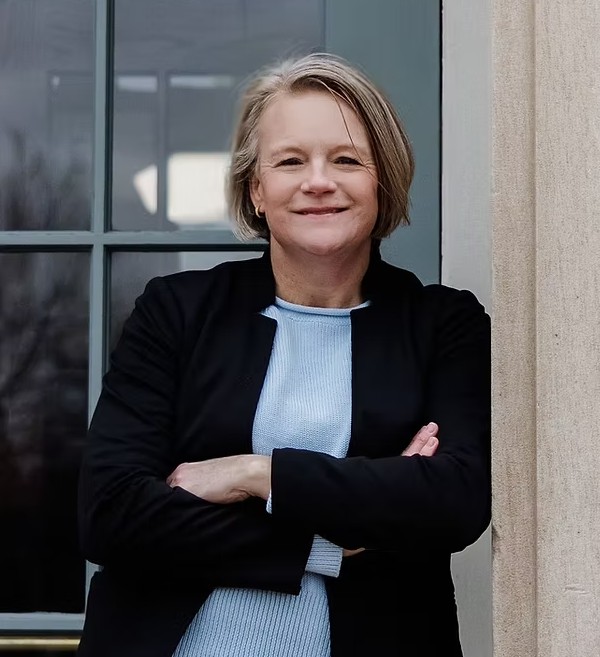
Lauren Reinhold
LAUREN REINHOLD
Reinhold attended Truman State University and the University of Kansas School of Law. For almost 30 years, she has served as a legal aid attorney, immigration attorney, disability advocate, union leader and federal government administrator. Reinhold also has 16 years of federal service with the Social Security Administration and the National Labor Relations Board, which she said has given her unique experience to advocate for people at the federal level.
To address affordability in Kansas, Reinhold said at a minimum, the state needs healthcare reform, starting with a free or low-cost public insurance option. In addition, she said the state needs to control housing costs, fairness in taxation – requiring the wealthy to pay their fair share, and an increase to the minimum wage.
“Every Kansan and every American should be able to access a job that pays all the bills (including, but not limited to, good healthcare, nutritious food, habitable housing, transportation, insurance, child care and adult education expenses) with money left over to save for emergencies, retirement, and recreation,” Reinhold said.
Reinhold said the taxation system has turned upside down since the middle of the last century.
“I support reforms, including tax cuts to 0% for Americans earning under $100,000, offset by increased rates for corporations and the highest earners,” Reinhold said. ” … We need a return to a laddered tax system comparable to what it was during the Eisenhower administration, when we had a healthy, thriving middle class that could support a family of four on a single income, and we were able to build the interstate highway system.”
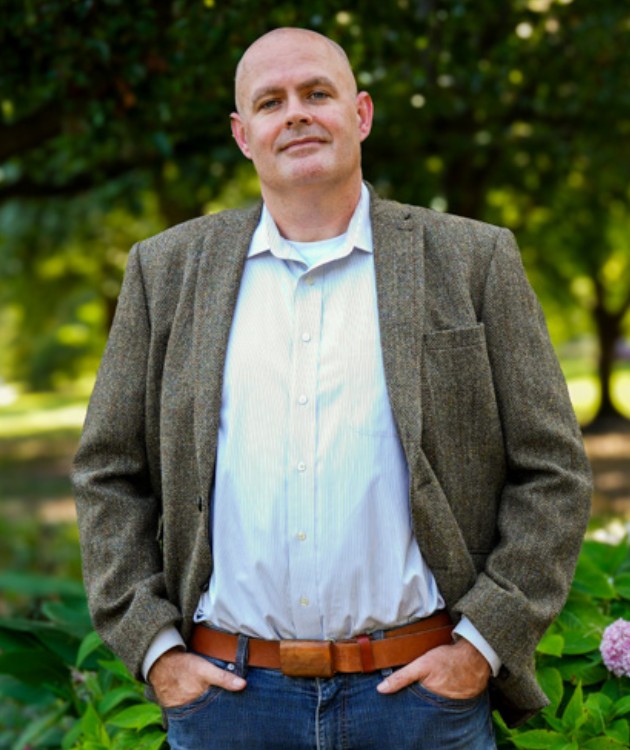
Colin McRoberts
COLIN MCROBERTS
McRoberts currently teaches business law and negotiation at the University of Kansas School of Business. McRoberts previously was a negotiation expert for hire, and he traveled the world advising businesses, nonprofits, military and diplomatic teams on negotiation strategy. He also has a law degree from Harvard and an international studies degree from another university.
McRoberts said the most effective way to control the rise in prices is to end the tariffs President Donald Trump has implemented.
“Those tariffs raise the cost of our imports, including food, and they also lead to trade wars that make it hard for farmers to make a living,” McRoberts said. “Since farming drives the Kansas economy, we all suffer when farming becomes unprofitable.”
He also said lowering healthcare costs should be a priority, and Congress should restore Affordable Care Act subsidies to control these expenses.
“That is a temporary solution, but it would stabilize healthcare costs so that Congress could begin negotiating more permanent fixes,” McRoberts said.
If elected, McRoberts said he wants to work on reversing the work by the Department of Government Efficiency and prioritize scientific and medical research funding. Without the funding, he said Kansans will be deprived of cancer treatments, drought-resistant crops and other critical advancements.
Other News

Baldwin High already has won $25K and is competing for $1M through national sports program
On sister city visit, delegates from Hiratsuka, Japan, see Lawrence’s friendship firsthand
U.S. Sen. Roger Marshall faces Democratic, Libertarian challengers in general election

Incumbent Douglas County commissioner and newcomer challenger face off for District 5 seat
Primary winner faces incumbent’s write-in campaign in Douglas County Commission District 4