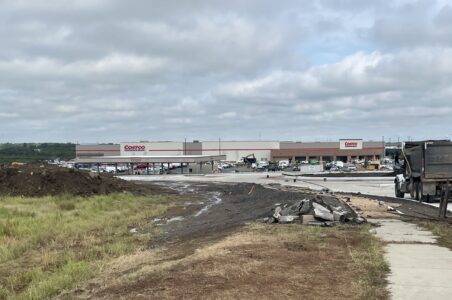
Road construction will tear out vegetation at Hidden Valley Camp, and advocates will need help to restore it
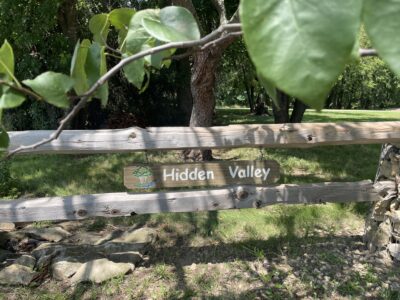
photo by: Sylas May/Journal-World
The sign at the entrance to the Hidden Valley Camp is pictured on Thursday, July 16, 2026.
Construction work along Bob Billings Parkway is about to tear out what makes Hidden Valley Camp so hidden – more than a thousand feet of mature trees and other vegetation on its south side.
The reconstruction of Bob Billings and the installation of a new bicycle and pedestrian path alongside it will require the majority of the vegetation along the secluded camp’s 2,000-foot southern property line to be removed, Gwen Macpherson, chair of the Friends of Hidden Valley, told the Journal-World on Thursday. And the camp’s supporters will need help raising money and raising trees to restore it next year.
“Our goal is to help Girl Scouts and other children gain courage in the face of unknowns and challenges,” Macpherson said. “And that’s hard to do when people are staring at you from the sidewalk.”
While the construction hasn’t started on Bob Billings’ westbound lanes, Macpherson said it’s “due to start any minute now.” When it does, she said, it will require crews to take out the camp’s fence and bulldoze anywhere from 5 to 40 feet inside of the property line.
“That’s going to take out a lot of our visual barriers, the vegetation, which also serves as noise barriers,” Macpherson said. “They’re basically going to work on about 85% of our approximately 2,000-foot-long property line on the southern side.”
The vegetation gives the camp and the scouts who use it a sense of privacy, she said. “We have lots of activities going on there, children’s activities – we have an archery range and zip lines and camping places and things like that – so we need to build that vegetation back up for privacy and for security.”
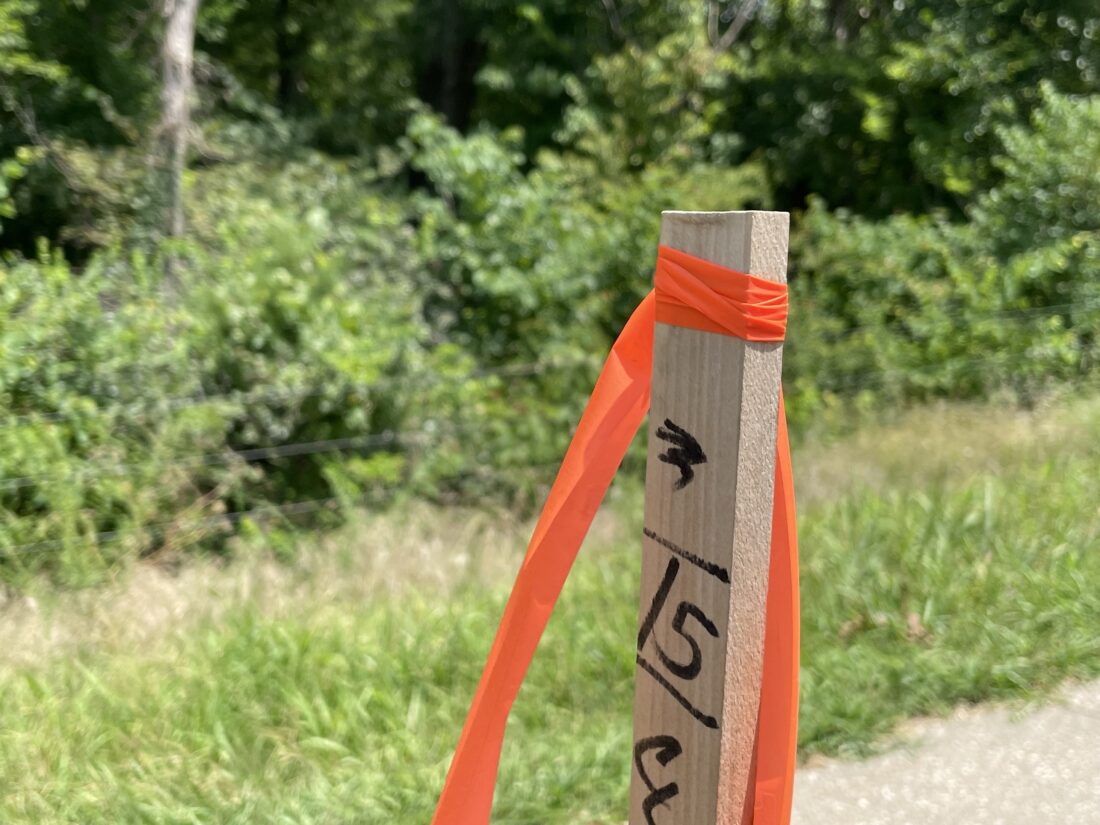
photo by: Sylas May/Journal-World
A marker for the construction work on Bob Billings Parkway is seen on Thursday, July 16, 2026, with the edge of the Hidden Valley Camp in the background.
That’s why Macpherson and the Friends of Hidden Valley are already looking for volunteers to help them replant after the construction is done. Right now, they’re specifically looking for donations and for gardeners who are willing to save and raise tree and shrub seedlings for planting next year.
“If anybody is good with plants and would like to do that, we’d love to let them do that,” Macpherson said.
If volunteers raise their own seedlings, that will mean less money the camp has to spend on new trees. Macpherson said the camp estimated that it would cost $80,000 to get the trees and the supplies needed to protect and irrigate them. And, while the camp did negotiate with the City of Lawrence for some compensation, she said it wouldn’t be enough to cover all of that cost.
The idea to save seedlings came while working in her own yard, she said: “I have a redbud in my yard that I get redbud seedlings (from) all the time. And instead of yanking them out of the ground, I could probably gently dig them out of the ground and try to save them.” She asked the camp’s consultant, Courtney Masterson of Native Lands Restoration Collaborative, if that would work, and Masterson said it would, with about a 50% success rate for those trees and plants.
“So it’s definitely worth doing, and that could save us quite a bit of money, because otherwise we have to buy those trees,” Macpherson said.
They can’t be just any trees, though. Since its founding in the 1950s, the Hidden Valley Camp’s bylaws have specified that only native species can be planted on the site. “It was remarkable that in 1956, the four women who started the camp had that kind of foresight,” Macpherson said.
So, the camp has put together a list of trees and shrubs “that are acceptable, that are right for this part of the country, this climate” that volunteers could raise.
The camp will still need to raise money; it’s already gotten a donation for the replanting project, Macpherson said, and it will be selling bricks with donors’ names on them that will go in the patio behind the camp’s cabin.
Rebuilding the wall of vegetation will also take a lot of volunteers for planting and watering, and a lot of time.
“We’ll need help for months if not years afterward to get this going,” Macpherson said.
Though there’s a lot of work ahead, she’s optimistic. “We’re surrounded by good neighbors, and that’s helpful, and we’re just thankful for that,” she said.
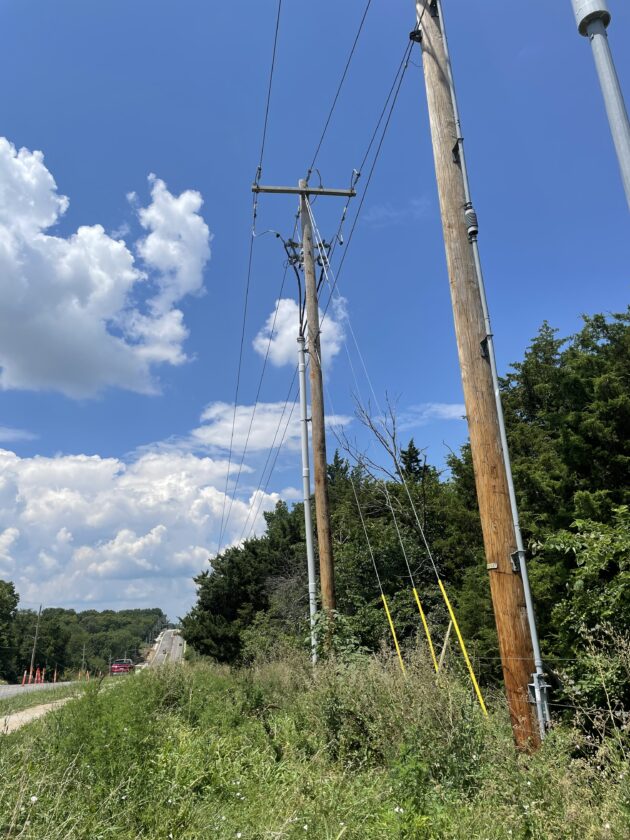
photo by: Sylas May/Journal-World
Power poles run along the outside of the Hidden Valley Camp on Bob Billings Parkway on Thursday, July 16, 2026.
She’s also encouraged by the camp’s history.
“This is not the first time our southern boundary has been devastated,” Macpherson said. Twenty or 25 years ago, she said, electric utility Westar, now Evergy, had to bulldoze that same stretch of vegetation to put in new power lines. The camp replanted then, and it’s those trees and plants that will be taken out this time.
“This is our second time around,” Macpherson said.
Even if everything goes according to plan, not having the vegetation on the southern border will be difficult to adjust to. Macpherson remembers something fellow board member Cindy Riling told her: “Imagine if one whole side of your house was removed.”
“That’s kind of how we’re feeling right now,” Macpherson said. “That’s how the camp is going to feel. It’s going to feel like one whole side is gone. And that’s a little unsettling.”
Still, she said, “we’ll get through this.”
“I’m sure we will. We got through it last time when Westar did their thing, and we’ll get through it again.”
If you want to help the Hidden Valley Camp with its restoration project, you can find out how to donate, volunteer or join the Friends of Hidden Valley at friendshv.org. Macpherson encouraged those with questions to reach out on Facebook, as well.
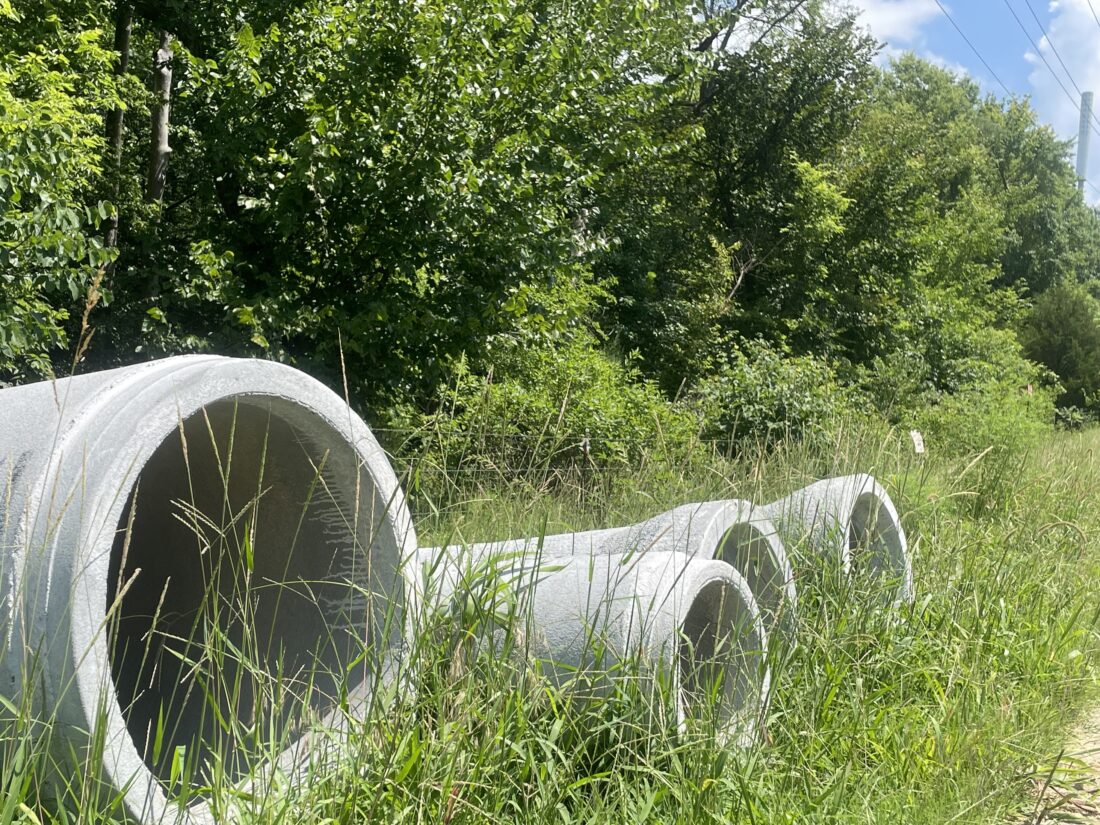
photo by: Sylas May/Journal-World
Concrete pipes sit outside of the Hidden Valley Camp on Bob Billings Parkway on Thursday, July 16, 2026.
Which plants are OK?
Here’s the list of native plants that Macpherson provided. The list shows the height the plants can eventually reach and whether they are slow, medium or fast to grow.
Understory trees and bushes for a visual barrier along the fence:
New Jersey Tea (slow, 1 to 3 feet)
Golden Current (medium, 3 to 5 feet)
Fragrant Sumac (medium, 3 to 8 feet)
False Indigo (medium, 4 to 6 feet)
Elderberry (fast, 5 to 7 feet)
American Plum (medium, 6 to 10 feet)
Sandhill Plum (medium, 6 to 10 feet)
Hazelnut (fast, 6 to 12 feet)
Redtwig dogwood (fast, 6 to 12 feet)
Buttonbush (medium, 6 to 15 feet)
Chokecherry (fast, 6 to 18 feet)
Rusty Blackhaw (fast, 10 to 20 feet)
Serviceberry (medium, 15 to 25 feet)
Larger trees (the camp needs fewer of these):
Chinkapin Oak (medium, 30 to 60 feet)
Bur Oak (medium, 50 to 80 feet)
Northern Red Oak (medium, 50 to 75 feet)
Pin Oak (fast, 60 to 70 feet)
Shumard Oak (medium, 60 to 80 feet)
Shellbark Hickory (slow, 60 to 100 feet)
Shagbark Hickory (medium, 65 to 90 feet)
Other plant species:
Redbud (medium, 10 to 20 feet)
Pawpaw (medium, 15 to 30 feet)
Black Willow (fast, 30 to 40 feet)
Black Cherry (fast, 50 to 80 feet)
Hackberry (fast, 60 to 80 feet)
Silver Maple (fast, 70 to 80 feet)
Cottonwood (fast, 70 to 100 feet)
Sycamore (fast, 75 to 100 feet)
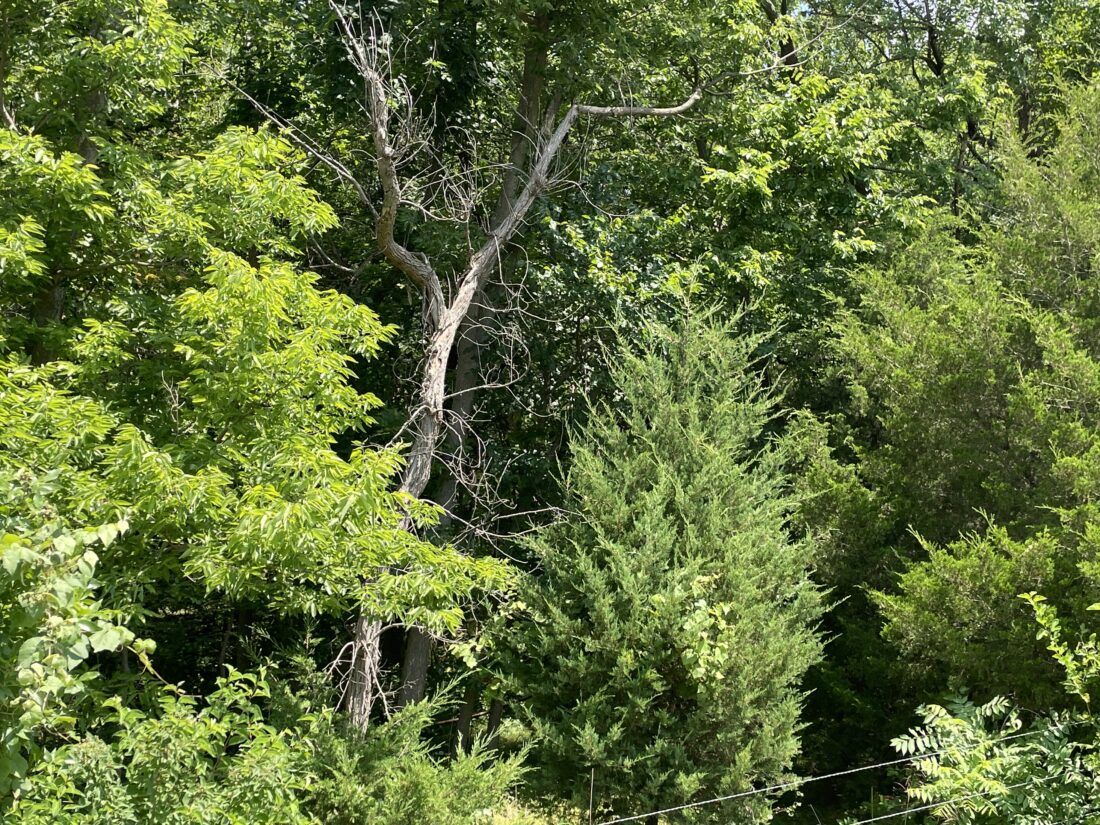
photo by: Sylas May/Journal-World
Dense vegetation is seen from Bob Billings Parkway at the edge of the Hidden Valley Camp on Thursday, July 16, 2026.
Other News
RJ Mitte, ‘Breaking Bad’ actor and disability rights champion, dies at 34
Clinton State Park and other state parks will increase overnight camping, vehicle permit fees starting next month
‘No day is like the other here’: Students from Lawrence’s German sister city discover football, new foods and new friends on exchange
GCSAA celebrates 100 years with new plaza and statue honoring its founder and first president

Go, See, Do: Library book sale, candidate forum and more