Kansas advocates reflect on food assistance, healthcare cuts a year after ‘One Big Beautiful Bill’ passed

photo by: Alex Brandon/Pool/Getty Images
President Donald Trump holds up the "One Big Beautiful Bill Act," which was signed into law in July 2025.
Before HR1, also known as the “One Big Beautiful Bill” was passed in July 2025, Douglas County advocates warned cuts could have harmful effects to healthcare costs and assistance programs for Kansans.
A year later, advocacy organizations reflected on the impacts in a press conference Tuesday morning. All the advocates said some of their worst fears have become a reality, impacting thousands of Kansans and creating wider issues beyond just changes to nutritional assistance or health insurance.
“This bill expands expensive tax cuts while hurting vulnerable families and pushes more responsibilities onto the states,” Megan Leopold, a senior policy adviser for Kansas Action for Children, said.
The legislation package included a combination of tax cuts and significant changes to social safety net programs, like adding stricter work requirements for Medicaid and restricting eligibility for certain government programs like the Supplemental Nutrition Assistance Program, or SNAP.
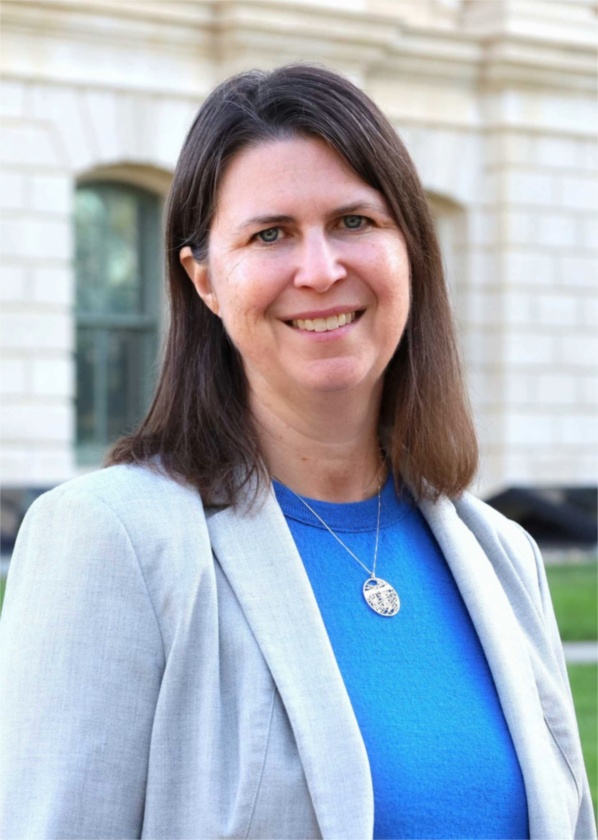
photo by: Contributed
Megan Leopold, a senior policy advisory for Kansas Action for Children.
Before the bill was signed into law, politicians had promised that healthcare costs would become more affordable, Medicaid would be protected and the changes would create stronger communities, according to Lacey Kennett, the director of communications for the Alliance for a Healthy Kansas.
Kennett said those promises were “broken,” with healthcare costs rising after tax cuts for the Affordable Care Act were not extended. Kennett said that led to ACA Marketplace enrollment in Kansas dropping by 20% — around 36,000 people. People who were able to keep their coverage wound up enrolling in insurance plans that have higher out-of-pocket costs, according to Kennett.
Meanwhile, around 23,000 Kansans lost Medicaid coverage as a result of the federal changes. Kennett said the state already had some of the “strictest requirements” to qualify for Medicaid — made especially harder because Kansas is one of 10 states that opted to not expand access to Medicaid after the passage of the Affordable Care Act — but the problem has gotten worse. State legislators passed SB2371 this year, which Kennett said “codified” parts of HR1 into state law that creates more barriers for people to access care even if they are qualified for it.
“We’re seeing policies that make it harder to get and keep (Medicaid) coverage,” Kennett said.
The other concern for advocates has been the cuts to SNAP. The “Big Beautiful Bill” cut federal spending to SNAP by $295 billion over the next five years, according to the Congressional Budget Office. As the Journal-World reported, nearly 22,000 Kansans have lost access to the program, with just over 600 people losing access to the benefits in Douglas County alone.

photo by: Contributed
Elizabeth Keever
Elizabeth Keever, the chief resource officer for Harvesters Community Food Network, said that hunger was at “the highest it has been in two decades” before those cuts to SNAP, and the rising costs to everything have led to more families visiting its partner food banks.
Harvesters, which transports food to partner agencies across a 27-county service area in northeast Kansas and northwest Missouri, has a team and volunteers that are “incredibly dedicated” and has received immense support from the community, but Keever said it can’t be a “substitute for our nation’s nutrition security network.”
Already, Keever said 59% of the around 347,000 people who have been served across its network were “above the qualifying threshold” for SNAP. Cutting food assistance benefits further creates more demand — even at a time when Harvesters is already facing increased transport and food costs.
“We simply cannot fill the gap,” Keever said. “The cards are stacked against us.”
The cuts for these programs ripple out past what HR1 specifically cut. Haley Kottler, the senior director for Kansas Appleseed, said children whose families already qualified for an assistance program like SNAP or Medicaid were able to automatically qualify for free or reduced school lunches thanks to a process called direct certification, meaning no additional application as a barrier for families. With cuts to SNAP and Medicaid, families lose the automatic connection for free school meals, so children are more likely to “slip through the cracks” when they could qualify, Kottler said.

photo by: Contributed
Haley Kottler, the senior director for Kansas Appleseed.
Some schools in Kansas provide free meals to every student thanks to a federal program called the Community Eligibility Provision, which does not require each household to fill out an application for the free meals. Kottler said this program depends on direct certification because the program is more “financially viable” if more students are automatically a part of the free meal program. It could lead to more schools not being able to “make the math work” for this program, which Kottler said will impact children’s behavior and ability to learn.
“Federal decisions around SNAP never stop with SNAP,” Kottler said. “We could see schools leave the CEP — not because the need has disappeared, but because the (finances) no longer work.”
These changes also add more of a burden to state lawmakers when they need to close a gap on the state budget, according to Leopold. The state used over $400 million from its general fund balance to cover a budget gap, but HR1 creates even more pressure to balance the budget.
According to Leopold, the cost shifts from the federal to state level means that Kansas lawmakers will have to account for millions of dollars more in the budget to keep programs like SNAP or Medicaid. In FY2028, it is estimated the burden for Kansas in the SNAP program will be around $55 million. The $4 trillion bill over 10 years from HR1 is not just a federal budget issue, but a Kansas budget issue, Leopold said.
Although the press conference highlighted the consequences for struggling Kansan families, Keever said the advocates are committed to serving them. She also said the anniversary of HR1’s passage is “an important reminder that decisions made in Washington directly impact our neighbors and local economy.”
Other News

PHOTOS: 19th annual Lawrence Zombie Walk

Housing Stabilization Collaborative’s new system directs rental and utility aid to more vulnerable households, review finds

Go, See, Do: Maple Leaf Festival, concerts and a haunting tour
Douglas County commissioners discuss tracking results of awarded funding to community partners

Baldwin High already has won $25K and is competing for $1M through national sports program