A year after federal firings, Haskell students say ‘roller coaster’ brought community together
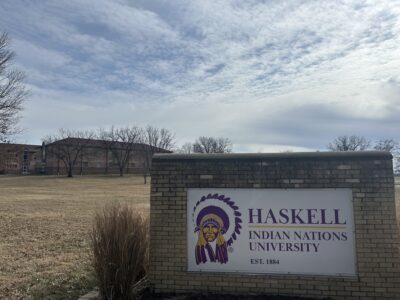
photo by: Bremen Keasey/Journal-World
The campus of Haskell Indian Nations University seen on Feb. 13, 2026.
When De’Ara Dosela first heard the rumors that many instructors and staff at Haskell Indian Nations University would be fired, she said it felt like something illegal was going on.
On Valentine’s Day in 2025, nearly 40 probationary employees out of about 160 total employees at Haskell were fired based on an order from the Trump administration. With confusion swirling around campus over the sudden firing of so many employees seemingly without “precaution for their lives,” Dosela was worried for the many people suddenly let go.
“I was saddened by it,” Dosela said. “It just happened like nothing. (It was) out of nowhere.”
Dosela was one of the people in the Haskell community who began to work to rally and fight for the laid off employees. Eventually, much of the fired staff returned to campus and their jobs, but the turbulent few weeks caused uncertainty for students and the community.
Dosela was one of many Haskell students who spoke with the Journal-World about how the firings impacted their educations.
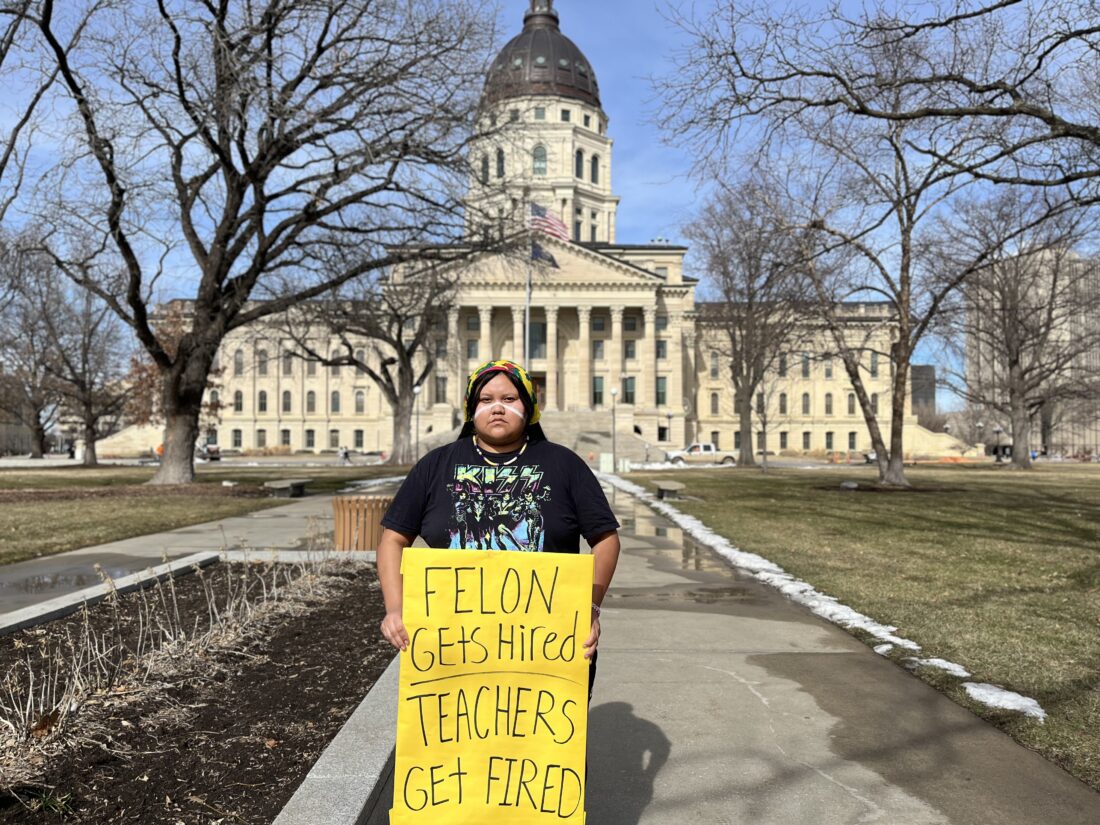
photo by: Contributed/De’Ara Dosela
De’Ara Dosela, a senior at Haskell Indian Nations University, at the Kansas State Capitol in Topeka during protests in 2025. Dosela said she learned a lot in the past year in organizing for her community after Haskell employees were shockingly fired a year ago due to a federal order.
A “ROLLER COASTER” IN CLASSES
Neena Lasley was taking a nutrition class during the spring 2025 semester when one day, she found out her instructor was fired.
As the Journal-World reported, the nearly 40 employees who were let go included a range of personnel, like program specialists, janitors, IT specialists, coaches and at least seven instructors. At least 34 courses were left without an instructor due to the firings.
For two weeks, Lasley said she and her classmates were taught by another instructor in place of her old teacher. Then another instructor came to teach her class, with Lasley saying they were going “back and forth.”
“It was very confusing,” Lasley said, describing that period as a “roller coaster” of emotions.
Isaiah Runningrabbit, a sophomore at Haskell who runs track, said the English teacher for one of his classes was let go in the firings, but more importantly for Runningrabbit, so was his coach, Clay Mayes.
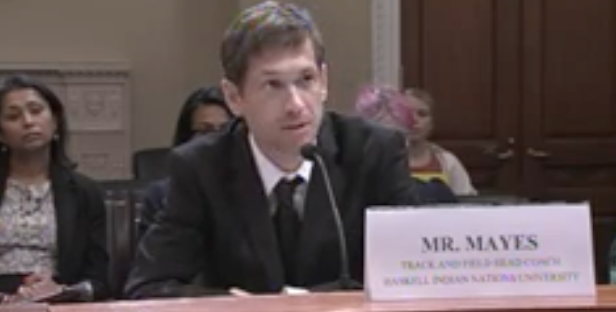
photo by: YouTube Screenshot
Haskell Indian Nations University cross country coach Clay Mayes addresses a bipartisan congressional panel Tuesday, July 23, 2024, in Washington, D.C.
Mayes and women’s basketball coach Adam Strom were two of the well-known figures on campus who were let go, with Strom’s dismissal and vow to keep coaching the team leading to attention from national media like the New York Times.
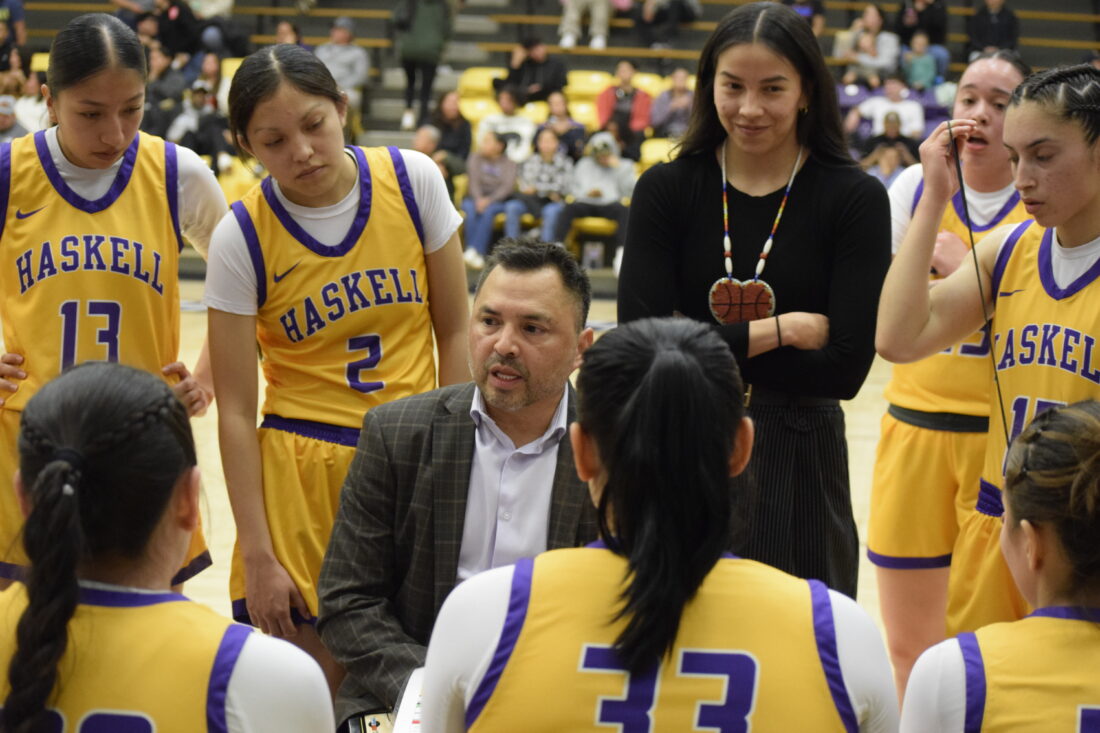
photo by: Cynthia Hernandez/Journal-World
Coach Adam Strom talks to his team after the first quarter against Washington Adventist on Saturday during the Continental Athletic Conference semifinal Saturday, March 1, 2025, at Coffin Sports Complex in Lawrence, Kansas.
For athletes like Runningrabbit, those departures were hard to take, but he also said it left him and his teammates wondering about if they could still compete.
“We didn’t know if we were going to have a season,” Runningrabbit said.
The news of the layoffs was also impacting potential students. Jai’enna Big Eagle said as a high school senior applying to colleges, she was worried about what the sudden firings would mean for her education.
“I didn’t want to come to (Haskell) if the firings would be a problem,” Big Eagle said.
Dosela said while none of her teachers were impacted by the firings, she said one employee who had been like an aunt to her was let go. Meanwhile, friends of hers who were seniors were worried about how the sudden changes could affect their graduate school opportunities or impact their scholarships. The ripple effects of the firings felt like a “slap in the face” to everyone on campus, Dosela said.
“Every job is so important… (but) it seemed like they were treated as if they were disposable,” Dosela said.
TURNING TO ACTION
After the shocking firings, many people in the Haskell community — and in Lawrence — began to come together to figure out how they could help people impacted.
Hundreds in Lawrence gathered for community meetings, and students began to gather together to lead protests to make sure their voices were heard, Dosela said.
Dosela said she got involved in helping lead protests, including at the State Capitol in Topeka and the “Hands off Haskell” protests in Lawrence. Dosela said that during the protests, one big thing she noticed was that differences between students quickly went away to make sure they “gave a voice to people (who couldn’t) speak up for themselves.”
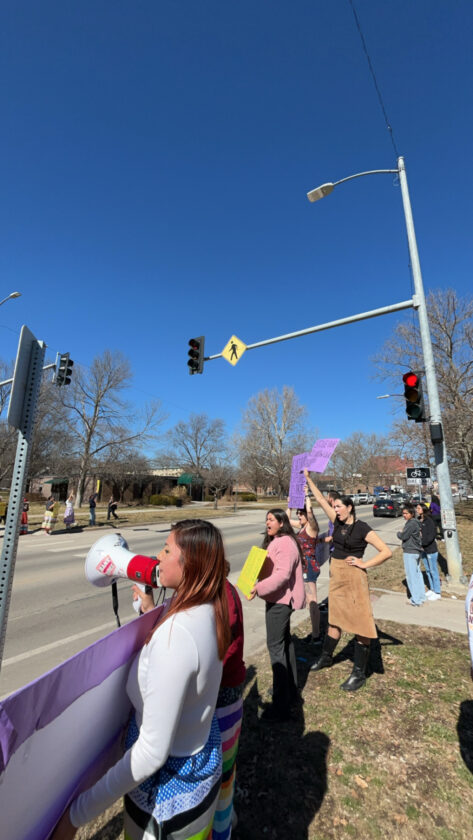
photo by: Contributed/De’Ara Dosela
Haskell Indian Nations University students protesting against the firing of university employees along Massachusetts Street in Lawrence during February 2025. A year since the firings, Haskell students say although it was a hard lesson, they feel the campus has come together.
“We can all be different…but the minute something doesn’t seem right and affects the people we care about, we all have the same goal to stick up for them,” Dosela said.
Dosela, who grew up in the small town Whiteriver, Arizona, on the Fort Apache Indian Reservation, said that protesting at places like the State Capitol or along Mass Street was new to her, and it was a different experience to be someone “that speaks up when others are too shy to.” But while she noted sometimes there were some people who gave “dirty looks” during protests, it was amazing to see the support from much of the community.
One student worker who wished to not give her name said that during the period right after the firings, she noticed there was a lot more support from outside the Haskell community, many who “didn’t show up before.” She said “it was sad” it took something like the drastic firings to get more support for the school, but it was a welcome change.
Dosela said the need to protest highlighted a “hard lesson” of what it is like to be a Native student. She said that based on the long history of marginalization of Native people, it is “inevitable” that they’ll have to fight for something. But another lesson she learned was about the power of community. Dosela said many important movements for Native peoples started with the community coming together to take a stand, and the time protesting made her realize that strength.
“When the community comes together, it’s really really something,” Dosela said. “You’re really not alone.”
CAMPUS CONNECTION
In March 2025, some employees who were fired began to be reinstated. Later that month, a U.S. District Judge ruled that multiple federal departments had to hire back all the employees that were let go.
Lasley said the instructor for her nutrition class was brought back around that time, and Runningrabbit said Coach Mayes also returned to coach as well.
Dosela said that this kind of time period in the spring semester — between protests and temporary re-hires of staff — was marked by feelings of uncertainty by most students, especially those who were very involved in protests.
“It was just exhausting,” Dosela said. “We didn’t know what was going to happen next.”
But in those weeks where many of the students felt the pressure and uncertainty, the chaos might have brought the campus community closer together.
Dosela said one of the big moments for her in that spring semester was a student organized fashion show led by the Haskell Runway Club. Dosela ended up walking in that show, wearing the designs of two fellow students, but she said students were “genuinely freaked out” over whether it would happen. When it finally did, and the community came out in force to attend, Dosela said it was a “breath of fresh air” for a campus that was waiting to exhale.
“It was just really beautiful and happy,” Dosela said. “Everyone was happy, it just seemed like something we really needed after the semester.”
Another student who wished to not be identified said she felt the collective protests brought a wider sense of community for the students. After they overcame that turmoil, she said it is like the students “appreciate all the events more.”
Big Eagle, now a freshman at Haskell, said that she ended up choosing to go to the school even after the initial concerns. So far in her first year on campus, she has enjoyed her college experience.
Some of that might be down to how the community has showed up for each other. Lasley said that in the past year, there’s been a lot more support on campus and “people willing to help.”
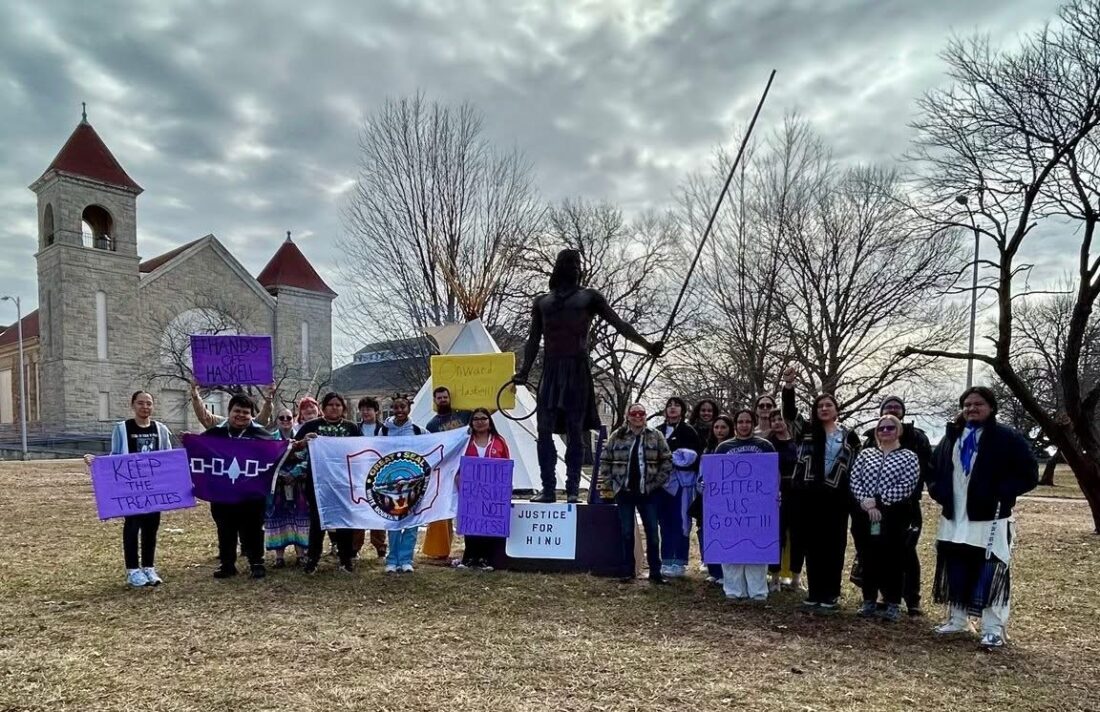
photo by: Contributed/De’Ara Dosela
Haskell Indian Nations University students posing on campus with signs ahead of a protest against the firing of dozens of campus employees in February 2025.
Dosela has felt that kind of support too. As she came back on campus for the fall semester, knowing that employees were hired back and seeing student life be more lively, she was happy to see those improvements. It meant that all the work and “yelling and screaming” and talking with news outlets was for a good cause.
“It was worth it,” Dosela said. “It was worth it to put up the fight to have our voices heard.”
While the past year at Haskell saw student activism and support bring back the fired employees, Dosela said it doesn’t mean it is not hard. She said that it can be draining work to be on the front lines of voicing concerns, and those fights are still coming for Native people. Even after the Haskell workers were hired back, proposed federal budgets would have slashed funding for Haskell by 90%. Dosela also noted that Haskell students have been supporting other efforts and protests, including being a part of No Kings Day rallies and supporting students at “ICE Out” protests in Lawrence.
While the turmoil of the past year provided both good lessons and hard lessons for Haskell students, Dosela said she hopes those lessons learned can teach other students about the importance of fighting for the community.
“One thing about (the last year), I finally understood what it was to really stand for something,” Dosela said.
Other News
A year after federal firings, Haskell students say ‘roller coaster’ brought community together

Lawrence startups win grants to help get their health and tech innovations to market
Southwest Middle School student Maci Perrins wins fourth consecutive Douglas County Spelling Bee championship
‘This is our family’: At Night to Shine, people with special needs are honored for who they are

City of Lawrence and Lawrence Arts Center invite public to community fair and documentary screening