

Midco plans to convert vacant lot in downtown Lawrence to prairie ‘oasis’ with help from Native Lands Restoration Collective, other local partners
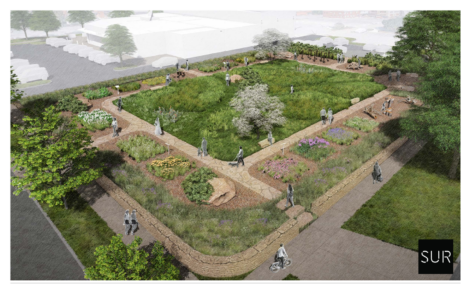
photo by: Contributed
A design rendering of a park planned for downtown Lawrence near Seventh and New Hampshire Streets. Courtney Masterson, the executive director for Native Lands Restoration Collaborative, has worked with Midco and several other partners to help the park come to development, and she hopes it can become an "oasis" for wildlife and people alike.
As the old Joni Mitchell song goes, “they paved paradise, and put up a parking lot.” But one project in downtown Lawrence aims to do the reverse and create an urban oasis with native plants.
Pat McAdaragh, the chair and CEO of Midco, told the Journal-World via email that after the remodeling of the company’s store in downtown Lawrence on 644 New Hampshire St., the company saw an opportunity to turn a vacant lot into “something meaningful” for Lawrence that reflected the city and company’s values.
Now, the lot next to its office will be transformed into “Midco Prairie,” with the help of the Lawrence-based Native Lands Restoration Collaborative. Work started on the site at the start of April, and it will become a public park featuring native plants that should open later in the fall, according to Courtney Masterson, an ecologist and executive director for Native Lands Restoration Collaborative.
Masterson told the Journal-World that Midco reached out to her organization last fall to express interest in doing something related to native planting in the area, but they did not have a “strong vision” at that stage. As the groups had further conversations, Masterson said Midco was supportive of many ideas, including creating a community meeting space and educational aspects. That seedling of an idea soon sprouted into a community-rooted park.
“It just started to grow and become more interactive and engaging for the community” Masterson said.
Masterson said the final vision of the park will feature zones of native plants that reflect the environment of Douglas County so visitors can “engage with the three main ecosystems in (the) area:” native prairie grassland, woodlands and wetlands.
Ninety percent of the land of the county was native prairie grassland, and Masterson said that the majority of the park will be seeded with native prairie plants to illustrate that history. Other pockets of the park preserve some of the native trees on the site — including a tall pin oak tree and a walnut tree — and those areas will feature “woody, edible plants” to connect the native woodlands. The park will also feature rain gardens seeded with wetland plants where rainwater can be “captured and filtered,” according to Masterson.
Having this native landscape in an urban environment will bring “nature to people,” Masterson said. Much of the native prairies that used to dominate Kansas are now located in rural areas, hours away from Lawrence residents. If people don’t have a car to get to those spaces or don’t have time, this new park can help people learn about these landscapes so they care about preserving them.
“This is going to give us an opportunity to let everybody connect with prairies,” Masterson said.

photo by: Shawn Valverde
Courtney Masterson, a KU lecturer in environmental studies and the executive director of Native Lands Restoration Collaboration, speaks to a group of students at Potter Lake on the University of Kansas Campus on Friday, May 30, 2025.
Masterson said that once the idea came into view, she and Midco started to put together a team of different local contractors and artisans to help make the vision possible. Some of the partners involved with the project include Lawrence Arborists, SpyderArt Constructors and Sur Landscape Architecture, who helped design the park.
María Landoni, the owner and founder of Sur Landscape Architecture, told the Journal-World via email that from the first conversation with Masterson about the park, her firm was “excited about the opportunity” to design the park.
Landoni said her firm has worked with native plant landscaping specifically because it feels like “restoring the health of the environment restores our own health. She said creating these native landscapes that connect the area to natural systems that improve the surroundings helps ensure that people can find harmony in their surroundings by accepting and celebrating nature in its true native character.
The environmental benefits are positive for every being. Landoni envisions the native plants attracting birds, butterflies and pollinators, with humans being able to view the natural landscapes “in the right context.” Masterson also said that the park enhances environmental durability, with the deep root systems of the plants creating better drought tolerance and the established plants serving as a carbon sink by catching pollutants” that come off the parking lot.
The positives will be even more acutely seen on muggy summer days. Masterson said the concrete and asphalt of city areas create warmer temperatures because they don’t absorb the heat in the same way that plants do. The effect, known as an urban heat island, can cause conditions to be “really extreme.” Removing a parking lot and “creating an oasis” will make a great space where people can cool down.
“It will be a great place for people to relax,” Masterson said.
Not only will it be a place to relax, but it is intended to educate the public as well. Masterson said there will be signage around that connects people to the landscapes and tells stories about other elements, like the importance of native rocks. Pathways in the park will be made of “native flagstone,” and Masterson said many of the remnant prairies left in the state are there because of rock, so there will be native stone “everywhere.
Landoni said she is specifically excited about the “anchor rocks” at the park, which will be oversized stones placed at the park’s corners. She said they will evoke the tradition of “prairie keepers” that guard the landscape in local tradition, and Landoni hopes these landscapes and the educational elements can inspire the people who visit to make similar efforts in their own gardens or be greater advocates for the prairie.
“We need rock-solid communities to keep protecting the prairie — a treasure of biodiversity and carbon storage that belongs to all of us,” Landoni said.
As the development of the area is underway — Masterson said that some of the workers were out removing non-native trees and the asphalt on the site — McAdaragh said Midco is “fully funding” the transformation efforts including the design, development and long‑term investment. McAdaragh said working with Native Lands and the other partners has been “energizing,” and Midco is striving to create a prairie space that is “ecologically sound and accessible to the public.”
Masterson said that the plan is to hold a ribbon-cutting ceremony to open the plaza to the public in October this year, and she hopes it can be a model in the story of conservation. The U.S. Fish and Wildlife Service estimates about 80% of the original grassland ecosystems in the country are gone, including 99% of tallgrass prairies. Masterson said she hopes people can see through this restoration project that there is a “commitment to reestablishing these landscapes after they have been lost.” She hopes people can see that even after ripping up some natural paradise, it is possible to try and bring back what was there — from the birds and the bees to people who want to enjoy the Kansas landscape.
“We hope to inject as much biodiversity as possible to invite the animals and people to really connect with what has always been here,” Masterson said.
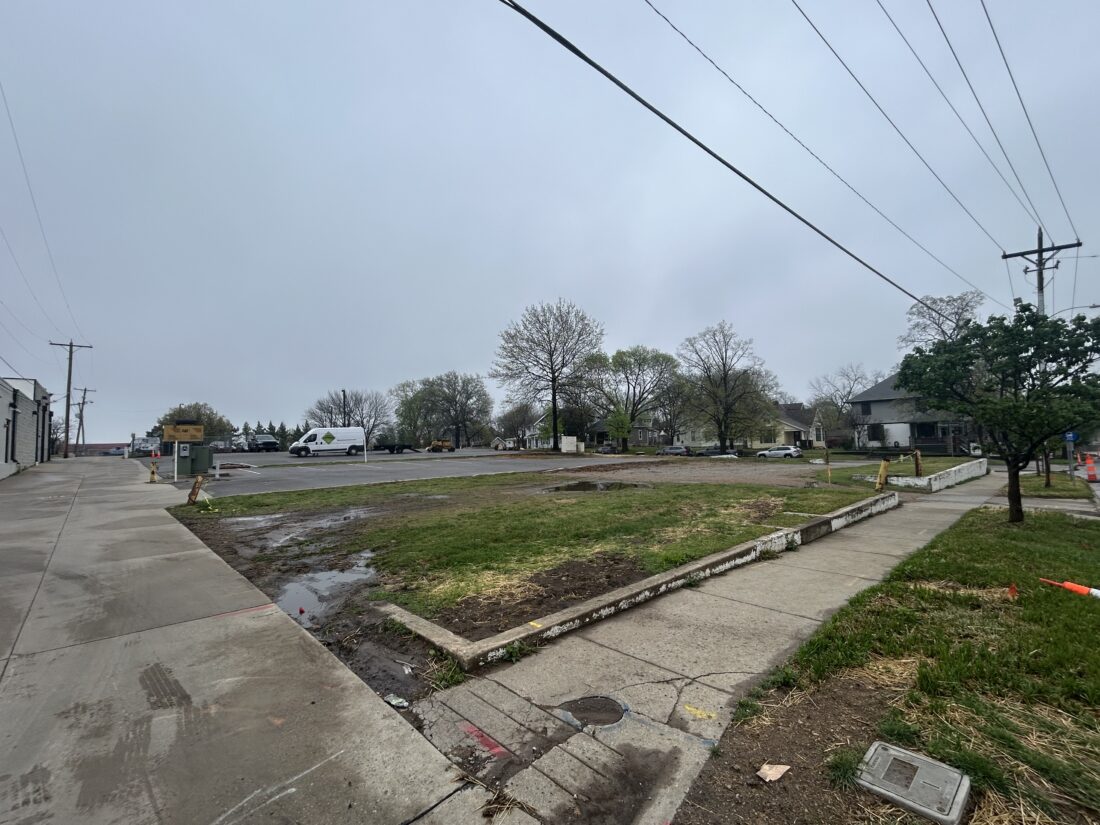
photo by: Bremen Keasey/Journal-World
A parking lot in downtown Lawrence next to the Midco offices at 644 New Hampshire St. Pat McAdaragh, the chair and CEO of Midco, told the Journal-World they saw an opportunity to convert the space into something positive, and with the help of local partners like Native Lands Restoration Collaborative, the lot will be converted into a park that features native plants.
Other News
Midco plans to convert vacant lot in downtown Lawrence to prairie ‘oasis’ with help from Native Lands Restoration Collective, other local partners

Lawrence Jewish Community Congregation to host Yiddish Poetry Night featuring readings from local poets

School board to consider a step toward boiler replacement at Lawrence High School
Friends, family and legal community pack historic courthouse to bid Judge Sally Pokorny farewell
Lecompton Historical Society to host panel discussion about legacy of African-American cemetery in rural Douglas County