Pawpaw season in Lawrence is wild, elusive and tasty, local enthusiast says
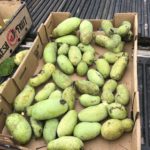
photo by: Dylan Lysen
A flat of pawpaws sits in the back of Ross Jones' truck. The oblong fruit is native to Kansas, but is only available for a brief time in the fall.
While eating dinner and sharing conversation with neighbors in late September last year, the topic of a native Kansas fruit came up, said Ross Jones, a hobby farmer in rural Douglas County.
“Everybody was talking about pawpaws, so I ran down here with a laundry basket and pretty much filled it up,” Jones said of the fruit naturally growing on his land. “Several people said, ‘OK, you won, you have more pawpaws than I’ve ever seen in one place at one time.'”
The revelation led to Jones trying to sell the unusual fruit to the local public for about a dollar apiece or about $3 a pound.
But, one may be wondering, what is a pawpaw?
Pawpaw is a wild fruit native to North America, specifically an area spanning from the eastern seaboard of Virginia and the Carolinas over Appalachia all the way to northeast Kansas. Jones said pawpaw trees need a lot of shade in their infancy; all of his wild pawpaw trees have grown under the canopy of his walnut trees.
The oblong pawpaw fruits eventually fall off the spindly trees they grow on. They look and feel sort of like a pear. When they begin to ripen a few days after falling, they become soft and have a banana-like taste.
Jones, a former welder who now raises bees and chickens on his land, said he first learned of pawpaws when he was a child hunting with his father. He noticed the trees were growing in the wooded areas behind the house he’s lived in for about 30 years.
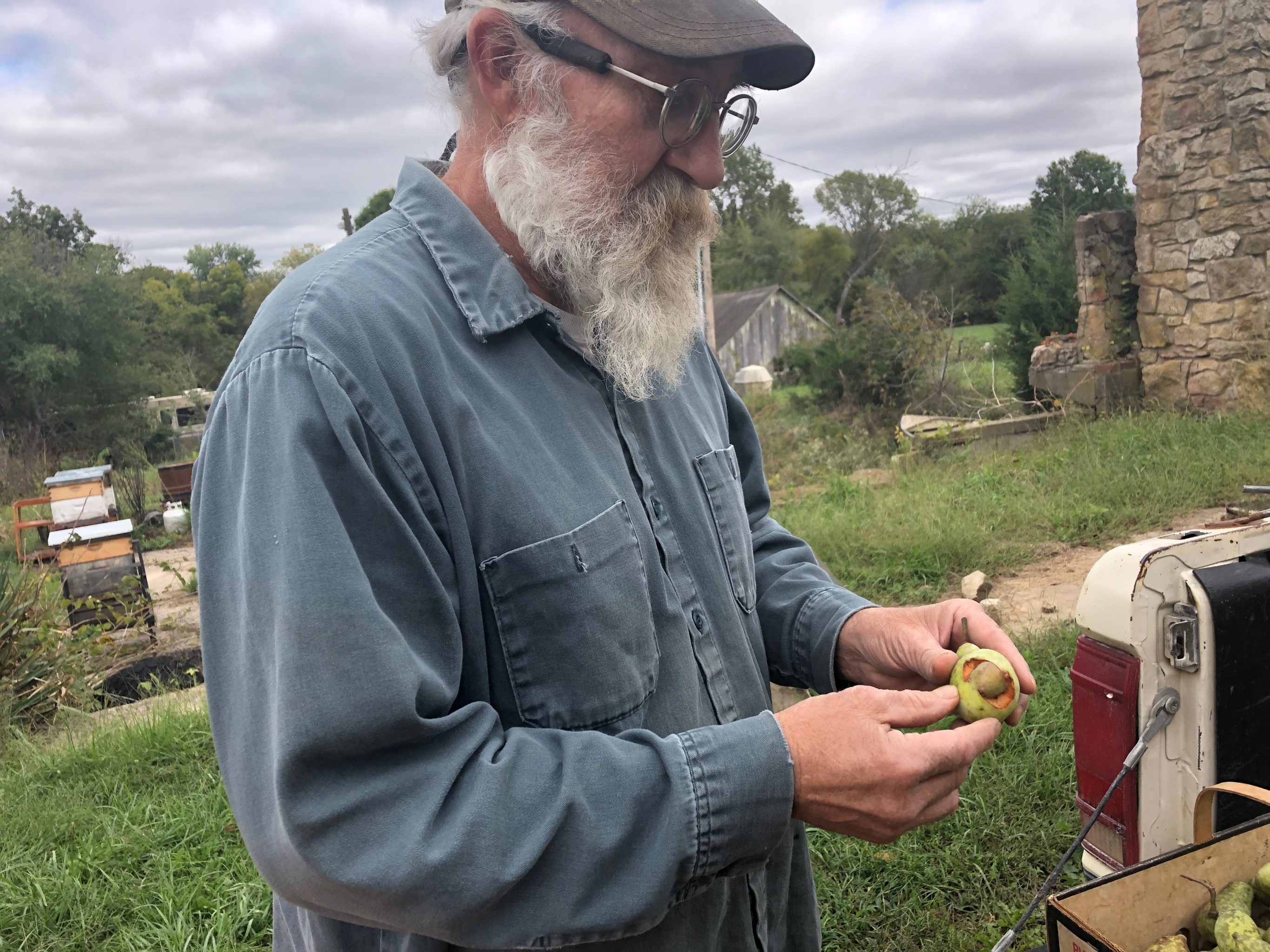
photo by: Dylan Lysen
Ross Jones, holding a pawpaw that a deer took a bite of, explains how the fruit grows and ripens.
He started collecting the fruit only recently. He said that once the fruits ripen, he likes to cut them open like he would an avocado and dig into the fruit with a spoon.
But there are many ways to use and eat pawpaws. Michael Pearce, a communications manager for the Kansas Department of Parks, Wildlife and Tourism and a big fan of the fruit, said he and his wife like to use pawpaws to make bread.
“We like to give pawpaw bread for Christmas gifts to a few special friends,” Pearce said.
Jones said pawpaw season is brief. He said the fruit on his land began falling off the trees on Sept. 17, and his final batch finished falling recently. This weekend is likely the last chance he will be able to sell the fruit.
“I’ve gone out in July and pulled a couple in that sat on the counter and never ripened,” he said. “If you get them too early, you can give them all the time in the world and they will never ripen. You have to wait for them to start falling out of the trees (in September).”
Last year he and a friend tested how well they would sell at the local farmers’ markets. The answer? Quickly.
This year, Jones began a concentrated effort of selling the fruit through his friend’s stand at the Lawrence Downtown Farmers’ Market and selling to the the Baldwin City Market grocery store. He said he also knows another grower who sold the fruit to Checkers Foods in Lawrence.
He was also able to sell some to Free State Brewing Company, which is planning to make special desserts with the fruit. Chuck Magerl, Free State owner, said the restaurant is currently offering pawpaw ice cream and pawpaw bread pudding, among other items.
But other than that, the fruit may be hard to find. Jones believes some consumers who like the fruit may not think about its availability until the weather turns cold, but the trees will no longer be producing the fruit by mid-October.
“It’s almost like everybody looks for them after the fact,” he said.
He said he hopes to turn his wild patch of pawpaw trees into a small, organized operation, but he faces some hurdles.
Jones has tried to cultivate some of the large seeds the fruit produces. He said he has to refrigerate the seeds for 90 to 120 days, then plant the seeds in the spring. The trees should then sprout in the summer.
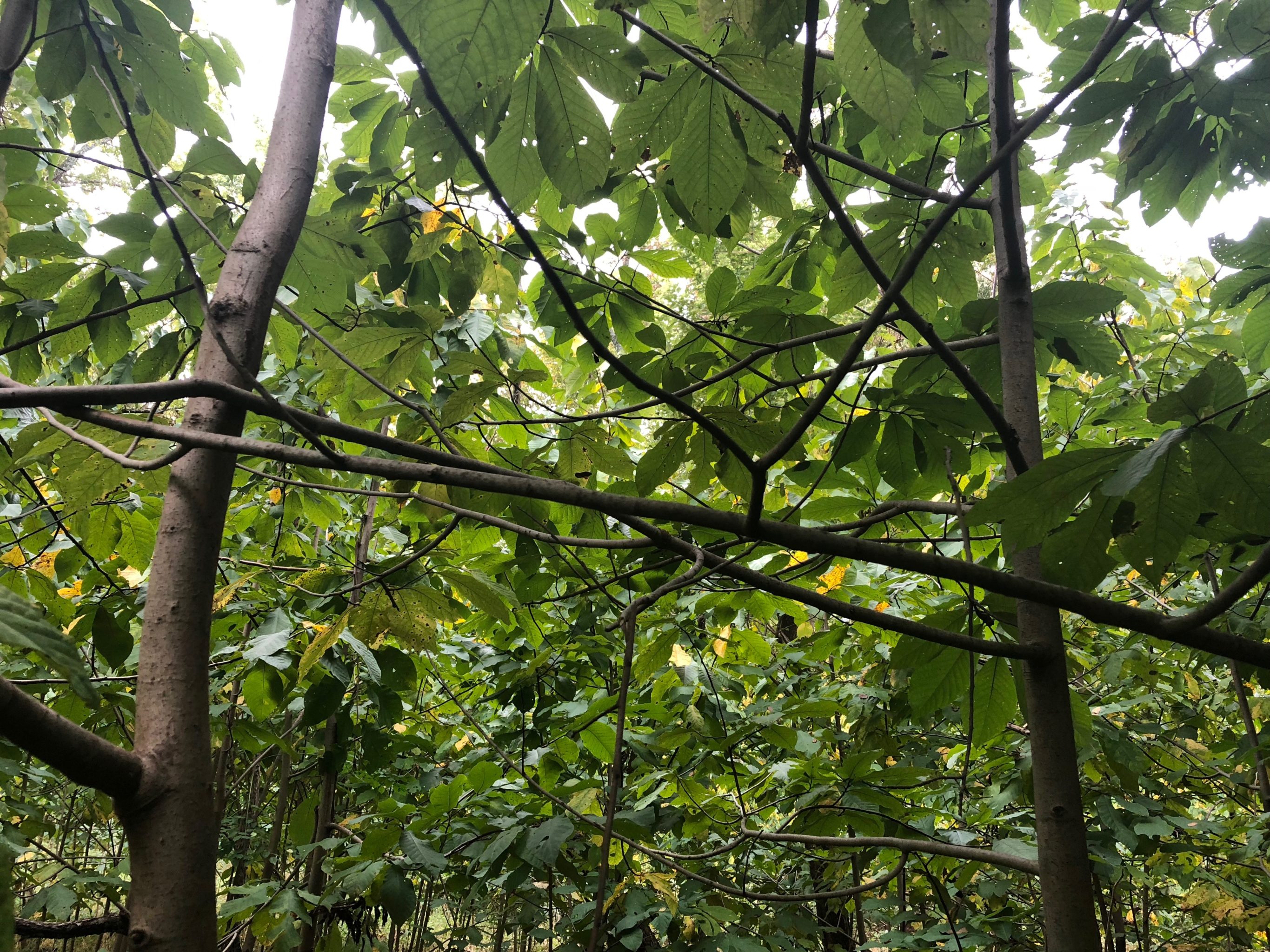
photo by: Dylan Lysen
A grove of pawpaw trees grows in a wooded area behind Ross Jones’ property in rural Douglas County. Jones described the Kansas native trees as surprisingly spindly with large tropical-looking leaves.
After a few years Jones will move the tree from under a walnut tree’s shade out into a sunny spot, he said. But even if they mature properly, which could take three to five years, they are not guaranteed to actually bear fruit.
“It’s kind of difficult,” he said.
But Jones is hopeful he can turn the operation into a new pawpaw market for the local area.
“We just need to remind people that you got to start looking for them in September, not November,” Jones said with a laugh.
Other News

U.S. Army says cleanup at Sunflower Army Ammunition Plant is ‘slowing down’; PFAS investigation at site still needs funding

‘One of a kind’: Sale at the Lawrence Arts Center will find new homes for late musician’s unique custom guitars

Go, See, Do: KU homecoming, Halloween happenings and other events

Student-run coffee shop opens at Community Connections at Pinckney, teacher receives surprise $1,000 award
‘This is for all of us’: Midco Prairie, an oasis of native plants in downtown Lawrence, opens to the public