

Haskell alumnus becomes first graduate of a tribal university to attend Harvard Law School
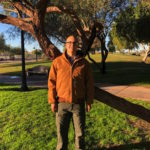
photo by: Contributed photo
Connor Veneski, a 2017 graduate of Haskell Indian Nations University, Lawrence, stands in a park in Yuma, Arizona, on Dec. 26, 2018. Veneski is forging a path as the first student admitted to Harvard Law School from a tribal university.
College wasn’t on Connor Veneski’s radar as a high school student. Instead, he was leaning toward a future in welding or in the military.
But not only did college become a reality for Veneski, he’s also now a bit of a trailblazer. Veneski, a 2017 graduate of Haskell Indian Nations University, just finished his first semester at Harvard Law School. And while it’s not unusual for Haskell graduates to attend law school, Veneski is the first student admitted to Harvard Law not only from Haskell, but from any tribal university in America.
He described his first semester as “long and really hard.” Plus, he faced culture shock as one of the 500 students in the Harvard Law School Class of 2021.
He found himself surrounded by extremely talented classmates — including people who attended Oxford and Cambridge universities for their undergraduate studies — as well as privileged ones.
“I thought people were looking at me in my Carhartts and boots,” Veneski said.
However, he said, those intimidating circumstances only encouraged him to work harder.
Knowing he is the first Native American from a tribal college in the class is a “pretty wild feeling,” Veneski said.
Currently, 2 percent of enrolled students at Harvard are Native American, according to the Harvard Gazette. Veneski and another student, Chance Fletcher, a member of the Cherokee Nation, are the only two Native Americans in the law school class of 2021. Fletcher’s undergraduate degree is from Princeton.
•••
Veneski’s journey to Harvard began at Haskell, where he believes he recognized how much potential he really had.
As a freshman, he arrived in Lawrence, having grown up in a melting pot of cultures along the U.S.-Mexico border in Yuma, Ariz. Through his mother, Paula Veneski, he is a member of the Cayuga Nation, one of the founding Iroquois tribes of New York. His father, Stephen, is of Irish descent and is a retired U.S. Marine Corps veteran. Paula Veneski worked in Indian Health Services on the Quechan Reservation at Fort Yuma, which is six miles from the border.
Before Conner Veneski went to college, he didn’t think much about issues of Indian Country. But, at Haskell, it was discussed in every class, and he met people from a diverse mix of tribes.
“At Haskell, for the first time, I was around people like me. But at the same time, every tribe was different,” Veneski said. He realized the diversity between the tribes was similar to the diversity of European cultures.
While in Lawrence, Veneski, like many Haskell students, felt like he was living in the shadow of the University of Kansas.
“You just think you don’t have as many opportunities as they do at KU,” he said.
However, his Haskell professors saw something in Veneski, and were determined to give him the chance to excel. Tyler Kimbrell, an instructor in the communications department, encouraged Veneski to take an upper-level speech class.
“For the first time, someone challenged me,” Veneski said. Other faculty noticed as well, including Mary Stuckey, his business law instructor, who has since retired from Haskell.
“He worked very hard and was always improving,” Stuckey said. “We have a number of talented students going to law school, but he is the only one going to Harvard.”
Stuckey said she could always count on Veneski to help keep the discussion going in business law classes. She said she was also moved by the work Veneski did outside of the classroom — including his work with immigrants and refugees in Yuma while on break from Haskell.
“It was really impressive to me,” Stuckey said. “… Connor was stepping up to make the world a better place.”
At the same time, Veneski appreciated the way Stuckey brought business law to life.
“Business law is probably the most boring topic you can imagine,” Veneski said. “She wasn’t shy about the dryness of the topic. But she tried to make it fun and enjoyable.”
•••
Veneski said it was Stuckey who encouraged him to set his sights on law school.
“She had this contagious hope and she convinced me to take the most atrocious thing created in human history, the LSAT,” he said.
The test was tough, but Veneski scored on the high end, and his father suggested he apply to Harvard Law.
“There was a hefty $100 fee to apply and I was not thrilled with throwing that money away,” Veneski said. “My dad said he would pay the fee. I took the hit. He has not paid me back.”
After graduation, Veneski wants to join the U.S. Army Judge Advocate General’s Corps. Then he plans to return home to Arizona and work with tribal relationships within the state.
In the meantime, he’s still getting his arms around the idea of the path he is blazing.
“Sometimes, I want to speak out, but there is this weight, just being Native American and underrepresented, I am an ambassador. Everything I do is reflected on the tribal university.”
However, despite the challenges, Veneski said: “It’s an honor forging this path.”
Other News
‘One of a kind’: Sale at the Lawrence Arts Center will find new homes for late musician’s unique custom guitars

Go, See, Do: KU homecoming, Halloween happenings and other events
Student-run coffee shop opens at Community Connections at Pinckney, teacher receives surprise $1,000 award
‘This is for all of us’: Midco Prairie, an oasis of native plants in downtown Lawrence, opens to the public
Douglas County commissioners express interest in fireworks sales dates that include a weekend
