Beading demonstration at Watkins Museum to highlight the importance of the tradition in Potawatomi culture
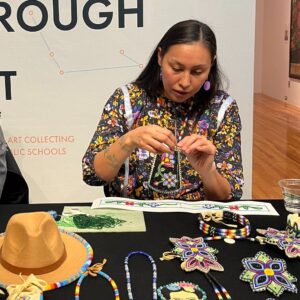
photo by: Contributed
Tara Mitchell performs a beading demonstration during an event at the Marianna Kistler Beach Museum of Art in December 2023. Mitchell, a professional beadwork artist and the deputy tribal historic preservation officer for the Prairie Band Potawatomi Nation, will host a demonstration Friday, July 10, at the Watkins Museum of Art, 1047 Massachusetts St., that also discussing the cultural importance of the art.
The Watkins Museum of History will host a presentation of traditional beadwork that highlights the art form’s key role in preserving Potawatomi culture and capturing Indigenous persistence.
The museum, in partnership with the Federation of State Humanities Councils and the Smithsonian Center for Folklife and Cultural Heritage, will feature a free live beading demonstration Friday night from Tara Mitchell, a professional beadwork artist and the deputy tribal historic preservation officer for the Prairie Band Potawatomi Nation.
The event, called “babisyakatek” — Mitchell said means “it is beaded” in the Potawatomi language — is a part of the America 250 series at the Watkins, and Mitchell’s presentation is meant to “foster understanding, appreciation and respect for Potawatomi culture across communities,” according to the Watkins’ website.
Mitchell told the Journal-World she was approached by Humanities Kansas earlier this year to be a speaker for a program focusing on folklife in the state. As part of her programs, Mitchell said she not just does a demonstration of the beading, but also incorporates Native history and how the skills were passed down despite the historical challenges faced by Indigenous people.
Mitchell said she had learned the traditional practice through her mother, who she often has partnered with on presentations. Although Mitchell said her mother could not attend this specific event, it highlights the “generational teaching” that is so crucial for beadworking.
“It is not all the time you can present with your mom on something,” Mitchell said.
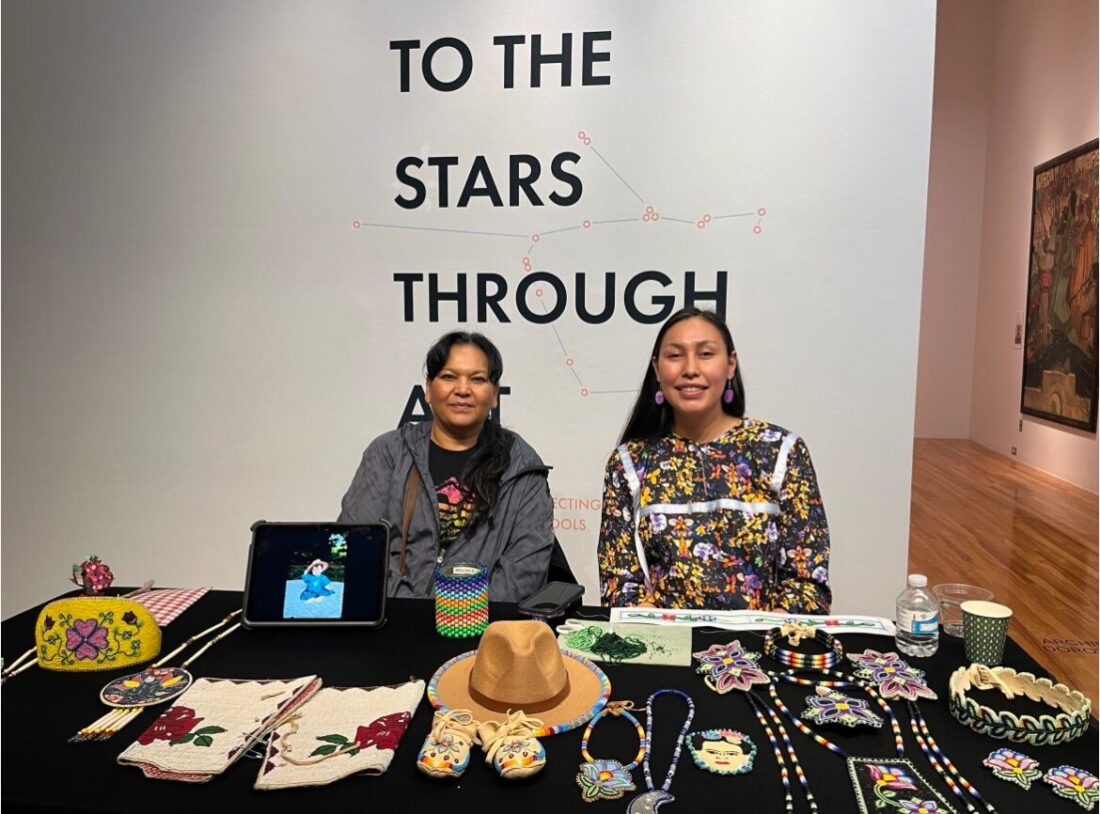
photo by: Contributed
Tara Mitchell, a professional beadwork artist, right, poses with her mother during a beadwork demonstration in December 2023. Mitchell said the passing of knowledge of beading from one generation to the next is fundamental to Potawatomi culture.
Mitchell said that lineage is even more important because of the efforts by the U.S. government that tried to erase those types of Indigenous traditions. Mitchell said her grandmother never learned to bead because she was sent to an Indigenous boarding school, which forced Native children to assimilate and give up their cultural heritage.
Mitchell said that system of boarding schools disrupted the cycle of passing down knowledge, but she and other beaders are trying to keep the tradition going “as long as we can. She has already taught her three-year-old daughter how to bead, saying that people on the reservation “teach (their) kids very young.”
Mitchell said getting the opportunity to present the traditional beadworking is special, but it is especially important to showcase the work to other communities. Mitchell said that oftentimes, non-Native people can associate Natives with the past, categorizing them as “people who were here and now gone.” Even in Mitchell’s beadwork, she has beaded cowboy hats, graduation caps and sports medallions with logos for the Kansas Jayhawks or Kansas City Chiefs. She said being able to produce the beadwork is a sign of the way that Native culture has persevered
“We’re still here, practicing our traditions and keeping our culture alive,” Mitchell said.
Mitchell’s beadwork presentation will take place Friday at the Watkins Museum, 1047 Massachusetts St., from 7 to 8 p.m.

photo by: Austin Hornbostel/Journal-World
The Watkins Museum of History is pictured Wednesday, Aug. 3, 2022.
Arts and Entertainment

Growing up with famed Kansas fossil hunter, daughter returns with new book that goes beyond the digs

Duncan Sheik, Tony- and Grammy-winning ‘Spring Awakening’ composer and pop star, dies at 56

For this local artist and many others, Lawrence’s Art in the Park is the biggest event of the year

Go, See, Do: Haskell Arch celebration, Lawrence Beer Co. block party and more

Ed Sheeran’s tour in trouble after opening acts drop out in solidarity with Macklemore