

Rural growth is outpacing infrastructure capacity in Douglas County, stakeholders warn
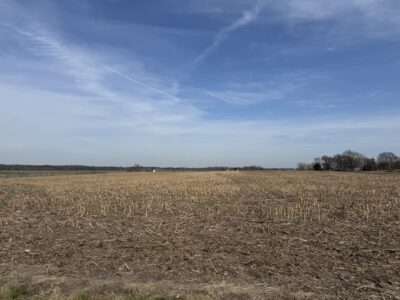
photo by: Josie Heimsoth/Journal-World
An agricultural field near the Lawrence Regional Airport is pictured on Monday, March 30, 2026.
In a preliminary review of Douglas County’s land use rules, stakeholders are saying that rural development is outpacing the capacity of roads, water and other services.
Consulting firm Clarion Associates has been conducting the review since January and met with at least 10 groups to discuss their experience with navigating and interpreting the county’s land use regulations. They include the Douglas County Commission, Douglas County Public Works, Lawrence-Douglas County Planning & Development Services, township board members and rural water representatives and more.
In a memo shared with the County Commission and the Planning Commission on March 18, Clarion said it heard from multiple of these stakeholders that the number of buildable parcels in rural areas has steadily increased, leading to more residential development in areas not able to support it.
“Township roads, built originally for agricultural access, are not designed for sustained rural residential traffic, and the density of these lots does not generate sufficient tax base for needed improvements. Additionally, varying capacity among Rural Water Districts contributes to uneven service ability,” the memo reads.
The stakeholders said the county should evaluate which application types – such as the creation of multiple buildable parcels, conditional use permits and site plans – should require ability-to-serve letters from the rural water district, township and fire district. These letters are official documents from utility providers confirming they have the capacity and willingness to supply services.
Stakeholders are also recommending that the county establish clear standards and processes to be followed if a landowner petitions the county to create or extend a public road or to convert an existing private road into a public one. In addition, they recommend updating zoning districts and introducing new tools — such as open space or public/institutional districts — to better manage growth and preserve agricultural land and natural resources.
The consultants’ review has identified four main problem areas: outdated and sometimes unclear zoning rules; increasing pressure from rural land divisions on roads and services; inconsistent guidance from Plan 2040, the city-county comprehensive plan; and a confusing, overlapping city-county planning process.
The memo said that Plan 2040, which guides growth, land use and development policies through 2040 in the City of Lawrence and unincorporated Douglas County, lacks clear direction and hierarchy. This is leading to inconsistent decisions, especially near the Lawrence city limits. Stakeholders expressed the need for clearer direction on how county and city priorities — such as agricultural preservation, annexation and growth management — should be balanced.
Finally, administrative processes for development applications are often unclear and inefficient due to shared responsibilities between the City of Lawrence and Douglas County, creating confusion for staff and applicants. Stakeholders want the county to clarify roles, standardize application requirements and improve coordination between agencies.
As the Journal-World reported, Douglas County is partnering with the City of Lawrence and Clarion Associates to complete a comprehensive review of two sections of the county code – Chapter 11, Subdivision Regulations, and Chapter 12, Zoning and Planning. While the effort will not produce a new zoning ordinance, it will assess how effectively the current regulations are working and outline an implementable roadmap for future updates.
The memo from Clarion Associates serves as an initial framework for understanding the county’s land use challenges. These findings will inform a more detailed diagnostic review, which is anticipated to be completed in May or June, and provide future recommendations for updating the county’s development regulations.
Other News

Theatre Lawrence’s upcoming season to feature ‘On Golden Pond,’ ‘Pirates!’ and more
Rural growth is outpacing infrastructure capacity in Douglas County, stakeholders warn
Bert Nash and health department use Douglas County funding to expand HIV, hepatitis testing for uninsured patients

Health order rescinded at The Outhouse after mold remediation completed
Document challenges claim that baby’s heart valves were donated, potentially lending support to natural causes, not abuse, as cause of death