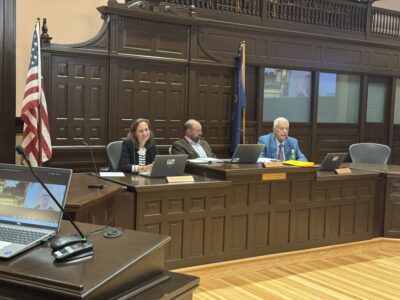
Douglas County commissioners to consider a $7 increase to motor vehicle fee in 2027; the change would last two years
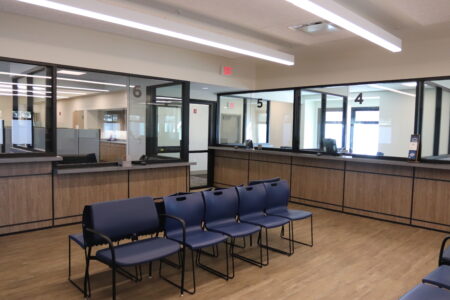
photo by: Josie Heimsoth/Journal-World
The inside of the new Treasurer's Office, pictured Friday, October 25, 2024, located on 2601 W. Sixth St. includes a lobby with seating, close parking and a drop box for convenience.
Currently, Douglas County residents pay a $3 fee to the county treasurer’s office when renewing their vehicle tags, but that may jump to $10 next year.
Douglas County commissioners at their Wednesday meeting will consider increasing motor vehicle fees in 2027 by $7, now that a new state law gives them the authority to do so.
The new law, Senate Bill 325, passed in 2026 and authorizes county treasurers to increase vehicle registration transaction fees to help fund motor vehicle services. However, county treasurers are only allowed to charge up to $5 with the new law, but county commissioners are able to consider up to $10.
The fee – previously only applied to transactions in-person at the Treasure’s Office – will now apply to all transactions, including online. The fee is in addition to the actual vehicle taxes that also are due at the time of renewing a vehicle tag.
Before the law, many counties found that the fees collected from renewals, title and registrations and personalized plate transactions did not fully cover the cost of operating their motor vehicle departments. This would result in counties using general fund dollars – which are largely supported by property taxes – to make up the difference.
SB 325 is allowing county commissioners to approve up to a $10 fee beginning in 2027. The funds could go towards staffing, office operations, technology and other motor vehicle-related expenses.
“If the County Commission decides not to increase the fee and continues with the current system, it would mean the property taxes are funding a state service,” Treasurer Adam Rains told the Journal-World via email. “SB 325’s goal was to move away from having counties across Kansas fund a state service.”
The change would only last two years, expiring on Dec. 31, 2029. It would only be temporary because the Kansas Legislature wants to see if the increase is actually needed for motor vehicle operations and what counties do with the additional funding. In 2030, transaction fees cannot exceed $5, according to state law.
Rains said in the memo that the change to $10 is essential for operations in the next two years. A chart in the memo shows that with the current $3 transaction fee, the motor vehicle division is projected to generate about $1.09 million in total revenue in 2027, and the division is facing $1.68 million in operating expenses. This would result in a $597,283 deficit.
If the fee was increased to $5, which the county treasurer has the authority to do, the deficit would shrink to about $389,033. The chart in the memo shows that motor vehicle operations are not sustained until the fee is increased to $10 per transaction. The total revenue would be approximately $1.74 million. These estimates are surrounding an expected 104,125 total transactions in 2027.
Even with the increase to the fee, Rains said the department will need property tax support in 2028 and 2029 to cover increased costs to employee benefits.
“Based (on) historical data, we believe that the increased revenue from the fee will quickly be consumed by employee benefits increases and property tax funding will be needed to subsidize the service,” Rains said via email.
If commissioners approve the change, Douglas County would be required to provide data to the state on how the increase to $10 impacted the county treasurer’s budget and the budget of the entire county. The county will also be required to include any improvements or achievements for customer service in vehicle services transactions resulting from the increased revenue.
According to the agenda, in comparison to other counties, Johnson and Riley counties are considering $10 in motor vehicle fees, Lyon and Potawatomie counties are considering $8, Shawnee County is considering $7 and Leavenworth County is staying at its current fee amount of $5.
The memo said staff is looking for direction from the County Commission on changes to the fee and how to proceed with motor vehicle operations in the future.
The fee doesn’t have to be increased at this time, and commissioners have until October to make any decisions for 2027. Commissioners could revisit a decision during budget discussions in July if they need additional information from the Treasurer’s Office, the memo said.
IN OTHER BUSINESS, COMMISSIONERS WILL:
• Hold a work session to discuss efforts to expand supportive housing options for women and children experiencing homelessness or housing instability in Douglas County. Supportive housing is an area of the city-county ‘A Place for Everyone’ plan to end chronic homelessness, which set a goal of adding 120 additional units of permanent supportive housing for priority populations and 15 units of transitional housing for individuals with substance use disorder and/or mental illness.
In March, county commissioners chose to contract with non-profit consulting team Amethyst Amplified – which is affiliated with Amethyst Place, a lont-term supportive housing program for women and children recovering from poverty, substance use and trauma – in the amount of $48,000. The team has been providing strategic guidance and technical assistance to a project team in Douglas County looking to improve access to supportive housing.
Over the past six months, the project team was tasked with three goals: creating a funding model to support housing programs for women and children, designing an evidence-based supportive housing program and building community support for future projects. The county and community partners will be sharing the progress to date and seek feedback from commissioners on next steps.
• Consider executing an agreement with Foley Equipment Company for a Caterpiller 275 XE compact track loader and attachments in the amount of $189,568 to replace an existing compact track loader in the Public Works department.
The County Commission will have a work session beginning at 4 p.m. Wednesday in the Douglas County Commission meeting room at 1100 Massachusetts St. The business meeting will follow at 5:30 p.m. The meeting will also be available via Zoom.
Other News

U.S. Army says cleanup at Sunflower Army Ammunition Plant is ‘slowing down’; PFAS investigation at site still needs funding
‘One of a kind’: Sale at the Lawrence Arts Center will find new homes for late musician’s unique custom guitars

Go, See, Do: KU homecoming, Halloween happenings and other events
Student-run coffee shop opens at Community Connections at Pinckney, teacher receives surprise $1,000 award
‘This is for all of us’: Midco Prairie, an oasis of native plants in downtown Lawrence, opens to the public