Lawrence-Douglas County Fire Medical seeks expansion of mobile health team during Douglas County budget hearings
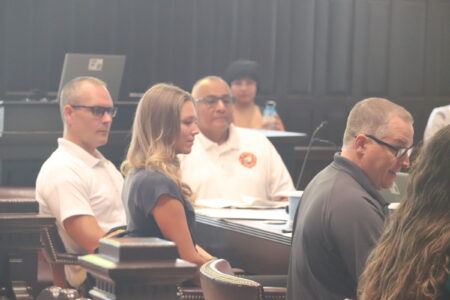
photo by: Josie Heimsoth/Journal-World
Lawrence-Douglas County Fire Medical staff meet with Douglas County commissioners during budget hearings on Wednesday, July 8, 2026.
Douglas County commissioners discussed the possibility of expanding fire medical’s two-person mobile integrated health team on Wednesday, so the department can continue to help reduce repeat emergency calls.
County commissioners discussed multiple additional funding requests with Lawrence-Douglas County Fire Medical staff during budget hearings on Wednesday, with the primary focus on expanding its medical initiative that sends trained paramedics to visit patients directly for people who have ongoing health needs or frequently use 911 and emergency departments.
The program’s goal is to help people get the right care while reducing unnecessary ambulance transports and emergency room visits. County staff told commissioners that patient referrals through the mobile integrated health program increased by 44% when compared to 2024.
Three requests were submitted to fund three new EMS positions. The three positions include a mobile integrated health team lead, a mobile integrated health technician – paramedic and an EMS administrative specialist costing $199,000, $182,000 and $75,000, respectively.
Currently, there are only two community paramedics in the mobile integrated health team, and the program effectively shuts down when one of them is absent and not able to respond to calls.
The proposed team leader would supervise the program, fill in when one of the paramedics is absent and take over administrative responsibilities currently handled by LDCFM leadership. The paramedic position would add another paramedic to the team. The third position would function as a part of the EMS billing team to collect potential EMS claim revenue each year.
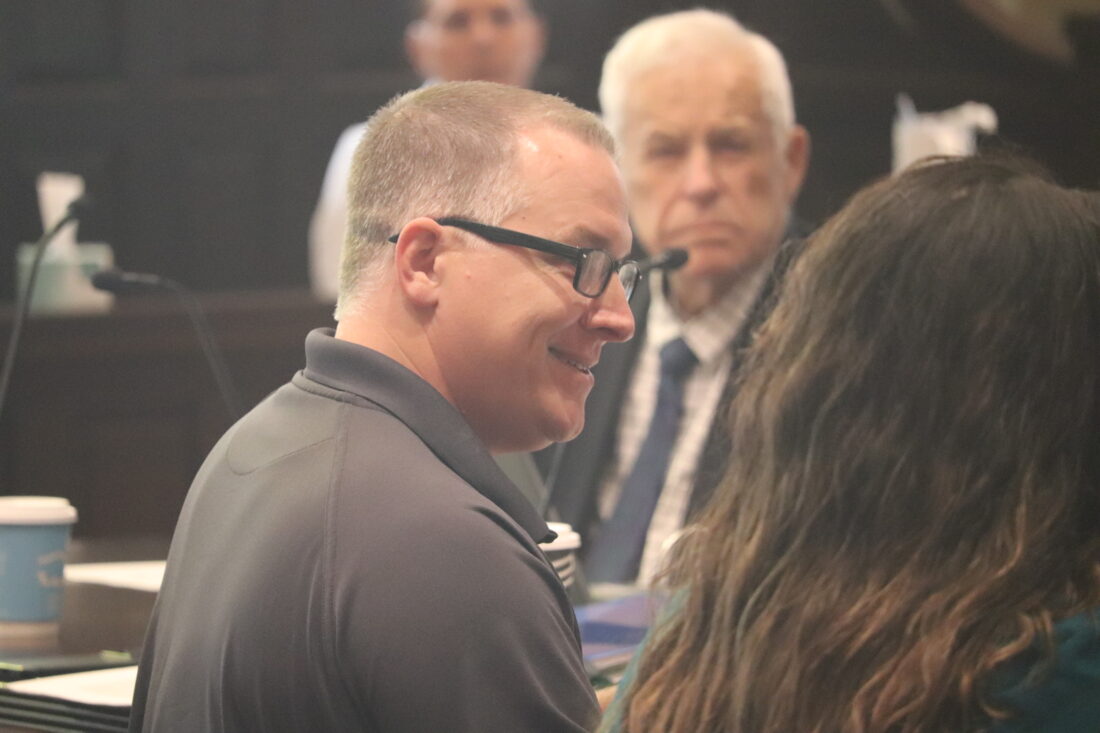
photo by: Josie Heimsoth/Journal-World
John Darling, division chief of emergency medical services for LDCFM, speaks with Douglas County commissioners on Wednesday, July 8, 2026.
John Darling, division chief of emergency medical services for LDCFM, said the paramedics on the mobile integrated health team need additional certifications compared to other paramedic positions. He added that to obtain the additional certification, team members have to take an extensive course and out-of-class study time.
“For most paramedics, our job is to take care of you for the 10, to 20, to 30 minutes it takes from the time we get on scene to the time we get you to the hospital,” Darling said. ” … They don’t do a whole lot with training to deal with … wound care, chronic management of conditions or medication reconciliation, or all the things that an MIH technician does.”
While there are other community partners aiming to reduce the number of people who frequently use emergency services, Darling said there is data pointing to the mobile integrated health program helping prevent people from falling under that category.
“And that’s where I think we see a lot of benefit,” Darling said. “Because while there are going to be people who have very complex medical cases, there’s also a lot of people who we have the ability to intervene early and prevent from getting there.”
Darling also added that in the last five years, LDCFM has made significant strides in reducing the number of times they see an unhoused EMS caller per quarter.
In 2021, if they received a call, the average number of times they would see a housed individual in a quarter was 1.5 more times. For an unhoused individual, it was expected to see them three more additional times.
“It’s now 1.5 total calls per quarter per unique patient, so that’s for the housed population,” Darling said. “And 1.75 times for the unhoused population. So they’re very close together.”
THE FUTURE OF TRUANCY SERVICES
County commissioners also wanted to touch base with some of the community partners providing truancy support for students and families in Douglas County.
As the Journal-World reported, last week, commissioners approved a county-run truancy program, dubbed “EveryDay Counts.” The program is going to be run by Douglas County Criminal Justice Services’ Youth Services division to provide case management services. The money to create the program was previously going to go toward the nonprofit Center for Supportive Communities’ truancy program, SupportEd.
Commissioners decided to pursue the new county program in 2026, citing it as an opportunity to save money after the CSC asked commissioners to cover potentially lost AmeriCorps funding. The commissioners denied that request, but the CSC ended up receiving AmeriCorp funding after all, and the county continued developing its own program.
Before commissioners approved the program last week, the CSC requested to have its $150,000 in funding reinstated for the SupportEd program. In addition, the CSC is requesting $100,000 to better serve high school students experiencing chronic absenteeism and truancy.
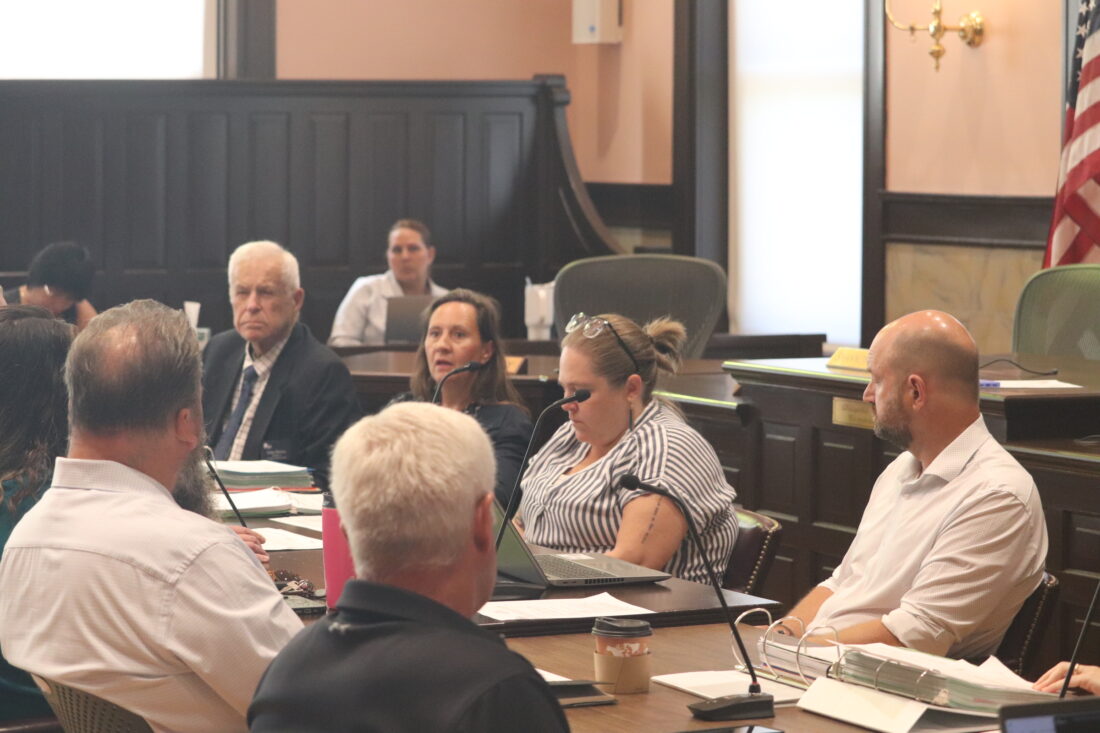
photo by: Josie Heimsoth/Journal-World
Douglas County commissioners hold another day of 2027 budget hearings on Wednesday, July 8, 2026.
Meanwhile, the O’Connell Children’s Shelter also submitted a request for $100,000 in additional funding to the county to strengthen its high school truancy programming. Commissioner Karen Willey pointed out how similar the request was to the CSC, and perceived it as the organizations competing for similar funding.
Erin Harmon, prevention services director at O’Connell, said partners requested additional 2027 funding for high-school truancy services after it became clear the county was developing its own program and shifting funding priorities. Like other community agency requests, these were submitted in April, before county commissioners decided on truancy programming last week.
“We didn’t want to lose the program and the services for the families,” Harmon said. “And so, we all just went head first into it to make sure that those services did not get cut altogether.”
Commissioner Erica Anderson asked what partners hoped for with the new county-run program and working together in the future. Kelsey Dachman, executive director for CSC, said she hopes the organization will still collaborate with criminal justice services and help achieve the work outlined in the five-year Community Health Improvement Plan.
“I want to get back to doing what we had planned and meeting with schools and figuring out what data we want to collect and focusing on outcomes,” Dachman said.
WHAT’S NEXT?
Douglas County staff has proposed a $201.5 million budget, holding the property tax rate flat at 40.669 mills, as the Journal-World reported. One mill is equal to one dollar per $1,000 of a property’s assessed value. With the proposed budget, a homeowner with a $600,000 home would pay $2,805 in property taxes to the county under the proposed mill levy. A $300,000 home would have a bill of $1,405 and a $200,000 home would incur $935 in taxes.
The tax a property owner pays is determined by both the mill levy and the property’s assessed value, so even if tax rates stay steady or are lowered, rising property values might still cause tax bills to go up for many residents. The total assessed property valuation increased by 4.9% in 2026, compared to a 5.7% increase the previous year.
On Thursday, county commissioners will continue budget hearings with local agencies and county departments from 9 a.m. to noon in the Douglas County Commission meeting room at 1100 Massachusetts St. The Journal-World previously reported the full schedule of 2027 budget hearings and deliberations.
Commissioners will hear from the Senior Resource Center, Sexual Trauma and Abuse Care Center, Willow Domestic Violence Center, Douglas County Administration, Just Food, Salvation Army, Douglas County Zoning and Codes, Douglas County Treasurer and Douglas County IT.
The public is welcome to attend in person or join virtually on Zoom. There is no opportunity for public comments during hearings or deliberations. The details from the meeting and recordings will be available on the county’s YouTube page.
The full 2027 proposed budget can be accessed on the county’s website at dgcoks.gov/administration/budget.
Other News

Douglas County commissioners to discuss whether to increase the number of days fireworks can be sold in the county
Lawrence’s first bike lanes with physical barriers are installed on Ninth Street

Data center company plans up to $1,000 a year in tax, utility credits for De Soto households

Supernatural thriller filmed in Lawrence to have multiple showings at Liberty Hall
Eudora voters to decide sales tax election to fund increased fire protection in the city