The county created a policy to limit how large its rainy day funds can grow, but the policy exempted more than $30M of sales tax money

photo by: August Rudisell
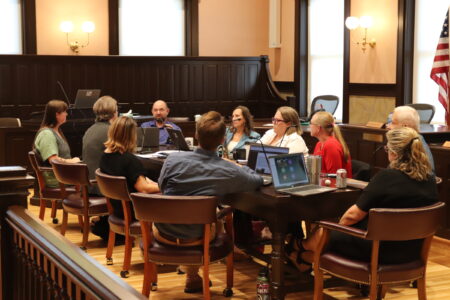
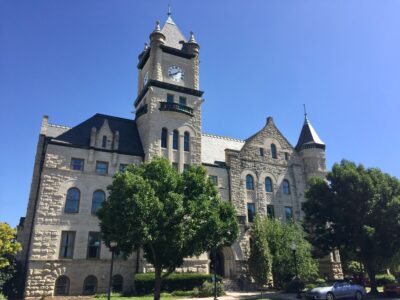
The Douglas County Courthouse is pictured in this contributed photo from June 2020.
A year ago, Douglas County leaders said the county needed a policy about how large its piles of unused cash — rainy day funds, so to speak — could grow.
Lots of governments have policies that call for them to keep funds equal to three months worth of expenses — and no more — to cover downturns or unexpected events. But as a review by the Journal-World found last year, the county had no such policy, despite idle funds in key accounts growing by more than $10 million in a single year.
The county has a policy now, but don’t be mistaken into thinking it doesn’t also have the large piles of cash. One fund has enough idle funds in it that it currently would cover more than 14 years worth of expenses.
How? Because the county’s new fund balance policy comes with a big exemption.
A review of the county’s new policy found county officials crafted it so that more than $30 million of idle funds are exempted from the new rules.
A pair of sales tax funds overseen by the county are budgeted to start 2024 with approximately $34 million of taxpayer funds that aren’t budgeted to be used for any purpose. That amount far exceeds what the new policy would allow, but as the Journal-World learned through interviews this month, the county — with little fanfare — decided to exempt those funds from the policy.
That exemption allows for situations like the one in the county’s local general sales tax fund to develop. It is budgeted to start 2024 with idle funds of $16.2 million, while having expenses of only about $1.1 million. The $16.2 million in idle funds would cover about 14 years of the fund’s current expenses.
A pair of county commissioners said the policy is well founded because commissioners will have uses for those funds at some point in the future.
Both accounts in question are funded with countywide sales taxes that previously were approved by voters — a general sales tax approved in 1994 and a specific sales tax approved for mental health initiatives last decade.
County Commission Chair Patrick Kelly correctly noted that the ballot language for those two sales tax initiatives did not put any limits on how much of that sales tax money the county could hold back in reserves. But does a 14-year cushion conform with the expectations voters had? Kelly said he thinks many voters are comfortable with it.
“My experience is that voters have a wide variety of opinions when it comes to the use of tax dollars,” said Kelly, who declined a request for an interview but answered questions via email. “Douglas County has put their trust in their elected officials to ensure that these funds are used effectively to address the needs of Douglas County.”
Commissioner Karen Willey, who is going through her first county budget process, largely agreed.
“The one-cent sales tax is allocated within the ballot language adopted by voters,” said Willey, who also declined an interview request but answered questions via email.
The fund balance levels of the county became a community topic last year after the Journal-World published a series of articles highlighting that over the last two decades, Douglas County had experienced the largest increase in property tax rates of any urban county in Kansas, while the amount of idle funds held by the county increased by tens of millions of dollars.
Future needs
The approximately $34 million in the two sales tax funds is not budgeted for any particular use in the 2024 budget, but county officials don’t always expect that to be the case. Both commissioners and County Administrator Sarah Plinsky said the county will have major project needs in the future where the funds can be expended.
Among the project possibilities include a renovation to the Judicial and Law Enforcement Center.
“With the rising costs of labor and materials for capital projects, we are fortunate to have funds on hand to begin to address the needs of our community,” Kelly said via email.
When the county will begin to address that need is unclear. The Judicial and Law Enforcement Center project has been on the county’s list of possible capital improvements for years, but it has been slow to start.
County officials at this time last year pointed to the Judicial and Law Enforcement Center project and other downtown space needs as a possible use for the funds. But the fund was not used for any of those purposes in the 2023 budget and is not scheduled to be used for that project in 2024 either.
Other projects that have been mentioned include funding for a Douglas County open space plan that is being created. Kelly said he envisions “significant funds will need to be dedicated to that.”
Still growing
In the meantime, expect the idle cash in the fund to grow. At the beginning of 2020, the amount of unused fund balance in the general sales tax account was $4.6 million. By the end of 2024, the county is projecting the fund balance total to stand at $19.6 million. In 2024 alone, the county is expected to add $3.4 million of money to the fund that won’t be spent during 2024.
That’s because the county automatically transfers half of all the proceeds from the countywide one-cent sales tax into the local sales tax fund. The other half remains in the county’s general operating fund, where it is used for a variety of purposes and reduces the amount of property taxes the county otherwise would need to levy.
Last year, when questioned by the Journal-World, Plinsky contended the county was obligated to put 50% of the sales tax revenues into the sales tax fund, and that the fund would only be used to fund debt related to county projects. She said the county was obligated to split the sales tax revenues in that manner in order to keep a promise made to voters during the 1994 sales tax election
However, an investigation by the Journal-World last year — which examined the ballot language, campaign advertising and media coverage from the 1994 election — found no evidence that such a pledge was ever made.
This year, county officials haven’t mentioned anything about a pledge to voters. Kelly acknowledged that the County Commission could change the policy to allow more of the sales tax dollars to stay in the general fund, where they would be used for operations and could relieve pressure on the mill levy. But Kelly did not indicate in his email response that he expected a change to the policy.
“The Board of County Commissioners has the ability to review any policy at any time if we believe the policy is not serving the best interest of the community,” he said.
Willey also said she’s comfortable with how the fund is progressing because she likes the idea of “saving money for a project and then spending it down to accomplish that project.”
But when voters will get specifics on what those projects actually will be remains unclear. Neither Kelly nor Willey was able to offer a projected timeline for when the county would start making decisions on how to spend down that fund balance.
Kelly, though, said the county has time.
“Spending funds just because you have them is reckless,” Kelly said via email.
The county also has a growing fund balance in its second sales tax fund, which is devoted to behavioral health and mental health care issues. That fund is expected to start 2024 with an $18.4 million fund balance, up from $14.8 million at the beginning of 2023.
Unlike the general sales tax fund, the ballot language of that sales tax limits the county on how it can spend that money. It must be spent on behavioral health needs. The county has tentatively agreed to spend down about $2.5 million of the fund balance to partially fund supportive housing projects in the community.
Despite dipping into the fund balances, the budget still calls for the account’s amount of idle funds to grow during 2024. The mental health sales tax fund is expected to finish the year with just less than $19 million in unused funds.
Approval issues
Commissioners approved the new fund balance policy in January, a few months after the Journal-World published a review highlighting that the county lacked a policy.
It is not clear how much county commissioners or the public understood about the exemptions that the county was proposing as part of the policy. The policy states that budgeted funds shall not have a fund balance greater than 25% of the total revenues in the fund.
The Journal-World first learned that a number of funds were exempted from the policy as it undertook a review this month. During that review, Plinsky clarified that the two sales tax funds and several others were exempt from the policy.
The policy applies only to “budgeted funds,” and the two sales tax funds technically aren’t defined as budgeted funds, Plinsky said. That’s despite the two funds showing up on page No. 1 of the county’s budget, listing their fund balances and revenue totals.
None of the staff presentations provided to the commissioners nor the public listed the funds that were exempted from the policy. It is not clear whether commissioners knew during that meeting that those funds were exempted from the policy.
The Journal-World asked both Kelly and Willey whether they were aware that the two sales tax funds were exempt from the policy. Willey did not provide an answer to the question in her email, and Kelly did not say whether he was aware of the exemptions, but rather said he is “comfortable with the finance policies approved” by the commission.
The fund balance policy received no substantive discussion from the commission during the meeting. Most of the discussion centered around other financial policy changes that were part of the package.
In addition to the two sales tax funds being exempted, the policy also exempted a road and bridge fund, a parks and recreation fund, a special alcohol program fund, an emergency telephone service fund, and a motor vehicle services fund that are all included in the county’s main budget document but aren’t technically budgeted funds. Those funds, in addition to the two sales tax funds, are budgeted to have just less than $38 million in idle funds to start 2024.
One fund that is covered by the policy — the county’s bond and interest fund — is out of compliance with the policy. It is projected to begin 2024 with a fund balance of more than 72% of revenues, well beyond the 25% cap. That amounts to about $350,000 of excess fund balance, according to the policy.
The fund’s noncompliance with the new policy never came up during the county’s recently completed budget hearings. When the Journal-World asked Plinsky about it, she agreed the fund was out of compliance, but noted that the fund doesn’t currently collect sales or property taxes. Instead, it houses funds paid by taxpayers who pay special assessments on their properties related to past county projects.
Plinsky said that distinction might warrant the bond and interest fund also being exempted from the policy.
“I can discuss modifying the policy with the (commission) accordingly in the near future,” Plinsky said via email.
County commissioners are in the final stages of approving the 2024 budget. Commissioners have given tentative approval to a budget that is about $27 million larger than a year ago, but reduces the property tax rate by two mills. Commissioners have been able to craft a budget that reduces the mill levy but increases spending as rising property values are creating higher property tax bills, and retail sales in the county continue to grow and produce more sales tax revenues.
Commissioners are scheduled to hold a public hearing and give final approval to the budget on Aug. 30.
County Government

General Election Voter’s Guide

An incumbent Douglas County commissioner faces no opponent in general election

Incumbent Douglas County commissioner and newcomer challenger face off for District 5 seat
Primary winner faces incumbent’s write-in campaign in Douglas County Commission District 4
Douglas County commissioners to discuss proposed changes to funding agreements with community partners