

‘We have to move forward’: On 3-2 vote, Lawrence City Commission approves budget with 1.4-mill hike
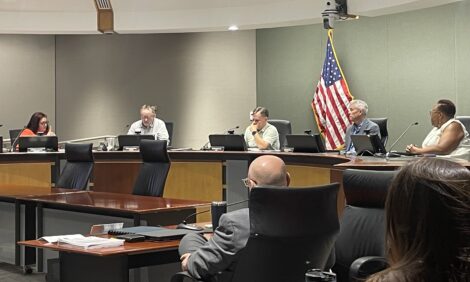
photo by: Sylas May/Journal-World
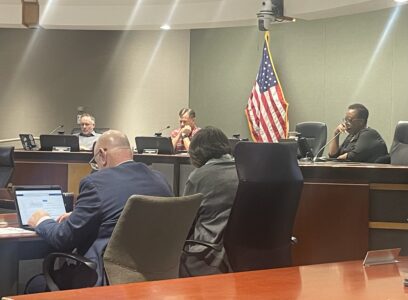
The Lawrence City Commission prepares to vote on the 2027 budget at its meeting on Tuesday, Sept. 15, 2026.
City Commissioner Mike Dever said he wasn’t exactly happy with Lawrence’s 2027 budget. He wasn’t happy that it would raise the property tax rate by about 1 1/2 mills.
But he also said that without his vote, and with the commission evenly split between yes and no, there would be no budget passed “unless I change my feelings about not wanting to raise the mill levy.”
“For me, this budget is about compromise,” Dever said, “and I’m going to compromise.”
He, Mayor Brad Finkeldei and Commissioner Amber Sellers all voted yes on Tuesday to pass the $397 million budget; Vice Mayor Mike Courtney and Commissioner Kristine Polian both voted no.
The 2027 budget will raise the mill levy by 1.46 mills – just over 1 mill for the city itself and a 0.4-mill hike that the Lawrence Public Library board approved earlier this year. The city’s mill levy hike was lower than the roughly 2-mill increase that city staff had proposed in their recommended budget.
Among other things, the budget will include raises for city staff: a 2.5% general raise and a 5%, performance-based “step” increase for some workers. It will also add 12 new Lawrence-Douglas County Fire Medical positions; reduce the city’s contribution to its employee healthcare fund; expand the city’s Parks and Recreation programming; and maintain access to the Community Building.
Before the commission voted, Finkeldei reiterated something he’d said earlier in the monthslong budget process – that when you’re balancing competing values, nobody gets everything they want.
“I think everyone who ends up voting for this and everyone who votes against it probably isn’t exactly happy,” he said. “… But we have to pass a budget, and we have to move forward with it.”
The commissioners who voted against the plan, Courtney and Polian, also repeated points they’d made before – that they couldn’t support a mill levy increase at a time when people were uncertain about the economy and their own finances.
Courtney said that over the past week, he’d spoken to some residents who were going through hardships – a single parent who worked all day to support their two kids, people on Social Security who needed to look for work because their benefits alone weren’t enough to support them.
“There are so many people in this community that I know that are not living; they’re just surviving,” he said.
And Polian said that “given what the bond market, again is doing, globally, I am very concerned.”
“I cannot support the budget as it stands,” she said.
Several members of the public spoke before the commission’s vote. Some, like Simon Stephenson, the leader of the local firefighters union, thanked the commission and staff for their work throughout the process. “I think that takes a lot of commitment and a lot of compromise from everybody up there, everybody on the staff,” Stephenson said.
Others felt like the commission hadn’t always listened to the public’s suggestions earlier in the budget process.
Finkeldei and Sellers both wanted to push back on that idea.
Finkeldei said he often hears that “people give us ideas and we don’t listen to them.” But he argued that the commission was charged with making decisions on behalf of the whole community, not just the people who show up to speak at public meetings.
He also said that just because the commissioners don’t adopt an idea, that doesn’t mean they didn’t listen to it. Some alternative budget ideas were discussed by the commission, he said, including a package of adjustments that Courtney proposed, but they couldn’t get a majority.
Sellers, meanwhile, said that “you’re always going to have a portion of your community that’s going to say that you’re not listening to them.”
She spoke out against the “narrative” that she sometimes hears “that this is a fractured governing body” and that some people on the commission represent the public’s will while others don’t. “That’s dangerous, and I’m tired of hearing it – I am so sick and tired of hearing it.”
“We all represent this community, and we may have special interests or key groups within our community that come to us,” Sellers said. “But do not stay in your echo chamber and project misinformation, disinformation and narratives that negatively impact the work that we do on this dais week after week.”
For his part, Dever said before the vote that “we have to manage the city for everyone.”
He said that he had hoped not to raise the mill levy – “I’m flat-out not comfortable with it,” he said – but he hasn’t seen realistic areas to cut other than staffing costs. He also said that Tuesday night, on the brink of the budget deadline, was not the time to have that discussion.
“I’m as uncomfortable as you are, trust me,” he told the commissioners who were planning to vote against the budget. But he noted that during his previous stint on the commission, from 2007 to 2015, he’d dealt with tough economic and budget situations before.
“I think I know what I’m doing,” he said, ‘and I’m not afraid to make a decision today.”
The commission also approved the five-year capital improvement plan, a long-term list of infrastructure priorities the city puts together each budget season. Because this was in the same motion as the budget, it passed 3-2, but Courtney and Polian both said they were voting no because of the budget, not because of the CIP.
City Government
As they approve bikes plan, Lawrence city leaders ask about data collection, Kentucky and Tennessee streets
Lawrence city leaders want to toughen tobacco licensing rules ‘sooner than later’
Algerian government invites Mayor Brad Finkeldei, Lawrence delegation for a visit
Construction on Wakarusa Drive to resume; city manager says KDOT’s secretary has apologized for delay
Evacuation drill planned Tuesday at Lawrence City Hall
