Lawrence City Commission approves layout drawing for airport; next is an FAA review
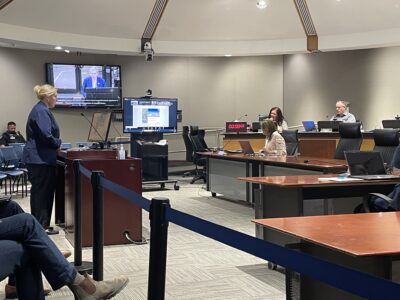
photo by: Sylas May/Journal-World
Melissa Sieben, the city’s director of Municipal Services and Operations and interim airport manager, addresses the Lawrence City Commission on Tuesday, Feb. 17, 2026.
A layout drawing for the Lawrence airport that’s required by the Federal Aviation Administration got the approval of the Lawrence City Commission on Tuesday night.
Commissioners voted 4-0 at their meeting to approve the drawing, which shows a variety of structures and improvements at Lawrence Regional Airport north of Lawrence. They also voted 5-0 to create two new subcommittees on the Aviation Advisory Board. (Commissioner Amber Sellers arrived partway through the meeting and was not present for the first vote.)
Melissa Sieben, the director of Municipal Services and Operations and the city’s interim airport manager, told the commission that the layout drawing was created as part of the city’s airport master plan process. The plan has been in the works for several years and is meant to forecast aviation activity in the area and suggest improvements to the facilities at the airport.
While Mayor Brad Finkeldei noted that the master plan itself wasn’t up for a vote on Tuesday, he also thought there were “a lot of good things that are happening out at the airport” right now.
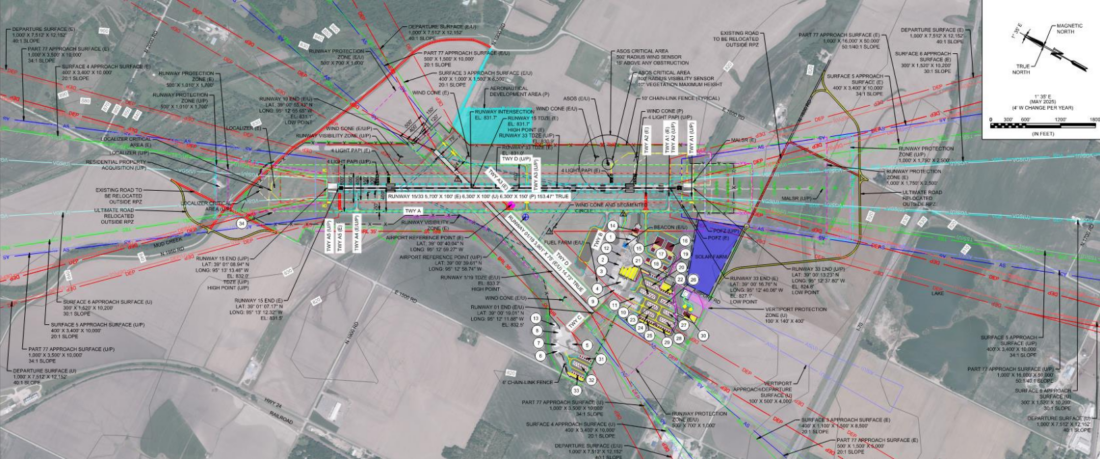
photo by: Screenshot/City of Lawrence
An airport layout drawing for Lawrence Regional Airport.
The drawing contains “all kinds of exciting things if you’re a pilot,” Sieben said, but there are some larger potential projects on it that the broader community might be interested in. Among them are future hangar developments on the east side of the drive up to the airport and some possible areas for development on the northeast side of the main runway.
Some of the features marked “TBA” on the drawing would be T-hangars, structures where aircraft owners can store their planes. Sieben said there was definitely demand for more storage like this and that more than 40 parties had expressed interest in T-hangars at the airport.
“There are always wait lists for T-hangars, and we are definitely not without that,” Sieben said.
The drawing also shows a space for a proposed solar installation just north of U.S. Highway 24/40 that would provide power for the airport.
Some commissioners were curious about how far the projects could go.
“Are we trying to make this more like the executive airport in Kansas City?” asked Vice Mayor Mike Courtney. “… What’s the direction we have?”
Sieben said that while there are some projects in the plan that are “aspirational,” most of the things the city plans to do at the airport over the next five years are not growth-related, but maintenance-related. The city actually has some maintenance projects either underway now or planned over the next couple of months, including improvements to the apron, taxiway lighting replacements and an upcoming runway rehabilitation, according to a presentation given to the Aviation Advisory Board earlier this month. (A $318,025 bid for the runway project was approved on the commission’s consent agenda on Tuesday.)
“We’ve done an incredible amount of work over the last couple of years,” Sieben said Tuesday.
The two advisory board subcommittees that the commission approved will be doing more work when they form. One will focus on capital improvements at the airport, and the other will be an events planning subcommittee to explore new ways to celebrate the airport and make it more visible.
The airport has already held special events such as youth camps and the United Way “Hangout at the Hangar” fundraiser, but the events subcommittee will look at how it can organize even more. That could include special World Cup programs in the near term, and looking forward it could also include planning a special celebration for the airport’s 100th anniversary. The airport was founded in 1929, and Sieben said the milestone anniversary in 2029 would be “monumental” for the airport.
Now that the layout drawings have been approved, the next step will be the preliminary review by the FAA, which Sieben said could take about 90 days, maybe a little longer. The final master plan report will come before the commission sometime after that. Any future projects on the drawing or in the master plan will have to go through the city’s normal approval processes, too.
City Government

Lawrence city commissioners agree Fire Medical expansion is necessary, but opinions vary on tax increase to fund it

The Lawrence Community Shelter is an ‘iceberg,’ and its leader provides a glimpse beneath the surface
Lawrence city leaders to get first look at 2027 budget proposal with 3-mill increase for Fire Medical’s Station 6 expansion
City leaders discuss how to strengthen existing public art funding program and make it more flexible
As Kansas’ anti-transgender bathroom law goes into effect, local governments are still trying to figure out how it works