Lawrence city leaders take a step forward on incentives for 121-unit affordable housing project
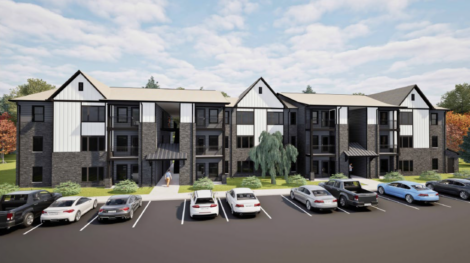
photo by: Wheatland Investments Group
This rendering shows a concept for an apartment building in the Floret Hill affordable housing development in west Lawrence.
City leaders took a step forward Tuesday on an incentive package for an affordable housing project that would create 121 units of affordable housing in western Lawrence.
At its regular meeting, the Lawrence City Commission voted 3-1, with Vice Mayor Mike Courtney opposed and commissioner Mike Dever absent, to approve a resolution of intent to issue two incentives for the Floret Hill development at the southeast corner of Bob Billings Parkway and Kansas Highway 10.
The project is being developed by Wheatland Investments Group in partnership with Tenants to Homeowners, and it requested Industrial Revenue Bonds for a sales tax exemption on construction materials, and a 10-year, 100% property tax abatement for property constructed or purchased with the proceeds of those bonds.
Floret Hill would be a mix of one-, two- and three-bedroom units that would be permanently affordable. While the project has received support from the city before – including $1.8 million from the city’s Affordable Housing Trust Fund and a city donation of 12 acres of land – Wheatland said that the project wouldn’t be able to move forward without the bonds.
Lea Roselyn, the city’s affordable housing administrator, said affordable housing “is not a profitable enterprise for developers. They cannot make it pencil out without community support.”
“This is housing that supports our local workforce,” Roselyn said. She said people in many important professions in the community made less than 80% of the area median income and would benefit from affordable housing – teachers, social workers, police officers, firefighters.
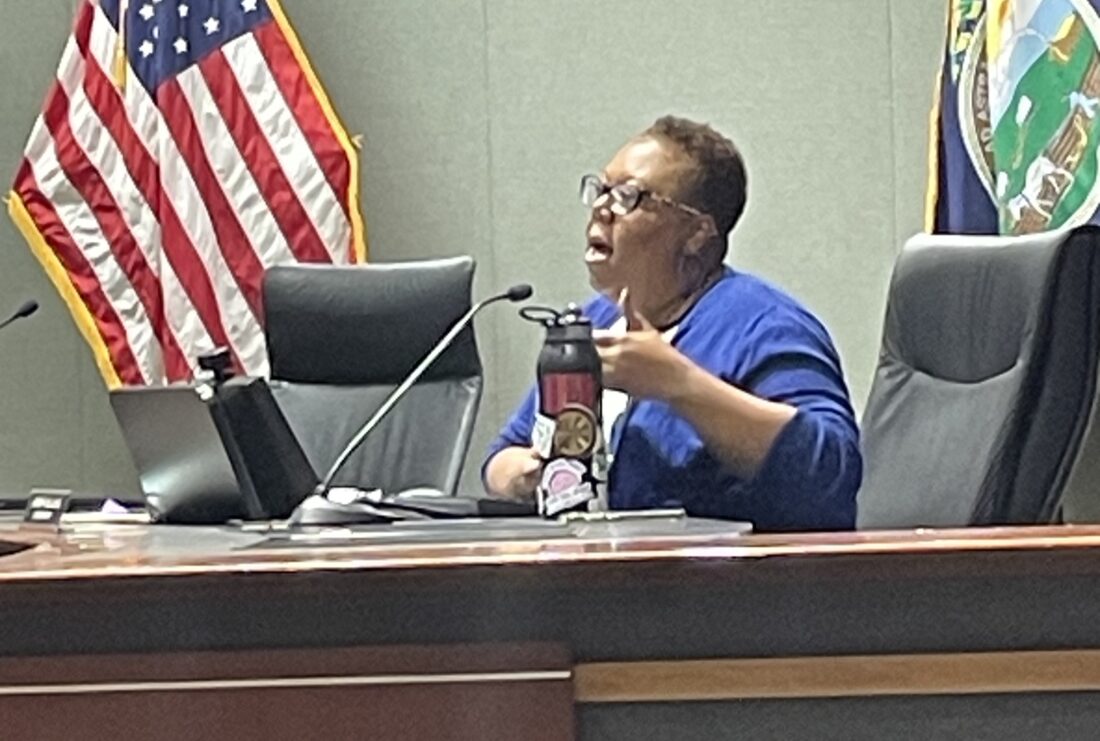
photo by: Sylas May/Journal-World
City Commissioner Amber Sellers speaks about affordable housing at the Lawrence City Commission’s meeting on Tuesday, Feb. 3, 2026.
Commissioner Amber Sellers echoed that. “It’s maintaining people and giving choice to those teachers, parents, firefighters, nurses, all of those … essential employees and neighbors in our community,” she said of Floret Hill.
Sellers said she was “insulted” by the stereotype that affordable housing was only for the poorest residents. She said that not long ago, she was below that threshold of 80% of area median income.
“Couple of years ago I was about in that 60% range,” she said.
She said that with an incentive request like this, it was important to look beyond just the impact on tax revenue.
“When we have someone that comes in front of us that has a track record of creating and sustaining affordable housing … providing an incentive is not about doing others wrong,” Sellers said.
Other commissioners did have some financial questions, though. Vice Mayor Mike Courtney and Commissioner Kristine Polian both wondered if the project could have foreseen the gap in funding.
“Did we know this from the start of the project?” Courtney asked of the need for extra incentives. And Polian said she felt that the city was often “put over a barrel” when projects came back to the city and asked for incentives.
“It feels like we’re kind of getting dragged,” Polian said.
But Mayor Brad Finkeldei said that often, projects were limited in how far out they could estimate their need for incentives. And Devin Rhodes of Wheatland said that in this case, the gap wasn’t apparent at the start.
“We did not know the amount of the gap when we started the project,” Rhodes said. “The more that we dug into the project, the more the gap grew.”
While the developers’ request for industrial revenue bonds was stated at $2.81 million in application documents, Rachel Orr, an attorney with Lathrop GPM, said that this amount was overstated. She said that the actual value would be about $1.5 million, and that only about 25% of construction material purchases for the project would be made in the city of Lawrence.
She also said that the commission wasn’t obligating itself to do anything with its vote, but merely signaling its intent as a “good-faith gesture to the development team.” The bonds wouldn’t actually be issued until the project was finished, Orr said.
In its memo to the commission, city staff estimated that the forgone property taxes from the incentives would be a little over $308,000 and the forgone sales taxes would be $78,000, for a total of about $386,000.
In explaining his vote, Courtney said he was concerned the financial impact would be greater.
“We’re voting on $2.8 million, and that doesn’t sit right with me,” he said in explaining his vote. “… We’re voting for ($386,000), but in actuality we’re voting on $2.8 (million).”
The project still has incentives requests that are pending. As the Journal-World reported, the developer wants to be able to use blasting for excavation work, which it says would save $700,000. It also is seeking $1.3 million for a road at the site, and it’s filed a request for funding in the city’s Capital Improvement Plan.
Finkeldei said he was “not excited about” the idea of the road as a CIP project. But he said there could be other ways of funding it, and that the specific incentives before the commission on Tuesday night were “something I fully support.”
“I’m very, very supportive of this project,” Finkeldei said.
City Government
City leaders consent to sale of Hamm Landfill to nationwide waste disposal company
Lawrence city leaders take a step forward on incentives for 121-unit affordable housing project

Hamm plans to sell landfill, recycling facility to nationwide company; Lawrence city leaders asked to consent
City Commission to consider tax incentives for 121-unit affordable housing project in west Lawrence

Why the City of Lawrence is doing a new housing affordability study – and what COVID has to do with it