City of Lawrence is providing less funding to economic development partners in 2026; here’s a look at what they have planned

photo by: Kim Callahan/Journal-World
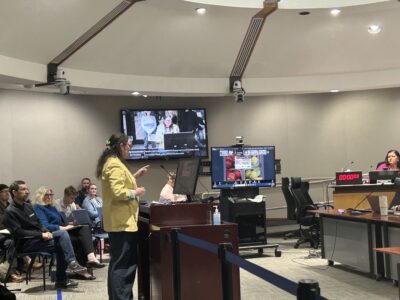
Lawrence City Hall, 6 E. Sixth St., is pictured on Friday, Sept. 6, 2024.
Story updated at 4:10 p.m. Wednesday, Dec. 31:
As 2026 rolls in, the city’s annual distributions to its economic development partners are rolling out — but they’re smaller than last year’s because of budget cuts.
In December, the Lawrence City Commission approved the funding agreements with its six economic development partners: the Lawrence Chamber, KU Innovation Park, Peaslee Tech, Douglas County CORE, the Lawrence Music Alliance and the KU Small Business Development Center. The organizations getting the funding are the same as last year, but the pool of money has shrunk: it’s about $727,000 instead of last year’s $903,000 — a drop of $176,000, or 20%.
The drop is due to the cuts that the city made during its 2026 budget process, which touched departments across the city as leaders worked to close a more than $6 million gap.
Many of the economic development organizations still have big plans for 2026 — from a Lawrence Music Week to more markets for minority entrepreneurs to programs related to the FIFA World Cup. Below you’ll find more details from the action plans they submitted to the city, as well as the amount of city funds each organization is slated to receive. You’ll also find how much they got in 2025, and the percentage by which their funding fell.
Lawrence Chamber/EDC: $163,887, down from $206,000 last year (20.4%)
In a letter to the City Commission, the Chamber’s leaders laid out some of their plans for 2026 — but they also said that the decrease in city funding wasn’t coming at a good time.
The letter from Chamber President and CEO Bonnie Lowe and Vice President of Economic Development Steve Kelly said the Chamber was working with six companies on economic development projects, three of which were companies already in Lawrence that were “interested in substantial new investment and jobs.” It also highlighted the Chamber’s role in preparations for the World Cup, for which Lawrence could be chosen as a team base camp.
The Chamber said that the cut to its funding during a time of so much activity “is challenging,” and it also noted that the city notified it of the cut on Dec. 2, less than a month before the start of its fiscal year on Jan. 1.
On Wednesday, Lowe told the Journal-World that the Chamber had made some adjustments since it learned about the funding it would receive. It has put one of its projects on hold, she said, and Chamber staff has discussed the possibility of making a supplemental funding request with the city in the first or second quarter of the year.
Still, she said, “there are some exciting projects that we’re involved with, with anticipated announcements in the coming months.” She voiced optimism about future sales tax growth with the World Cup and KU’s Gateway project, and said the Chamber’s partnership with the city was still strong.
“We’re not taking it personally,” she said of the drop in funding, “and we do not look at the reduction as anything more than the financial constraints the city is under.”
KU Bioscience and Technology Business Center/Innovation Park: $238,670, down from $300,000 last year (20.4%)
Some of the biggest developments for Innovation Park this year involve construction on KU’s west campus, including the $55 million National Security Innovation Center. But there are other initiatives planned there that don’t involve building lab space and moving dirt.
The park also wants to ramp up its marketing efforts and expand its online educational platform called CET to include general entrepreneurship education, “creating a solid foundation for anyone looking to start their own venture.” It will also host a slate of “lunch and learn” events, networking sessions and other educational programs throughout the year.
Peaslee Tech: $167,867, down from $211,000 last year (20.4%)
Peaslee Tech’s action plan filed with the city actually covers multiple years — 2025 through 2027 — and it mainly calls for growing its existing services. Among those is The Crunch, which it describes as a “business ignitor and prototyping center dedicated to supporting businesses and entrepreneurs in manufacturing.” Peaslee Tech provided stats from 2023, a year in which The Crunch served more than 70 local companies.
Other areas that Peaslee Tech will work to grow are apprenticeships (including for youth) and its RISE program, which recruits demographic groups that are underrepresented in the skilled trades, including women and people of color.
Douglas County CORE: $75,579, down from $95,000 last year (20.4%)
CORE, an entrepreneurship nonprofit that helps entrepreneurs in and out of the tech field, is making one of its programs that it successfully piloted available statewide.
The program is CORE’s Pre-Accelerator, which it describes on its website as “A focused cohort to validate your idea, test your assumptions, and prepare for building or raising capital.” In the plan, CORE says that Douglas County only creates one or two dozen “idea-stage tech startups” each year, and that the Pre-Accelerator program could do more if it were available to startups around the state.
“This will potentially help us recruit more innovative upstarts to Lawrence,” the plan reads.
CORE also hopes to expand its Inclusive Community Markets and its Blk & Brwn Entrepreneur Markets program for businesses owned by Black entrepreneurs and other people of color. Its action plan says that in addition to the existing Inclusive Winter Market, it’s holding an inclusive market event in the summer as well. And for the Blk & Brwn markets, the plan calls for “MORE of them” — specifically in March, June and October.
“[T]hese have been a hit,” the plan reads. “They will continue to expand.”
Creative Impact Alliance/Lawrence Music Alliance: $46,000, down from $51,000 last year (9.8%)
Lawrence already has an annual Restaurant Week, and the Lawrence Music Alliance wants it to have a Music Week too.
There aren’t many details about the timeline for Lawrence Music Week in the group’s action plan; it expects to solidify that timeline early in the year. But it says that this is part of the effort to “establish Lawrence as a regional leader in music ecosystem development, strategic planning and economic support for music and the creative sector.”
The Lawrence Music Alliance also plans to develop more “private/public partnerships to add live music in private businesses,” and to continue its annual events, including the MixMaster Music Conference, set for September, and Music Business Month, which provides resources and support for entrepreneurs in the music field.
KU Small Business Development Center: $35,000, down from $40,000 last year (12.5%)
For 2026, the Small Business Development Center has its eyes on the World Cup and on training more entrepreneurs.
According to the action plan it submitted to the city, its goals include preparing more than 30 businesses for opportunities associated with the World Cup. It also has goals of supporting more than 50 food entrepreneurs, expanding its advising services and growing its digital content on business topics, including by developing new video presentations and webinars.
City Government
Seniors are the ‘biggest surprise’ in first month of Lawrence rec center fees; also, a debate on free senior swim
State lawmakers considering bills that would overturn Lawrence housing ordinance related to income

Lawrence city leaders to vote on airport layout that’s necessary for federal funding
North Lawrence study’s goals – and how it differs from other studies – come into sharper focus
City leaders let tech company change the location of its incentives request from former printing plant to another downtown site