
Justice Matters to host annual action assembly Sunday
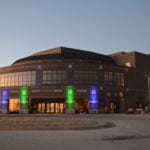
photo by: Ashley Hocking
The Lied Center of Kansas is pictured in this 2018 file photo.
Faith-based advocacy group Justice Matters is gearing up to host its annual action assembly this weekend.
The group will host Lawrence and Douglas County community leaders — and an estimated 800 community members, according to a press release about the event — to talk about solutions to key justice issues facing the region. The assembly is set for Sunday from 3 to 4:30 p.m. at the Lied Center, 1600 Stewart Drive.
Justice Matters plans to focus on a few specific issues at this year’s assembly, according to the release:
• Shifting from punitive disciplinary policies to restorative justice in the Lawrence school district. Justice Matters will invite a school board member to publicly restate a commitment to providing high-level training in restorative practices for teachers and staff.
• Improving quality of life for the elderly. The group plans to call for a commitment from county leaders to champion a “local workforce development collaboration” that would address a shortage of staff providing care to Douglas County’s senior citizens.
• Ending the crisis of chronic homelessness. The group will ask city and county leaders to recommit to the goal of reaching “functional zero” chronic homelessness — meaning the number of people experiencing homelessness never exceeds the community’s capacity to move folks into permanent housing. With that in mind, Justice Matters also plans to ask that key tenets of the “Built for Zero” movement be built into the final version of the county’s five-year plan for housing and homelessness that’s currently in development.
The program will also include a brief update from Justice Matters’ Jail Alternatives Committee about an analysis of the Douglas County Jail population published late last year by the Brooklyn-based Vera Institute of Justice. It examined bookings into the jail over the past five years and found, in part, that a majority of bookings were for minor, nonviolent charges, and that there were also racial disparities suggesting law enforcement officers are more frequently arresting Black people relative to the general population.
Other News
U.S. Sen. Roger Marshall faces Democratic, Libertarian challengers in general election

Incumbent Douglas County commissioner and newcomer challenger face off for District 5 seat
Primary winner faces incumbent’s write-in campaign in Douglas County Commission District 4
A student-run coffee shop will open at Community Connections at Pinckney next week
Douglas County commissioners to discuss proposed changes to funding agreements with community partners