Bioscience Authority puts its money on KU
Planned building will be part of Kansas Bioscience Park in Olathe
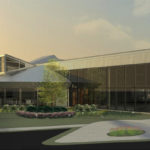
In this image by PGAV Architects, a rendering of a new 38,800-square-foot facility in the Kansas Bioscience Park is pictured. The Kansas Bioscience Authority board of directors Tuesday accepted a 0.6 million bid to build the facility.
The Kansas Bioscience Authority is giving almost $3 million to Kansas University in an attempt to recruit top-notch researchers to the state.
At a meeting in Lawrence on Monday afternoon, the KBA board of directors agreed to spend $2.49 million over five years for a position that would direct and expand KU’s laboratory for macromolecular and vaccine stabilization. Another $500,000 would be spent over three years to bring in a top researcher in the field of polycystic kidney disease.
Under the agreement, KU would match KBA’s contribution.
Both positions are in KU’s School of Pharmacy. Recruiting researchers is one of the steps the university is taking as it pursues National Cancer Institute designation for the KU Cancer Center.
The KBA wouldn’t release the names of the new researchers, saying the deals still needed to be finalized.
But Brad Kemp, project director for the KBA’s Cancer Fighting Cures division, called the potential director of the lab “a rock star” in the field who has already had success in taking drugs from research to commercialization and currently works in the private sector.
Based in Lawrence, the macromolecular and vaccine stabilization lab researches ways to develop new vaccines. Its director, Russell Middaugh, is planning to retire, Kemp said.
The polycystic kidney disease researcher was recruited at the request of the cancer center’s external advisory board because of the link between cancer and kidney disease, Kemp said.
The $3 million will be spent on the salaries of the new researchers, assistants and staff they will bring with them, and equipment and supplies. KBA’s contribution is part of an effort to hire 25 new cancer scholars by fiscal year 2011.
In other Kansas Bioscience Authority business with local ties, the investment committee recommended that $50,000 go toward a marketing plan for Lawrence-based CritiTech, which is working on cancer-fighting drugs that come with fewer side effects.
When CritiTech presented a business plan to the KBA last summer, there needed to be more information about who was in the market for the drug technology and what the market would look like five years from now, KBA staff member Terry Osborn said.
In May, the company received $50,000 from the KBA to develop technology for converting drugs into a dry, sterile powder form.
State Government
Kansas state employees could lose Blue Cross Blue Shield health insurance in cost-saving move
Lt. Gov. Toland in Lawrence to celebrate downtown affordable housing project, urges city to be ready for more growth
Kansas educators wrestle with teaching about John Brown as schools face scrutiny on race

Kelly vetoes more bills, including provisions related to recess at elementary schools, gold and silver coins as currency
Lawrence woman who underwent genital reassignment surgery 13 years ago suing state, which says her driver’s license must say ‘male’