

Texas may lead nuclear power surge
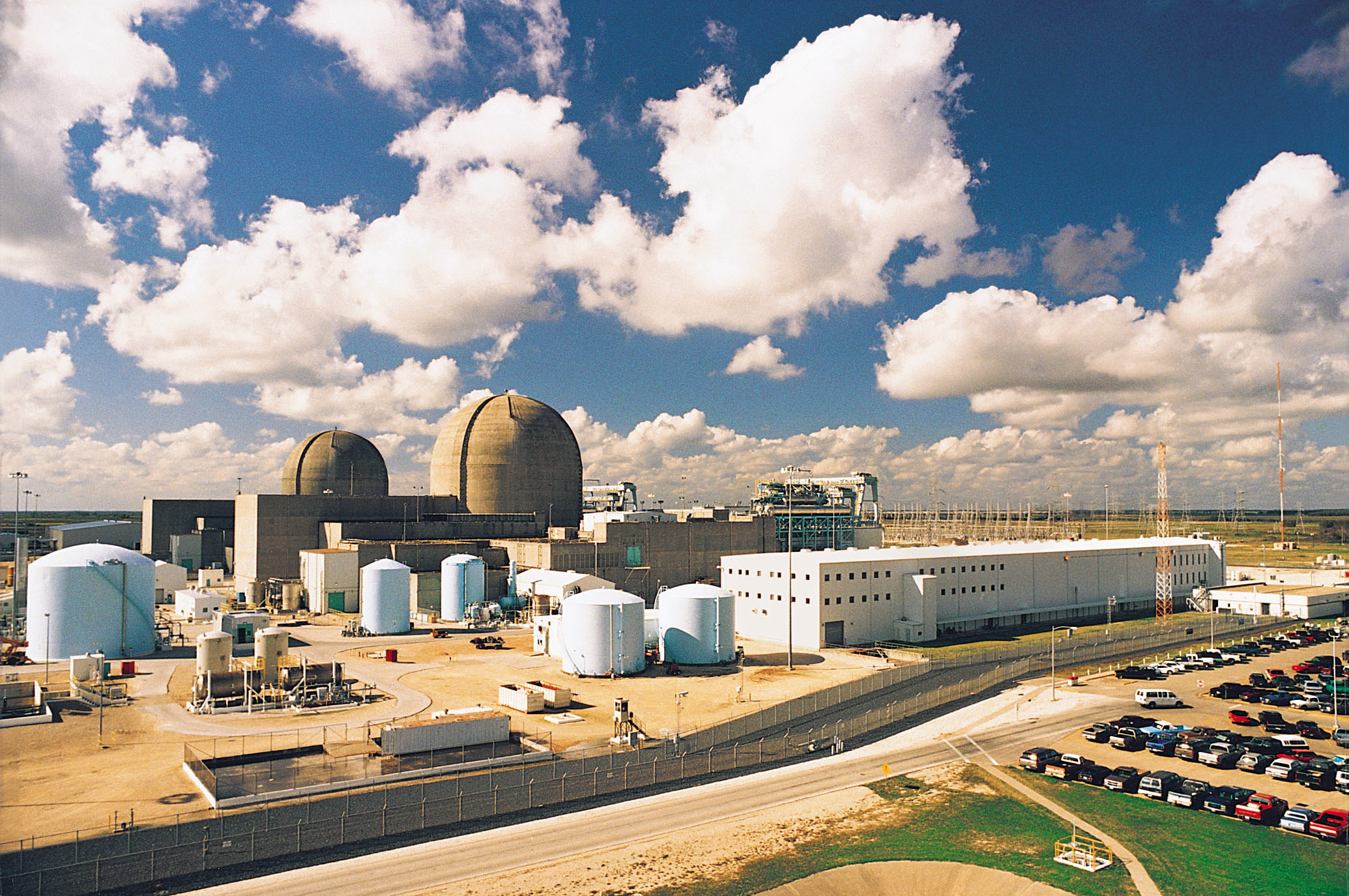
NRG Energy, the second-largest energy provider in Texas, has submitted an application to build two nuclear-powered generating units at the current site of the South Texas Project, in Matagorda County. The units would be of the advanced boiling water reactor style, built by GE Hitachi Nuclear Energy, and each would generate 1,350 megawatts of electricity. Cost is billion for both units, according to the company.

This photo looks down upon an existing reactor core at the South Texas Project.
Nuclear Pros & Cons
Pros:
¢ Unlike coal and gas-fired plants, nuclear plants create no harmful greenhouse gases associated with global warming.
¢ Nuclear power plants provide so-called baseload generation – that is, nuclear plants can continue running around the clock and provide a stable source of power.
¢ Nuclear fuel is relatively cheap.
Cons:
¢ Highly radioactive byproducts from nuclear reactors can remain dangerous for tens of thousands of years. There is a move afoot to create a nuclear waste dump in the Yucca Mountain, in Nevada, although that project remains stymied in Congress. Critics warn of a great potential risk when transporting dangerous radioactive waste to the site.
¢ Nuclear construction is expensive and, critics say, so far impractical without taxpayer help.
¢ Uranium mining can harm the environment and poses a potential public health risk.
Austin, Texas ? With eight power plants on the drawing board, Texas could lead the way in an American renaissance of nuclear power, according to industry leaders and some policymakers.
Four power companies – New Jersey-based NRG Energy, Amarillo Power, Dallas-based Luminant and Chicago-based Exelon – have proposed building nuclear plants in Texas. That would increase the reactors in the state from four to 12 and more than triple its nuclear output.
It’s likely that some of the plants will never get built, and the permit process and construction would take about a decade.
But whether Texas ends up with two more reactors or eight, it is clear that a nuclear awakening is under way. Largely spurred by new loan guarantees and other federal incentives, plus a new regulatory scheme in Washington, companies are floating plans and partnering with overseas firms on construction and design.
This reawakening is also evidenced by a spate of licensing and operating applications at the Nuclear Regulatory Commission, a development all the more startling given that these applications are the first since the Three Mile Island accident in 1979.
“Nobody has built a plant in 28 years, and all the manufacturing capacity is in France and Japan,” said Steve Winn, chief executive officer for nuclear development at NRG. “So rebuilding the U.S. labor force is going to be a challenge, and we’re working with the state and federal government to work with a plan for labor training. … But the financial community and the general population are more open to nuclear power now than they have been in a long time.”
Not cut and dried
Serious questions remain. For instance, no solution has been found for the radioactive byproducts of nuclear energy, which can remain hazardous not for just hundreds of years, but for thousands or even tens of thousands.
The construction costs can also be daunting. Already, detractors are warning that the new plants would be much more expensive than advertised.
While utilities reportedly have priced the cost of a kilowatt of nuclear power at $3,000 to $4,000, Moody’s Investors Services said in October that a more realistic price would be $5,000 to $6,000. That puts the cost of a 1,500-megawatt nuclear plant at about $9 billion, according to reports.
And another renaissance might be in the offing – that of the anti-nuclear movement.
“We think that nuclear power is the wrong way to go, and we’re certainly going to be opposing these new nuclear power reactors,” said Ken Kramer, director of the Lone Star chapter of the Sierra Club.
Texas is home to four nuclear reactors at two sites – two at Luminant’s Comanche Peak site at Glen Rose, and two at NRG’s South Texas Project in Matagorda County. The Comanche Peak reactors came on line in 1990 and 1993; the South Texas reactors came on line in 1988 and 1999.
Collectively, the NRG and Luminant plants produce about 13.4 percent of the annual output on the Texas power grid and have a combined generating capacity of 5,000 megawatts of electricity, enough for about 3.5 million homes.
Under current plans, Luminant and NRG would more than double their nuclear output by building two more reactors apiece adjacent to their current facilities.
Permit applications
NRG submitted its federal application in September 2007 for what the company says will be an $8 billion project.
The NRG application, which is being delayed by regulatory questions, is the only one for a Texas plant pending at the commission.
A Luminant spokesman says it plans to submit its application to the Nuclear Regulatory Commission in September 2008. The company has not said how much the project would cost, although it’s likely to have a price tag similar to that of the proposed NRG plants.
Two more companies could also become nuclear players: Amarillo Power, a company formed by developer George Chapman; and Exelon, which has floated proposals to build units in Matagorda or Victoria counties.
The Amarillo reactors would generate about 1,600 megawatts apiece and Exelon’s plants would put out about 1,500 megawatts, according to the NRC.
All told, the NRC says it expects as many as 30 permit applications for reactors across the country. The agency already has received 14 applications, the first since 1979.
Under the new regulatory process, companies can apply for an operating license using plant designs preapproved by the Nuclear Regulatory Commission. In theory, this will cut the time required to obtain the necessary permits.
“The catalyst has been the (federal) Energy Policy Act, which provided loan guarantees and production tax credits,” said Dave Knox, a spokesman for NRG. “It was needed to kick-start the nuclear industry.”
He said anxiety over global warming and the country’s growing dependence on fossil fuels helped spur the 2005 legislation.
State Government

9 nominees vying to fill vacancy created by Judge Pokorny’s retirement

As filing deadline nears for 2026 elections, some Douglas County races feature just one candidate
State lawmakers extend emergency declaration over hantavirus exposure
TOPEKA — Kansas legislative leaders on Tuesday approved the governor’s request to extend an emergency ...

Trump endorses Kansas Senate president in GOP campaign for governor
No Labels Kansas is no more as a political party
TOPEKA — Demise of the No Labels Kansas political party was inevitable after it neglected to fulfill the ...
Johnson County school districts plan to sue state over lack of special education funding
TOPEKA — Four Johnson County public school districts want to sue the state of Kansas for more than 15 years of ...