Comedy central
Lawrence comic Justin Leon schools wannabes on the do's and don'ts of surviving as a stand-up in the Midwest
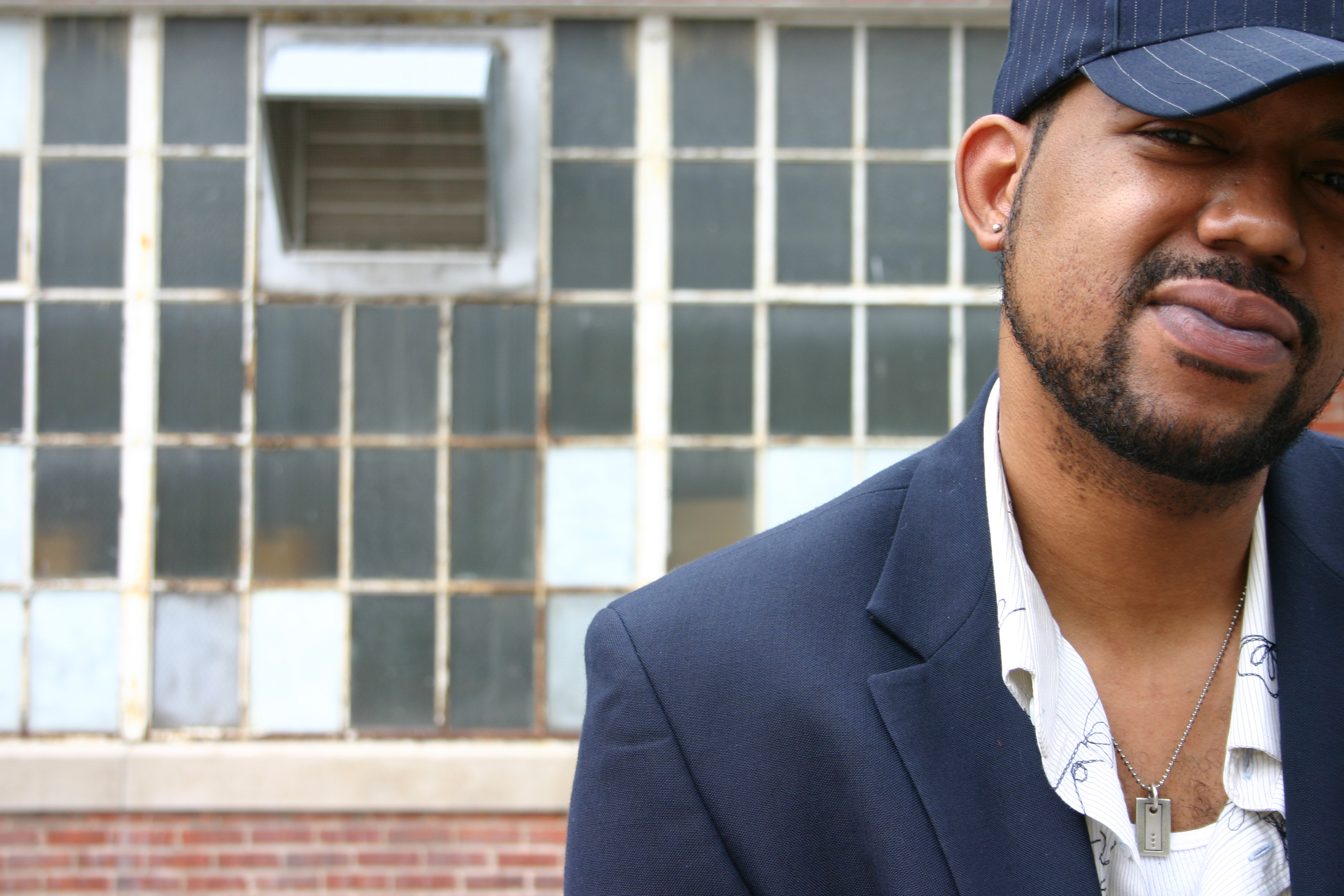
Justin Leon, a Lawrence-based comedian, is finding national success on the stand-up circuit thanks to his easygoing nature and sharp observational humor.
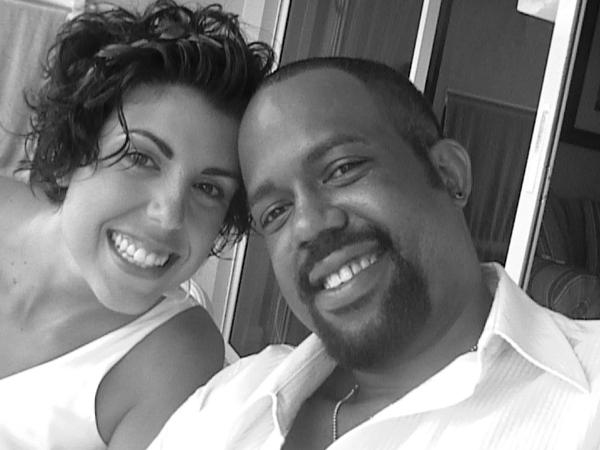
Marci Rhodeman, left, is used to comic husband Justin Leon incorporating their relationship into his act. Rhodeman recounts, Ill say, Hey,
If you ring up Justin Leon’s cell phone, the soulful music that greets the caller is “Easy” by The Commodores.
“For the most part that song absolutely does represent me,” Leon says. “That’s the way I think about stuff: I’m not going to let things get to me. I’m not going to let your troubles get to me either. I’m easy.”
That’s not to say the Kansas comedian is a softy. No, his material is plenty edgy. (I’m a 33-year-old African-American male. I’ve never been to jail. I don’t have any kids. I’m damn near extinct.) But it’s his ability to lull audiences into becoming comfortable that allows him to say what’s really on his mind.
That’s why he’s been able to share stages with comics ranging from Lewis Black to D.L. Hughley to Larry the Cable Guy.
“I can perform in front of anybody. People are people. Funny is funny,” he says.
The Lawrence resident is spending a month in Los Angeles for several reasons. First, he’s performing at the competitive California Comedy Festival this week. Second, he’s trying to land some national management – not necessarily an easy task for a Kansas-based entertainer.
“I’ve been doing comedy on the road for about eight years. The only thing that’s been keeping me from breaking over to that next level is television and representation,” he explains. “In order for most of these clubs to headline you on a regular basis, you’ve got to get at least one TV credit or something so people can go, ‘I recognize that guy. I’ll spend some money to see him.'”
To talk with Leon is to get schooled in the ways of stand-up comedy. He can deconstruct what will work in front of a live audience like a surgeon can pinpoint a tumor – a really funny surgeon, anyway. Not the Patch Adams kind.
“When I go to a show where I’m performing, I usually sit in the back and watch people walk in,” he says.
“You have to recognize what people’s moods are and what they look like. Is the husband being dragged in by the wife? Does he not want to be there? It’s not so much a race thing as an age thing. It’s a class thing. It’s a time-of-night thing. It’s how drunk they appear. Are they loud? Are they quiet? Are they uptight? Is that a bachelorette party over there? Are they sipping out of penis straws? That varies with every crowd.”
Two-step approach
For Leon, that type of comedic analysis also applies to different parts of the country.
“There are some towns where you just know things are a certain way,” says the Kansas City, Kan., native. “For example, Oklahoma City is what I call a two-step room. In comedy, you tell a joke and it’s setup, punchline, step, laugh. In Oklahoma City it’s setup, punchline, one step, two step, laugh.”
The key to conquering that? Slow down the pace a tad.
“There are some crowds where I can’t do certain jokes early because they have to get to know me better. They have to like me before I can say some things that might offend them a little bit,” he says.
Lately, that’s applied to his material involving his own interracial marriage. (I have a different responsibility to my wife than most men have with their wives. I have to make sure that nothing happens to my wife all the time. Because if something happens to her, I’m suspect number one.)
“We’re still newlyweds, so there’s still a lot of comedic territory left to explore,” says wife Marci Rhodeman.
Married to Leon since last year, Rhodeman says she’s often asked if she’s bothered by the fact her exploits wind up onstage.
“No, I’m not because they’re exaggerations,” she says. “For instance, he does a joke about us working out together. (Every time we go jogging it looks like a brother is chasing a white girl.) But I don’t jog.”
In fact, the 28-year-old says she relishes Leon’s material that delves into their personal lives – whether it’s fictional or not.
“I’ll say, ‘Hey, did you tell my joke tonight? Did it kill?’ I’m really vain.”
The couple actually met years ago in Arizona. Lawrence native Rhodeman was living there at the time, and Leon was doing a road gig while based in California.
They managed to reconnect years later after his show at Stanford’s Comedy Club in Kansas City, Mo. When Rhodeman decided to permanently move back to Lawrence to open her own hair salon, Leon decided it was time to join her.
“Now I’m a Jayhawk fan for life,” he says. “I’m rock-chalked out.”
Approaching the mic
Leon admits he “just kind of stumbled into comedy.”
His best friend, William Miller, invited him to check out an open-mic night at Stanford’s in the mid-1990s. Together they watched an uneven display of potty-mouths and wannabe Seinfelds.
Afterward, they sat in a car for a few minutes, then Miller told Leon, “If they think that’s funny, you’re going to be a star.'”
Leon worked up a short batch of topical material, then returned to open mic as a participant.
“I just crushed. I did three minutes of all-original stuff that went great,” he recalls. “However, the second time wasn’t near as good or exciting. I missed on a bunch of stuff. It was very painful except for the last 30 seconds. But that last part hooked me back onto it forever.”
The 6-foot-4-inch Leon – a former basketball standout at Westport High School – went through a variety of jobs while attempting to get his foot in the stand-up door.
He installed satellite dishes, worked ticketing for America West Airlines and cooked at Applebee’s. Most recently, he was a child-care counselor for a group home in Pasadena, Calif.
“All these things I did made me realize early how that wasn’t the lifestyle for me,” Leon says.
For the last five years, comedy has been his one and only day job.
Leon says, “People ask if comedy can be learned. Steps can be learned. Formats can be learned. But true funny is triggered by something that’s in your brain. I don’t think people understand how much work it takes to see the world the way we do.”
Arts and Entertainment
In collaborative show ‘Breeders,’ Lawrence artists capture the chaos and the fun of parenthood

Final Friday Art Walk, theater, markets, Kansas Union 100th Birthday Party and more
University Theatre’s final show of the season, ‘The Laramie Project,’ is important story of queer history, director says

Hear about the bizarre side of biology with acclaimed author Mary Roach at Liberty Hall

Lawrence groups will blend soccer and signature events for free World Cup watch parties