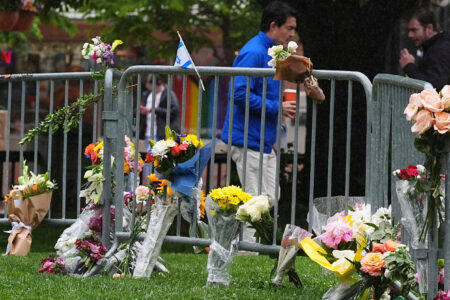
Texas death row inmate has sentence commuted to life

Tasha Foster, right, wife of death row inmate Kenneth Foster, hugs a friend outside the Walls unit at the Huntsville, Texas, prison after hearing that Gov. Rick Perry had commuted her husband's sentence. Hours before Foster's scheduled execution on Thursday, Perry accepted a parole board recommendation and commuted his sentence to life in prison.
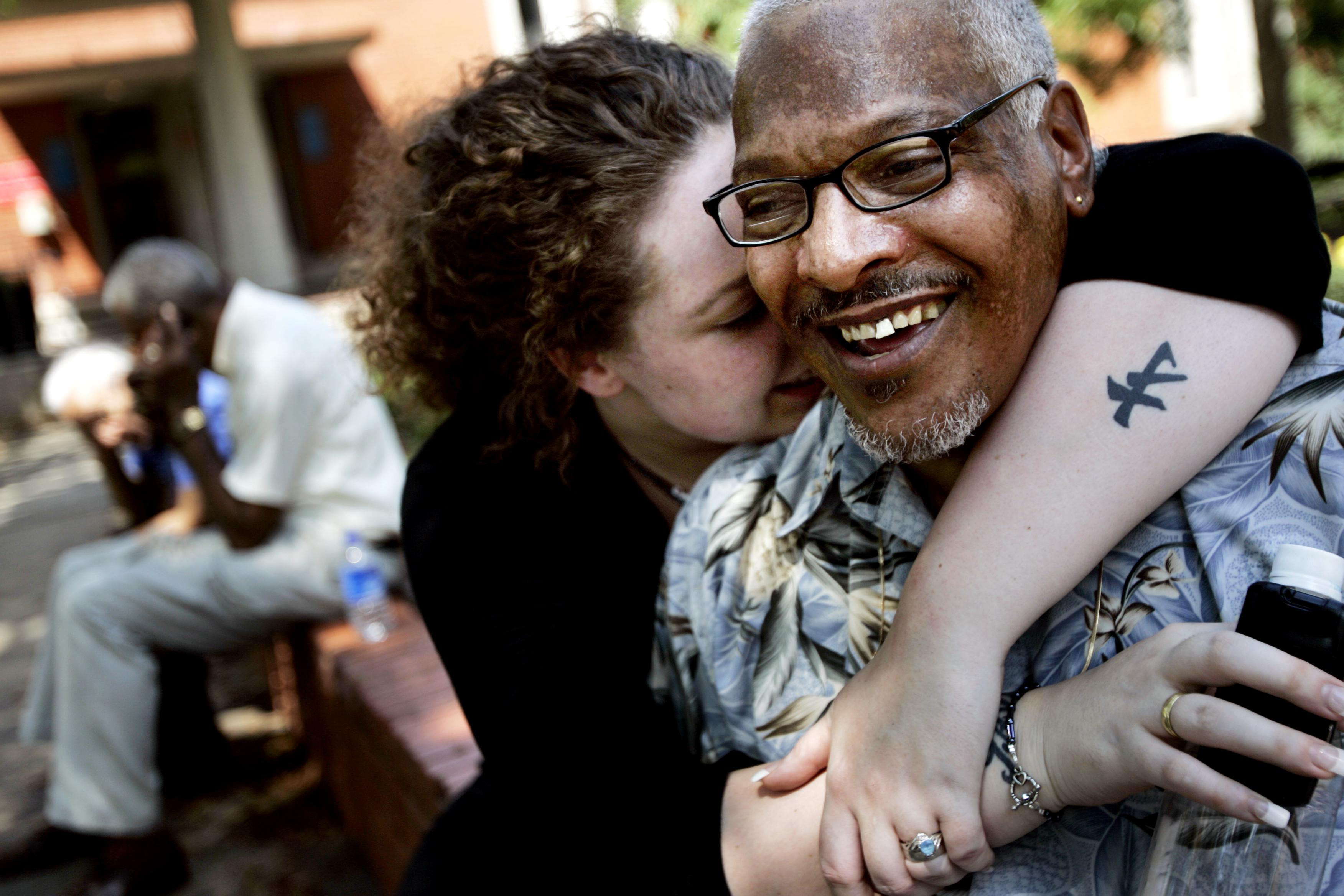
Kenneth Foster Sr., right, father of death row inmate Kenneth Foster, and Tasha Foster, the inmate's wife, hug Thursday outside the Huntsville, Texas, prison after getting the news that Gov. Rick Perry commuted Foster's sentence. Hours before his scheduled death, the getaway driver in a 1996 murder was spared when Perry accepted a parole board recommendation and commuted his sentence.
Huntsville, Texas ? Gov. Rick Perry, longtime head of the nation’s busiest death penalty state, spared an inmate Thursday hours before he was to have been executed for being a killer’s getaway driver.
Perry issued the commutation order on a parole board’s rare recommendation about seven hours before Kenneth Foster was to have been put to death – the narrowest gap by which he has halted an execution in his more than eight years in office.
Thursday’s vote marked only the second time since Texas resumed carrying out executions in 1982 that the Texas Board of Pardons and Paroles endorsed stopping an execution with so little time remaining. In a 2004 case, Perry rejected the board’s recommendation and the prisoner, who had been diagnosed as mentally ill, was executed.
Foster, 30, learned of Thursday’s 6-1 board vote during a morning visit with his father. A warden told him of the governor’s commutation about an hour later.
“The first thing I did was drop to my knees and say a little prayer,” he said as he was being taken from the Huntsville prison unit where executions are carried out for a return trip to the prison that houses death row. “I owe a lot of people.”
Death penalty opponents had launched a public-relations campaign to save Foster because they objected to Texas’s so-called law of parties, a unique statute in which each participant of a capital crime is held equally responsible. In any other state, the person who actually killed another person might be eligible for execution, but the driver or other participants might not be.
Foster’s lawyer, Keith Hampton, estimated that at least a dozen other Texas death row inmates have been executed under the same law, including one this year.
Perry, who has fought any attempts to water down Texas’ laws on capital crime, didn’t object to Foster’s execution on those grounds. Instead, he said he opposed trying capital murder defendants together, as Foster and a co-defendant were.
Foster had acknowledged that he and his “knucklehead” friends were up to no good as he drove them around San Antonio in a rental car and robbed at least four people.
“It was wrong,” Foster said recently from death row. “I don’t want to downplay that. I was wrong for that. I was too much of a follower. I’m straight up about that.”
Foster followed Michael LaHood Jr., and his girlfriend to LaHood’s home about 2 a.m. Aug. 15, 1996. One of Foster’s passengers, Mauriceo Brown, demanded LaHood’s wallet and car keys, then shot him through the eye when the 25-year-old couldn’t produce them.
Brown and Foster were tried together. Brown, 31, was executed last year.
National
Community-built map tracks ICE activity across Tucson, Arizona
Trump’s plan to paint the Eisenhower building could cost at least $7.5M
US will start revoking passports for thousands of parents who owe child support, AP learns
WASHINGTON — The U.S. State Department will begin revoking the U.S. passports of thousands of parents who owe a ...
Tennessee enacts new US House map carving up majority-Black district in Memphis
Federal court rules against new global tariffs Trump imposed after loss at the Supreme Court