

Rain and wind complicate annual fires in Flint Hills
STRONG CITY ? To everything there is a season, and in the Flint Hills of Kansas, now is the time for grassland to be burned, an annual ritual essential to renewal of the prairie.
But this year, rain and wind have limited the number of days suitable for burning.
“We’ve got a lot of burning and not much time to do it,” said Mike Holder, Kansas State University extension agent in Chase County. “We’re going to see a lot of fire over the next couple of weeks.”
Chase County, one of 14 Kansas counties in which the rolling, scenic Flint Hills are located, is home to the Tallgrass Prairie Preserve, the Z-Bar Ranch and vast amounts of pasture land. The prairie grass, touted as the richest pasture in the world that can add 2 to 2.5 pounds a day to the weight of grazing cattle, needs regular spring burn-off to flourish.
Smoke from the annual fires can cause visibility problems for motorists. There also are concerns about unexpected winds causing uncontrolled burning that threatens homes and barns, especially in areas where urban sprawl has spilled out into the countryside.
Some have suggested that the burning take place over a longer period, from as early as mid-February to as late as early June. But grassland managers say the timing of the burning is extremely important.
“It’s hard to believe for people unfamiliar with burning, but it really does have to be done at just the right time,” Holder said. “That is why some pastures just don’t get burned every year. You don’t get the right time or the right conditions.”
When the burning is done too early, the pasture is left vulnerable to wind and water erosion, and dormant wood brush isn’t killed. If it’s too late, the green grass won’t burn fast enough. At the right time, a hot and fast fire kills scrubby wood plants, and sunlight can get through to the soil, bringing life to fungi that help the development of plant roots.
In the past, American Indians knew that buffalo preferred new grass springing from land that had been burned over. And David Kehler, Butler County extension agent, said it has been shown that cattle feeding on burned pasture gain weight faster.
The buffalo roaming over the Kansas prairie came on their own to find the choicest grassland, but today ranchers bring cattle in by the truck, unloading them at places like Matfield Green, Cassoday, Bazaar, for a season of grazing in the scenic countryside before they’re taken to feedlots to bring them to market weight.
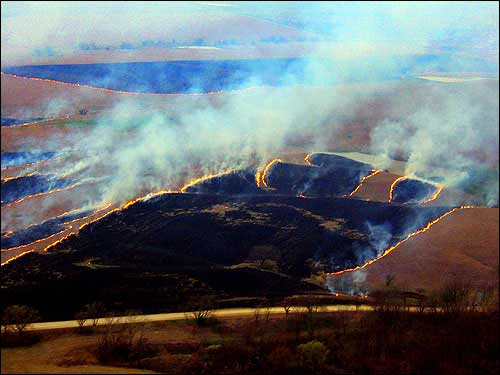
Each Spring, ranchers in the Flint Hills burn their grazing lands to encourage new growth. Smoke from the fires drifts eastward toward the Kansas City metro area, and has in the past skewed air quality readings.
State Government
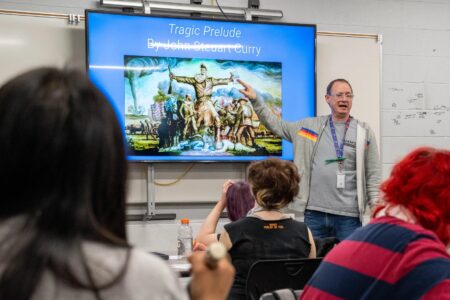
Kansas educators wrestle with teaching about John Brown as schools face scrutiny on race

Kelly vetoes more bills, including provisions related to recess at elementary schools, gold and silver coins as currency

Lawrence woman who underwent genital reassignment surgery 13 years ago suing state, which says her driver’s license must say ‘male’
Kelly vetoes bill that would have allowed protest petitions to stop city, county property tax increases
Thousands of Kansas residents to receive notice saying they need to repay mistaken unemployment payments from pandemic
