

Richard Robison
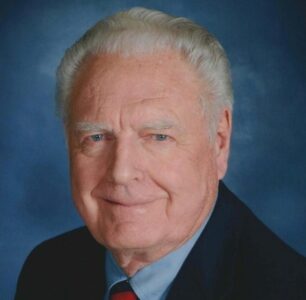
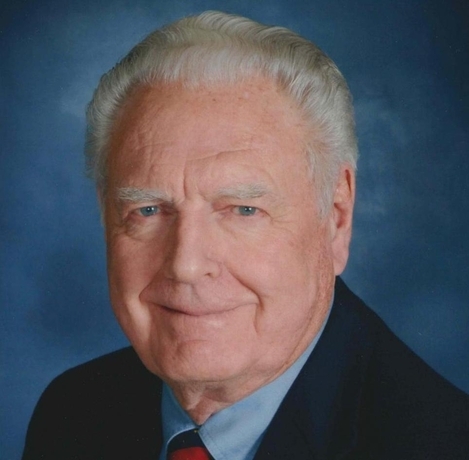 Richard Ashby Robison of Overland Park, Kansas, died April 24, 2026. He was 93.
He was born Jan. 10, 1933, in Fillmore, Utah, the youngest son of Aaron Wayne and Fern Ashby Robison.
Richard married Joleen Ashman in 1953; she died in 1994.
In 1996, Richard married Mary Meitl Pfortmiller, who survives.
He is also survived by sons Richard Dale Robison (wife Glenelle) of La Veta, Colorado, and Mark David Robison (wife Dianne) of Reno, Nevada; grandchildren Matt Phillips, Sarah Robison, Mollie Robison, Zach Robison, Lucas Robison and great-grandchildren Hope Harlow, Beau Harlow, Payton Robison and Carter Robison. Stepchildren include Teresa Castle, Rachelle Moley and Jon Pfortmiller. A daughter Valerie and brothers Ashby, Ray, Duane and Doyle preceded Richard in death.
After growing up in Fillmore, Richard served with the U.S. Army in Germany, graduated from Brigham Young University and earned a Ph.D. in geology from the University of Texas at Austin. As a young man, he worked for the U.S. Geological Survey, University of Utah and Smithsonian Institution.
A fascination with the Earth and its inhabitants – ancient and modern – led him to more than 50 countries and every continent.
From 1973 to 1996, he was a member of an International Union of Geological Sciences panel charged with refining the international geological time scale in Utah and China.
In 1974, he was appointed Gulf-Hedberg Distinguished Professor of Geology at the University of Kansas in Lawrence. He taught numerous students and authored or co-authored many scientific publications about fossilized early animals and their environments, including the textbook ‘Fossil Invertebrates.’ He also wrote an entry on the geologic Cambrian Period and its sedimentary rocks for the final printed edition of the Encyclopedia Brittanica.
He described and named most of the Cambrian trilobite species known from Utah, home to one of the one prolific faunas of that geologic age.
During his time at KU, Richard was director of its Paleontological Institute and editor of the encyclopedic ‘Treatise on Invertebrate Paleontology,’ a currently 55-volume work describing fossils of organisms without backbones.
He was elected a fellow to the Geological Society of America ‘in recognition of distinguished contributions to the geosciences’ and to the Paleontological Society ‘for significant contributions to paleontology.’
Richard officially retired in 1998 but continued his life's work. He was the senior author of ‘Exceptional Cambrian Fossils from Utah: A Window into the Age of Trilobites,’ published by the Utah Geological Survey. It is the most comprehensive work ever assembled on the state's world-renowned fossils.
Per his request, a family celebration of Richard's life will be held in lieu of a funeral. His ashes will be scattered in Utah.