Negotiators reach tentative deal on Kansas tax cuts
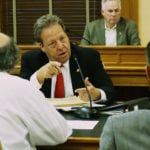
Kansas state Sen. Tom Holland, D-Baldwin City, makes a point during negotiations between the Senate and House over tax issues, Wednesday, May 2, 2018, at the Statehouse in Topeka, Kan. Holland argues that the state cannot afford tax cuts being pursued by top Republican lawmakers. (AP Photo/John Hanna)
Topeka ? Tax negotiators in the Kansas House and Senate reached a tentative deal Wednesday evening on a package of tax cuts, but it remains to be seen whether the package has enough votes to pass the full Legislature.
Supporters say the bulk of the bill is intended to return to taxpayers additional revenue the state would otherwise receive due to recent changes in federal tax law that Republicans in Congress and President Donald Trump approved in December.
But the package also includes a number of other provisions unrelated to federal tax law changes.
Among the provisions in the proposed package are:
• Allowing people to itemize deductions on their state tax returns, even if they take the new, higher standard deduction on their federal returns.
• Accelerating the pace at which Kansas restores full deductibility for medical expenses, mortgage interest and local property tax payments on Kansas tax returns.
• Exempting for one year only, tax year 2018, income from offshore assets known as GILTI — Global Intangible Low-Taxed Income — that are repatriated to the United States, as well as other deferred foreign income.
• Restoration of full expensing deductions for certain kinds of businesses that were just brought back onto state income tax rolls in 2017.
• Providing a sales tax exemption for the purchase of precious metal bullion.
• And enacting a tax credit for purchases made from qualified vendors employing disabled people.
The two sides also agreed to put other tax provisions into separate bills so lawmakers could vote on them separately, including one that would effectively lower the sales tax paid on motor vehicle purchases by letting buyers deduct the amount of any rebates they receive from the taxable purchase price of the vehicle.
The total package is expected to reduce state revenues by about $81 million a year, according to one early “ballpark” estimate from the Legislature’s Research Department. A more detailed estimate is expected to be released before lawmakers vote on the bill.
Earlier in negotiations, though, the Senate pushed for additional provisions that would have made the package more expensive, including a 25 percent increase in the state’s standard deduction.
Even with the changes the House insisted on, however, House Taxation Committee Chairman Steven Johnson, R-Assaria, said he still has concerns about the package.
“It is a mix of many good ideas that may not result in ideal tax policy,” he said to reporters after the tentative deal was reached. “As you work through the process of saying ‘here’s a great idea and here’s a great idea’ … we do have to take a step back and say, ‘How does this whole work together as we bring the parts back together?'”
Johnson also acknowledged concerns raised by Democrats that it may be premature to enact tax cuts before knowing whether the Kansas Supreme Court will accept the school funding plan that lawmakers finished last week.
“I think we have to be cautious about passing tax cuts that we don’t have to pass,” he said. “I think it is prudent to return that windfall that was an increase in taxes that we did not intend. But I do have concern about the tax cut piece, which is why this negotiation took so long.”
City Government

Opinion: An $80 million Hail Mary that combines Costco and Lawrence’s love of trails
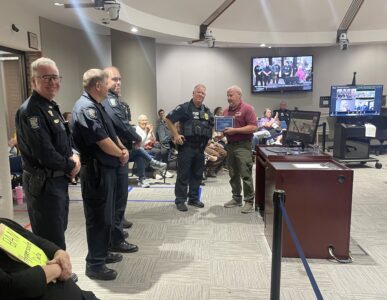
Lawrence Police Department receives KDOT’s top traffic safety award for second straight year
Lawrence City Commission approves extra layers of oversight for data centers, asks for patience on further regulations
Lawrence to participate in program that helps nonprofits rehabilitate abandoned properties as affordable housing

Lawrence’s first bike lanes with physical barriers are installed on Ninth Street