

Lawrence Public Library explores the facts behind the magic in ‘Harry Potter’s World’ exhibit
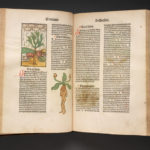
Hortus
Dragons don’t exist, the Philosopher’s Stone is an established myth, and unicorn blood can’t bring a person back from the brink of death. The magic in “Harry Potter” isn’t real, but 600 years ago, many in Europe’s burgeoning scientific community believed it to be.
That’s the premise behind “Harry Potter’s World: Renaissance Science, Magic and Medicine,” a traveling exhibit on display through June 24 at the Lawrence Public Library. The exhibit’s six panels explore the connection between the magical creatures, plants and potions in J.K. Rowling’s beloved books and the real-life theories of Renaissance naturalists, alchemists and thinkers.
The Lawrence Public Library is one of a handful of libraries across the state to host the exhibit, on loan from the U.S. National Library of Medicine, says Gwen GeigerWolfe, an information services and public-health librarian at the Lawrence Public Library.
“The exciting part of this is we’re able to see that Harry Potter is wonderful and truly imaginative, but it relates to the real world,” GeigerWolfe says. “And we have these beautiful images and resources and medieval texts that we can reference to learn more about the story itself.”
“Harry Potter’s World” serves as a companion piece, she says, to the books, both for longtime fans and newcomers to the series. GeigerWolfe, who missed the original literary phenomenon some 15 years ago, says she’s now reading “Harry Potter” for the first time. Together, she and her young kids are making their way through the series, GeigerWolfe says.
Supervising the arrival and installation of the exhibit at the library, she says, has caused her to take a closer look at Harry Potter. GeigerWolfe was surprised to learn, for instance, that Nicolas Flamel, the 15th-century French alchemist credited with creating the Philosopher’s Stone in the Harry Potter series, was a real person. (The Philosopher’s Stone, not so much.)
Another example: the mandrake, a very real plant species once thought to possess magical powers. During the Renaissance era, many believed the mandrake (the roots of which supposedly resembled a human figure, according to lore of the day) capable of producing the fatal scream documented in the “Harry Potter” series. Botanists and physicians of the era also recognized the plant’s medicinal value, sometimes using small doses of mandrake as an anesthetic, according to the National Library of Medicine.
GeigerWolfe hopes the exhibit will inspire Harry Potter fans to develop a deeper appreciation for the real-world history behind the magic, perhaps prompting readers to do their own research into the books they love — whether that be “Harry Potter” or other favorites.
“I think it’s great for anyone reading Harry Potter, anywhere you are on the continuum,” GeigerWolfe says.
What has enchanted her about Harry Potter so far, GeigerWolfe says, is Rowling’s ability to draw readers into Harry’s world. We want to “place ourselves” in his herbology classes at Hogwarts, or his adventures in the Forbidden Forest.
The exhibit, she adds, is “just making it come more alive.”
Related event
In conjunction with “Harry Potter’s World,” the Lawrence Public Library is hosting the “Magic of Mindfulness,” a Harry Potter-inspired evening of yoga and relaxation. Slated for 6:30 to 8 p.m. May 31, the event is geared toward kids 5 and up (and their families). Registration is required; call the library at 843-3833 for more information.
City Government
City Commission set to reconsider whether to charge entrance fees at recreation centers
Lawrence commissioners approve shift to ‘very high density’ zoning for collection properties abutting KU

Sidewalk improvements near downtown Lawrence funded through federal grant
Lawrence police chief tells community group about recruiting challenges; perception that city dislikes police is hurting
Commissioners unanimously approve expanded work agreement for stormwater projects near downtown worth $4.8M
