Senate panel begins debate on bill to reverse some of Brownback’s tax cuts; governor objects
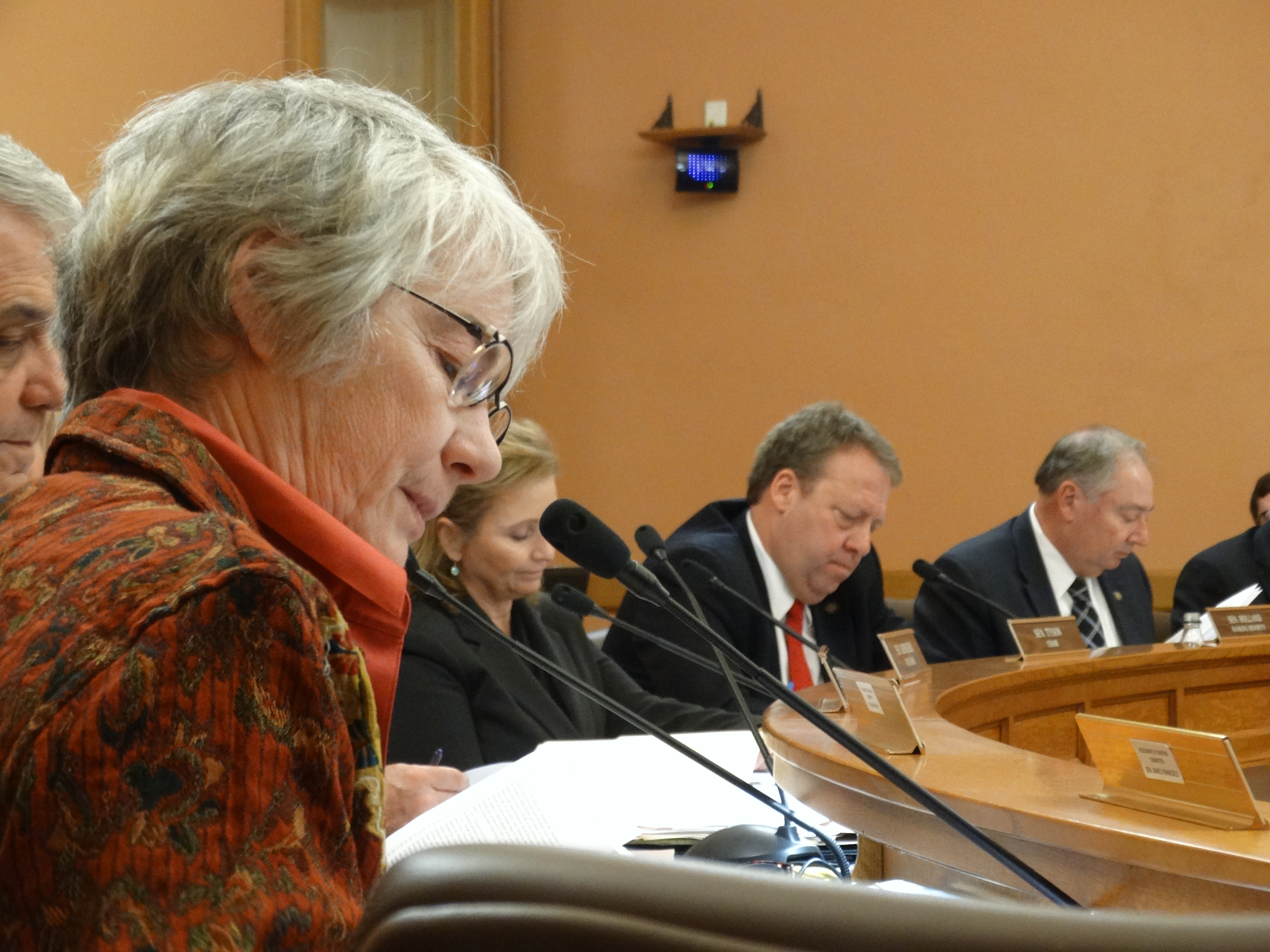
Sen. Marci Francisco, D-Lawrence, listens to testimony during a hearing on a bill to roll back some of the tax cuts that Gov. Sam Brownback championed in 2011.
Topeka ? Gov. Sam Brownback on Monday criticized a Senate Republican tax bill that would reverse some of the tax cuts he championed in 2012, saying the plan would punish the middle class and people who create jobs in Kansas.
That statement came as the Senate tax committee opened hearings on the bill, which would raise individual income tax rates by three-tenths of a percent and repeal the so-called LLC loophole that allows the owners of more than 330,000 farms and businesses to pay no state income taxes on their business earnings.
“Senator (Susan) Wagle’s tax plan needlessly harms the real people that serve as the lifeblood of Kansas,” Brownback said. “It punishes the middle class — teachers, police officers and nurses — working hard to provide for their families and serve their communities.”
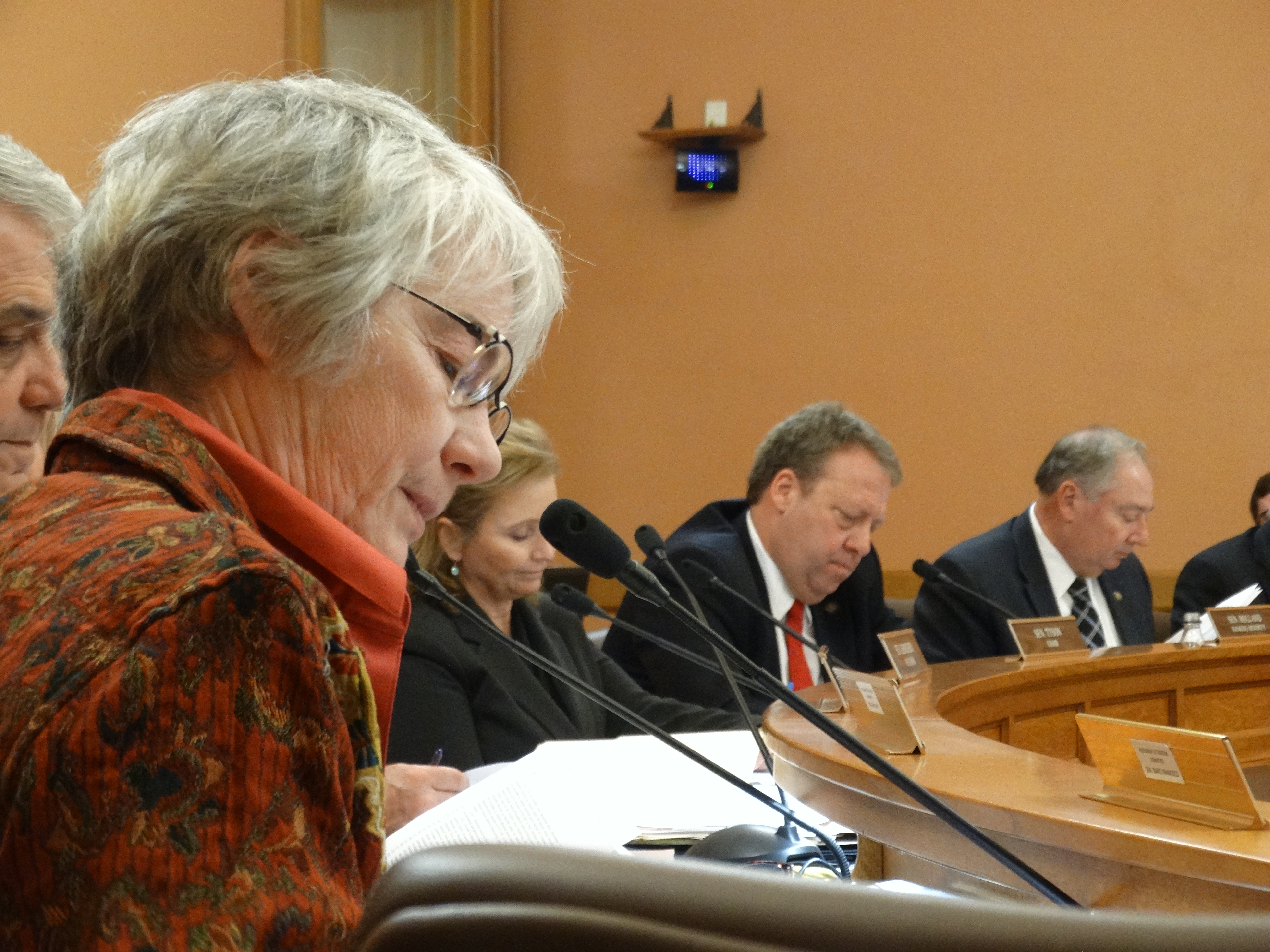
Sen. Marci Francisco, D-Lawrence, listens to testimony during a hearing on a bill to roll back some of the tax cuts that Gov. Sam Brownback championed in 2011.
Budget officials estimate that the plan would raise about $288 million in the fiscal year that begins July 1, and $372 million a year after it is fully implemented the following year.
That’s because the bill would repeal the LLC exemption retroactively to Jan. 1, 2017, but the higher individual income tax rates would not take effect until Jan. 1, 2018.
But some are saying the bill would only give temporary relief for the state’s short-term budget shortfalls because it does not repeal what many have called the “march to zero,” a formula in the tax law that takes effect in 2020 and triggers automatic cuts in individual rates whenever state revenues reach certain benchmarks.
During committee discussions Monday, the panel seemed split between those who think the bill does not do enough and those who oppose any form of tax increase. Democrats have argued that the state needs to raise between $900 million and $1 billion a year in new revenues to solve what they call the state’s “structural imbalance.”
“I’m hearing a recurring theme from proponents of this bill. It sounds like it’s not bringing enough to the table,” said Sen. Tom Holland, D-Baldwin City, the ranking Democrat on the committee.
“I would agree that it probably doesn’t do enough,” said Bernie Koch of the Kansas Economic Progress Council, who testified in favor of the bill. He also explained that he pronounces his last name “Cook” and is not related to the billionaire brothers Charles and David Koch, owners of Koch Industries, who pronounce their names “Coke.”
But a number of ordinary Kansans came to testify against the bill, including Barbara Paules of Bonner Springs, who said she is a constituent of Sen. Holland’s. She said she opposed raising individual rates because even with the cuts the state has made since 2012, the changes in deduction allowances and other measures have actually caused her total tax liability to go up.
“Because of that, my personal tax liability to the state of Kansas, and the actual taxes paid have doubled since 2011,” she said.
Drew Quinn, vice president of a commercial real estate firm in Johnson County, said repealing the tax cuts would send a negative message to the business community outside of Kansas.
“If you go and make this change after a mere four years, you are screaming to the outside public that you cannot trust the state of Kansas, you cannot make business plans, you don’t want to come here because we’re unreliable and we want to change our tax policies because we can’t manage our state.”
Drew and others suggested the state’s problem is with spending, not revenue, and he urged lawmakers to look for ways to cut spending and make government more efficient.
Committee chairwoman Sen. Caryn Tyson, though, tried to limit all testimony and discussion just to the issue of income taxes, and she would not allow people testifying to offer thoughts on spending or other kinds of taxes.
Sen. Marci Francisco, D-Lawrence, said that was both frustrating and concerning for some on the committee.
“We all know the discussion has to be wider than just income tax, and if you narrow comments from conferees, does that mean we have to narrow what we do with the bill?” she said. “There’s a bill on tax. It’s going to be open on the floor to any kind of amendments, so why would you not want the committee to weigh in?”
The committee plans to start debating amendments to the bill on Tuesday and could vote that day or later in the week on whether to send it to the full Senate.
City Government
Opinion: Don’t give up on trying to use Costco to take tens of millions of dollars from the state of Kansas
Abandoned housing pilot program, data center rules, funding clawback for Bert Nash project on City Commission’s agenda
KU professors, middle school band director, radio personality among this year’s Phoenix Award honorees: ‘It’s a cool mix’
Housing Stabilization Collaborative’s request for city trust fund aid won’t be considered because it was filed late
On sister city visit, delegates from Hiratsuka, Japan, see Lawrence’s friendship firsthand