Company opposed federal safety rules
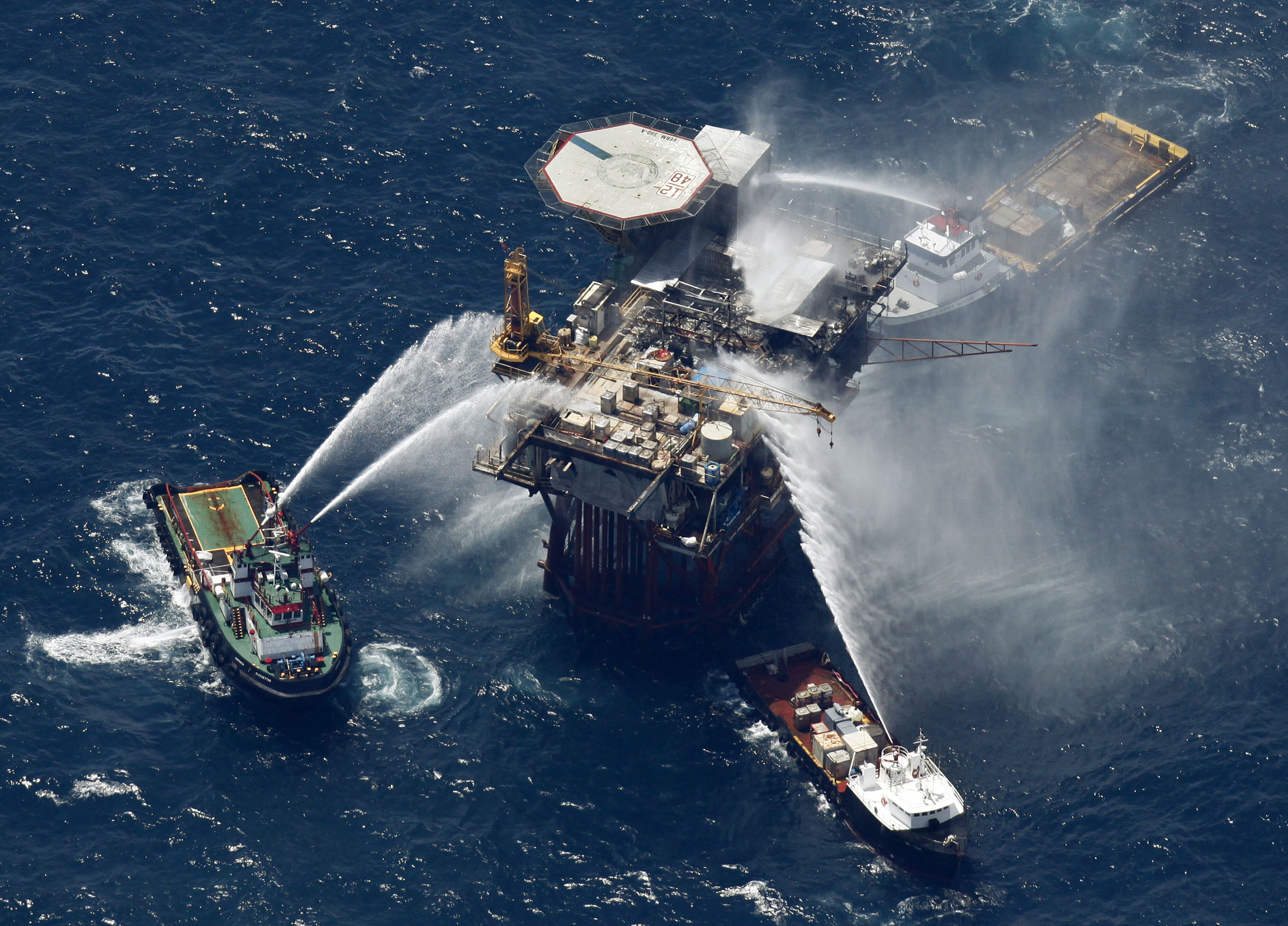
Boats are seen spraying water on an oil and gas platform that exploded Thursday in the Gulf of Mexico, off the coast of Louisiana. All 13 crew members were rescued.
Washington ? The company whose Gulf of Mexico oil platform erupted in flames this week cited the industry’s “excellent safety record” when it opposed a proposed federal rule last year that would require offshore oil and gas operators to have safety systems aimed at reducing workers’ mistakes.
The government still hasn’t put the safety rule in place despite Interior Secretary Ken Salazar’s recommendation months ago that it be adopted. Mariner Energy Inc., and others in the industry, including BP, opposed it when it was proposed last year.
The rule would require operators to develop safety and environmental management systems that federal regulators said could have prevented at least some of the 33 major accidents they studied. A former senior U.S. regulator — Elizabeth Birnbaum, who lost her job after the BP oil spill — previously told Congress that the safety rule would eliminate two-thirds of all offshore accidents.
It was not immediately clear whether these safety systems could have prevented the fire in the Gulf, which is still under investigation.
In a Sept. 10, 2009, letter to government regulators, Mariner said the proposal was a “major, paperwork-intensive, rulemaking that will significantly impact our business, both operationally and financially,” with little or no safety benefit.
The company’s environmental and safety director, Blaine E. Dinger, cited the offshore industry’s “excellent safety record” and said the rule was not justified. The National Ocean Industries Association, an industry trade group, used nearly identical language in its own letter Sept. 23 last year.
Dinger said Friday the fire hasn’t changed his mind.
“What went on with Mariner or what went on with BP, even with a robust (safety) program, possibly could have still happened,” he said in a brief telephone interview.
Federal authorities have cited Mariner Energy and related entities for 10 accidents in the Gulf over four years, including platform fires, pollution spills and a blowout, according to federal records.
In the proposal last year, the Interior Department’s Minerals Management Service said most accidents and oil spills can be traced to mistakes by workers or organizational failures.
Under the rule, these safety systems would identify and reduce the likelihood of spills; analyze proposed changes for problems; require written procedures; and require that equipment is designed, installed, tested, inspected and monitored properly.
Melissa Schwartz, a spokeswoman for the newly renamed U.S. Bureau of Ocean Energy Management, Regulation and Enforcement, said the new rule has been improved since the April oil spill and will be put in place soon.
BP also protested against the new safety rule. BP vice president Richard Morrison wrote in September 2009 that his company opposed what he called “the extensive, prescriptive regulations as proposed in this rule.” He also cited the industry’s safety and environmental record and said voluntary safety programs were working.
National

Authorities disrupt planned drone, gun attack on White House UFC cage-fight
Rain along the Gulf Coast could become the first named storm of the Atlantic hurricane season
MIAMI (AP) — A cluster of storms along the Gulf Coast could become the first named tropical storm of the 2026 ...
Unhealthy air quality in California city as huge warehouse fire burns for 3rd day
Judge orders Trump administration to restore National Park changes at sites that ‘disparaged’ US
Teens’ reading and math scores have stagnated, US test results show
WASHINGTON (AP) — Younger students have regained ground academically after the pandemic's disruptions while older ...