Banking regulators to help shape new rules
Washington ? Banking regulators shared the blame for the financial crisis that buckled Wall Street. Now they’re the ones lawmakers are counting on to give final shape to the new overhaul of financial rules.
In section after section of the massive 1,560-page Senate bill, lawmakers leave much of the details for the regulators to figure out. These are the bank and market overseers — the Federal Reserve, the Office of the Comptroller of the Currency, the Securities and Exchange Commission — who took a beating for not overseeing Wall Street more strictly and for failing to see the danger before it struck in 2008.
When it comes to key decisions about how to rein in complex, previously unregulated securities, how to liquidate large, interconnected failing financial firms, even how to protect consumers, the bureaucracies in charge of setting the rules get plenty of discretion.
Lawmakers and Obama administration officials confronted the question time and again, about when to be specific and prescriptive and when to give the regulators latitude.
“There is room for imposing more duties and responsibilities on the regulators, and the bill contains a number of steps to do that,” Assistant Treasury Secretary Michael Barr said in an interview. “But we also don’t want to lock anything in stone.”
It’s a delicate balance. For the financial industry, the more leeway regulators have, the more they can influence the final rules.
“It gives them wiggle room and pressure points,” said Ed Mierzwinski, consumer program director for the U.S. Public Interest Research Group, a nonprofit organization in Washington.
Of prime interest to the industry will be the final rules on derivatives, how much money and assets they must have on hand as capital, and to what degree they will have to give up their securities trading activities.
On each of those matters, the House legislation, which passed in December, and the Senate’s, which passed Thursday, leave key decisions to regulators. For the next few weeks, all eyes will be on House and Senate negotiators who are blending both bills. In many respects the bills are similar and there should be no conflicts.
Overall, the bills aim to prevent a recurrence of the crisis that deepened the recession and cost millions of Americans their jobs and their savings. The legislation would create an oversight council of regulators to watch for risks in the financial system. It would create a consumer protection entity to police lending and enshrine a mechanism for liquidating large, interconnected firms.
National
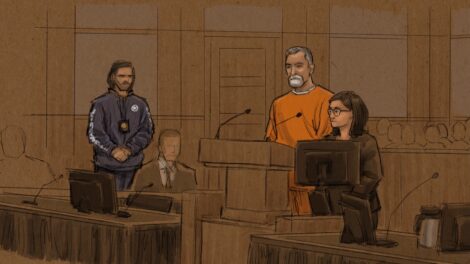
Man pleads guilty to killing a top Minnesota Democrat and her husband

New tornadoes outside Chicago as severe storms pummel the Midwest

Feds won’t seek death penalty in plea deal with man accused of killing top Minnesota Democrat

NASA unveils astronauts to test tech for future moon landing
Social Security’ fund faces shortfall one year earlier than expected
WASHINGTON (AP) — Social Security 's retirement trust fund is projected to face a funding shortfall in 2032, a ...