Students: Stand up and be counted here
Federal funding for Douglas County at stake in Census
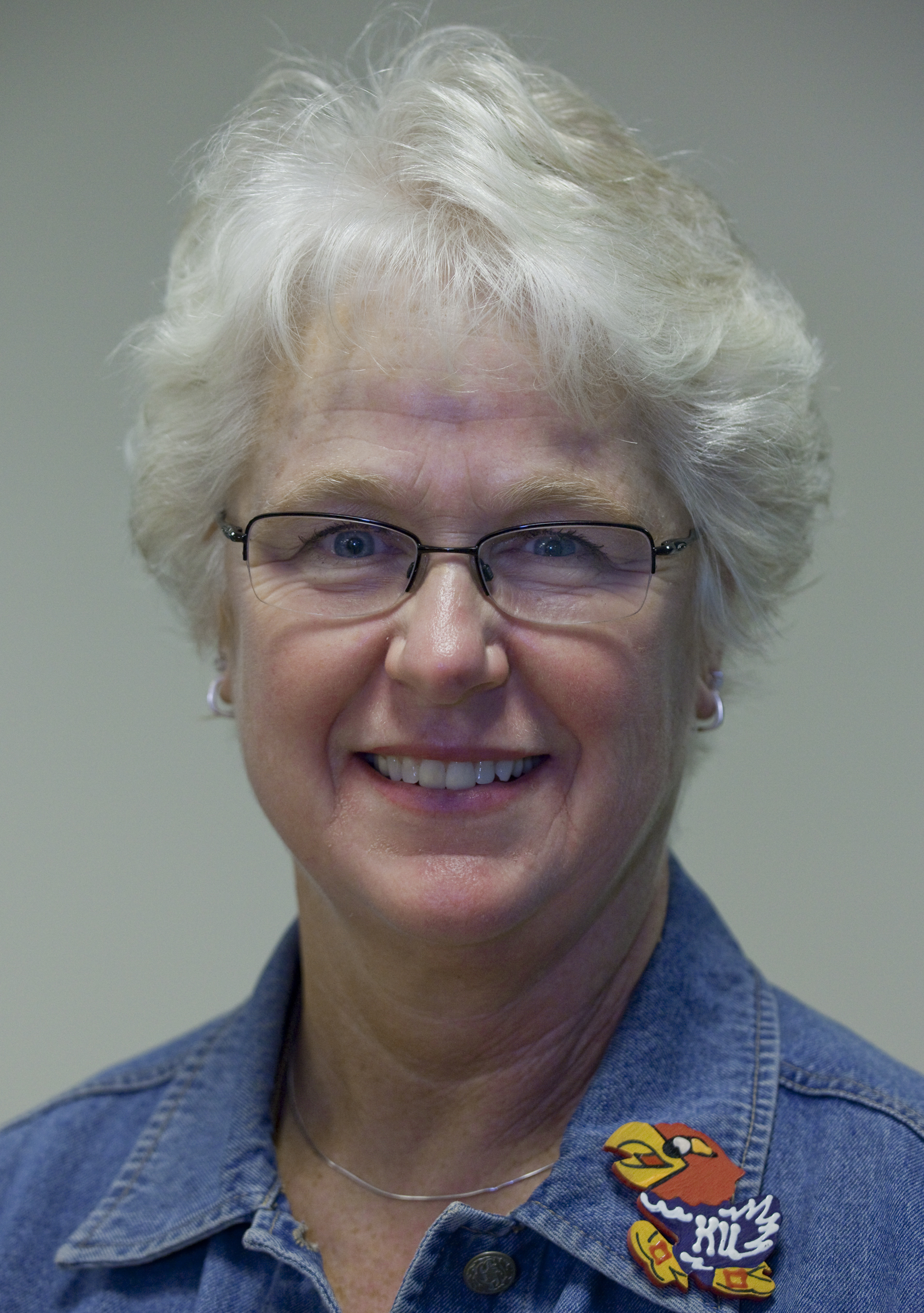
Sue Hack
2000 Kansas census
A total of 24 Kansas counties lost population in 2000 from the state’s special census. The top five:
-
Riley: 13,246
-
Douglas: 4,431
-
Ellis: 1,599
-
Geary: 1,541
-
Lyon: 1,487
The five largest gainers of population from the state’s special census in 2000:
-
Johnson: 2,569
-
Shawnee: 676
-
Nemaha: 307
-
Sumner: 290
-
Dickinson: 236
Source: Kansas Secretary of State’s office
Local Census leaders will put stickers on pizza boxes to remind university students to fill out their Census forms.
Once a decade, Kansas University students create confusion in Lawrence.
Well, maybe, they create confusion more often than that. But when it comes to the U.S. Census, anyway, once every 10 years there is confusion about where all these students should be counted.
Should they be included as part of the population of Lawrence where they sleep, drink, eat and partake in several other activities? Or, should they be counted back “home,” where they went to high school and where the magnet of a mom-operated washing machine and a dad-operated wallet (or maybe it is the other way around) still draws them from time to time?
Local Census leaders say there should be no confusion. Students who lay their heads on a Lawrence pillow are ours. Everybody else can keep their grubby, population-grabbing paws off of them.
“Making sure we get students counted here is huge for this county,” said Sue Hack, a former Lawrence city commissioner who is now a co-chair for the Douglas County Complete Count Committee. “There is no county that has more at stake with this than we do.”
That’s in part because in addition to KU, the county is home to Haskell Indian Nations University and Baker University. If large numbers of students marked their hometowns as their place of residence, Douglas County could easily could have its population shorted by 10,000 people or more.
The Census Bureau estimates that for every person who goes uncounted, a community — over a 10-year period — loses $5,300 in grants and other federal funding. For the math-challenged, that is $53 million for every 10,000 students who are counted elsewhere.
“The reasons why students should be counted here are very clear,” Hack said. “They are driving on our streets, using our police and fire and parks and all the other services that we offer.”
The U.S. Census Bureau agrees.
Rich Gerdes, an assistant regional Census manager, said the Census’ policy since about 1790 has been to count students in the place where they spend the majority of their time. But Gerdes, a Lawrence resident, said he’s definitely seen the confusion.
“I get the perception that everybody wants to count them,” Gerdes said. “Their parents want to count them. The communities where they are from want to count them. And, of course, the college communities want to count them.
“They’re kind of a hot commodity. A lot of communities see them as people they need to have to help out their population numbers.”
All that helps add to the confusion. But in Kansas there is one other group that adds to the challenge of counting students: the state of Kansas.
Separate census
Kansas, it is believed, is the only state in the country that requires college students to fill out a separate census form. When KU students this month and next seek to enroll for the next semester, they won’t be allowed to do so unless they have filled out the state’s special census form.
And unlike the federal Census, the state’s census does not give students clear directions to mark their college community as their place of residence. If students want to choose their old hometown as their place of residence, that is just fine with the state.
“It is really up to them to decide,” said Brad Bryant, who oversees the operation for the Kansas Secretary of State’s office.
The state has been using this process since 1989, and Bryant said about half of the students — particularly the younger ones — do choose their old hometowns.
The system creates some political losses for university communities. That’s because the state census is used for determining how many state representatives a city, county or area will receive in Topeka. The state census is not used for determining representation in Congress, and it also is not used in determining a city’s official population. All that is done by the U.S. Census.
But when it comes to state politics, the state census can be significant. In 2000, Douglas County had its population reduced by 4,431 people. That was the second largest reduction in the state. Riley County got hit the hardest, in part because there is a similar process used to factor out military personnel based in a community. Riley’s population was reduced by 13,246 in 2000.
The Secretary of State’s office oversees the state census, but leaders there aren’t great fans of the process. Bryant said the office several times has lobbied legislators to do away with the special state count. That effort hasn’t gone far. Bryant said legislators have been reluctant to vote for a change because they are unsure how eliminating the state census would impact the population totals for their districts.
“And there also is this idea of a rural-urban thing,” Bryant said. “There are some who want to keep the population back on the farm. They want to slow down the migration from the rural areas to the city. This, in one way, kind of slows that migration down.”
The provision also would be hard to change. The idea of a state census is part of the Kansas Constitution. That means it would take a two-thirds vote from the Legislature and then a vote of the people to eliminate it.
Get out the gimmicks
Beyond all the political stuff, the state census creates concern for local U.S. Census leaders. Hack said there’s a concern that college students simply will become confused and think that when they filled out the state form that they also fulfilled their duty for the federal Census.
Local leaders are trying to combat that by getting the word out in untraditional ways. The Lawrence Chamber of Commerce recently received a grant that allowed it to buy Census stickers that will be placed on pizza boxes delivered to university neighborhoods over the next couple of months. KU student leaders also have received money to purchase canvas bags and other give-away items that promote the Census.
“It is a gimmick, but we’re trying to do everything we can to make people aware,” Hack said. “When you consider the dollars that can come back to a community based on Census data, we have to get this right.”
City Government
Developer seeks incentive from City of Lawrence to build 131 units of housing near Wakarusa and Queens

Lawrence city leaders will consider whether to keep Community Building open, make 2 other rec centers free to access
A STAR Bond application raises questions for city leaders about Costco and housing west of the SLT
Soccer gear honoring Lawrence history’s all-star team is now on sale as part of city’s public art exhibition
To honor public servants, Lawrence’s July 4 celebration will have a whole gallery of their photos on display; submissions open now