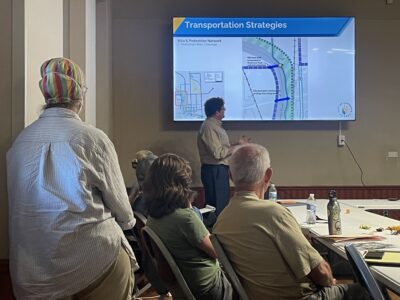
Volunteers counsel callers at risk

Kansas University student and Headquarters volunteer Adam Weigel, of Brookville, takes a local call Thursday at the counseling center. Weigel explained that he has noticed the need for more volunteers at the center after taking calls for the past five months.
A person dies by suicide about every 15 minutes in the United States, according to the American Foundation for Suicide Prevention.
Apply now
To become a Headquarters Counseling Center counselor, volunteers must go through an application and interview process, as well as an 11-week training program.
The last volunteer informational meeting before the next training session will be from 6 p.m. to 7:15 p.m. Monday in the Lawrence Public Library Auditorium, 707 Vt.
In Lawrence, volunteers at Headquarters Counseling Center provide services to more than 11 people a day for depression and suicide risk.
At first, Adam Weigel was intimidated and a little nervous at the thought of picking up the phone to talk with someone considering suicide. However, he soon realized that providing counseling can be less scary, and much more rewarding than it seems.
“There is so much work that just takes caring, listening and understanding,” Weigel said. “Volunteering is not as overwhelming as people might think, but the need for it is overwhelming.”
Marcia Epstein, director of HQCC, said the demand has increased exponentially since she began working at Headquarters in 1975 — as a volunteer. From 2006 to 2007, usage of the center increased 12 percent, and from 2007 to 2008 another 17.5 percent.
Volunteers are the heart of HQCC, providing free, 24-hour counseling service to thousands of people every year.
“Current volunteer numbers are very low,” said Kelly Barnum, assistant director. “Our numbers are lower and at the same time the needs are growing.”
Even though Weigel is there to serve others, the experience also has had an impact on him.
“Every relationship I have has drastically improved,” Weigel said. “I’ve learned to communicate better and be able to listen and understand others better. … The training is rigorous but it is incredibly rewarding.”
City Government

Developer seeks incentive from City of Lawrence to build 131 units of housing near Wakarusa and Queens

Lawrence city leaders will consider whether to keep Community Building open, make 2 other rec centers free to access
A STAR Bond application raises questions for city leaders about Costco and housing west of the SLT

Soccer gear honoring Lawrence history’s all-star team is now on sale as part of city’s public art exhibition
To honor public servants, Lawrence’s July 4 celebration will have a whole gallery of their photos on display; submissions open now