Moderate Democrats pivotal in today’s health care vote
Washington ? Suitably opaque, Section 2006 takes up only a few dozen lines in a sweeping health care bill that runs to 2,074 pages and mentions neither Sen. Mary Landrieu nor her state of Louisiana.
But the section’s purpose is indisputable: to deliver $100 million or more in federal funds to the state. And in the process clear the way for one of three moderate Democratic fence-sitters — Ben Nelson of Nebraska and Blanche Lincoln of Arkansas are the others — to help propel the legislation past its initial hurdle in a crucial vote today.
Nelson, Landrieu and Lincoln emerged several days ago as the last public holdouts among 58 Democrats and two independents whose votes Majority Leader Harry Reid and the White House must have to overcome the Republicans’ attempt to strangle the bill before serious debate can begin.
Each has moved carefully with an eye on home-state voters. And inside the Senate, each has taken advantage of the political leverage newly available.
Alone among the three, Nelson issued a statement Friday ending any lingering public suspense about his intentions. “The Senate should start trying to fix a health care system that costs too much and delivers too little for Nebraskans,” he said, adding his decision should not be seen as an indication of how he will vote on the bill itself.
Nelson had been publicly signaling his intentions for more than a week, and his words presumably came as no surprise to Reid or the White House, which issued a statement Friday saying the bill “provides the necessary health reforms that the administration seeks.”
This sort of political minuet can be delicate, as shown when the Senate’s second-ranking Democrat, Dick Durbin of Illinois, said earlier on Friday that Lincoln had already confided to Reid how she planned to vote.
Republicans, eager to scuttle the bill — and defeat Lincoln in 2010 — instantly accused the two-term senator of telling Democratic party leaders before informing her own constituents in Arkansas.
“No other senator speaks for Senator Lincoln. She is still reviewing the bill,” declared the senator’s spokeswoman, Leah Vest DiPietro, adding her boss had not yet made up her mind. For his part, Durbin sought to quickly close the loop with a statement saying he had been unclear and misinterpreted.
National
US tells states to deal with unemployment fraud or face penalties
The U.S. Labor Department told all 50 states on Wednesday that they need to get serious about fighting fraud and ...
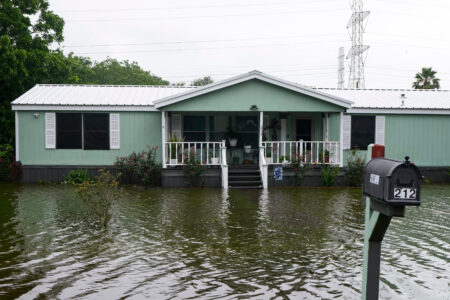
Dangerous flooding from Tropical Storm Arthur, first of the Atlantic season, threatens Gulf Coast

‘A million years isn’t enough’: Victims’ relatives confront Gilgo Beach serial killer at sentencing

Authorities disrupt planned drone, gun attack on White House UFC cage-fight
Rain along the Gulf Coast could become the first named storm of the Atlantic hurricane season
MIAMI (AP) — A cluster of storms along the Gulf Coast could become the first named tropical storm of the 2026 ...