Church nominated for historic distinction
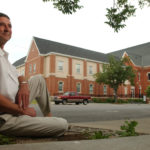
The Plymouth Congregational Church building, 925 Vt., has been nominated to be on the National Register of Historic Places.
The Plymouth Congregational Church building has been nominated for the National Register of Historic Places.
The 139-year-old building at 925 Vt. is one of nine nominations the Kansas Historic Sites Board of Review has forwarded onto the national registry.
The church was nominated for its architectural significance, said Sarah Martin, who is the national register coordinator for the Kansas State Historical Society.
Designed by John Haskell, the architect behind the Kansas Statehouse, the structure is described as an “eclectic Victorian-era church building with Gothic and Romanesque Revival characteristics” in the nomination form.
Betty Alderson, who first attended the church in the 1940s as a college student and was married there, said the building was one of the first large structures Haskell built.
Plymouth Congregational Church was the first church established in the Kansas Territory.
It held its first service in a mud brick boarding house in 1854. In its early years it was led by the Rev. Richard Cordley, a New England abolitionist and survivor of William Quantrill’s raid on Lawrence.
After the raid, some members had lobbied for a “simple building of adequate size,” but Haskell suggested “angles, projections and towers” could make the building much more attractive without “greatly adding to the cost,” according to the nomination form.
His vision prevailed.
The church women raised money to purchase stained-glass windows from England, which were installed in time for the dedication. They have remained in the church ever since.
Services have been held continuously since the church was built with two additions added and renovated over the past 100 years.
“It hasn’t been a building for building sake,” Alderson said. “It’s housed programs that the members of the congregation have wanted.”
In 2006, Plymouth Congregational Church was placed on the state registry.
Being named to the national registry comes with more than just a plaque. It makes funding accessible for renovation projects. After the state nomination, it could take several months before being placed on the national registry, Martin said.
City Government
Developer seeks incentive from City of Lawrence to build 131 units of housing near Wakarusa and Queens

Lawrence city leaders will consider whether to keep Community Building open, make 2 other rec centers free to access
A STAR Bond application raises questions for city leaders about Costco and housing west of the SLT

Soccer gear honoring Lawrence history’s all-star team is now on sale as part of city’s public art exhibition
To honor public servants, Lawrence’s July 4 celebration will have a whole gallery of their photos on display; submissions open now