Iraqis rejoice at U.S. pullback
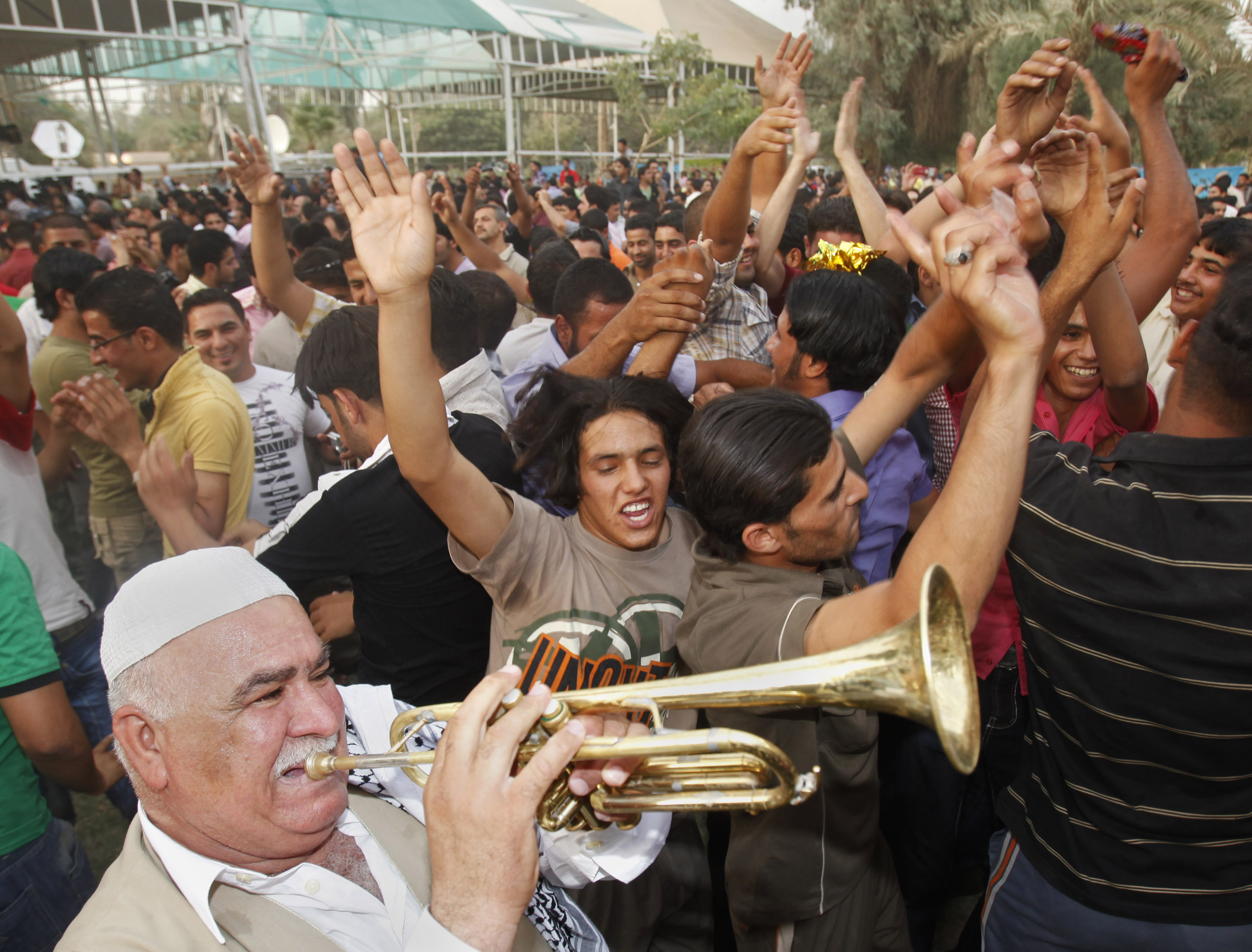
Iraqis celebrate Monday in Baghdad in expectation of U.S. troops being out of Iraqi cities by today.
Baghdad ? Iraqis danced in the streets and set off fireworks Monday in impromptu celebrations of a pivotal moment in their nation’s troubled history: As of today, this is no longer America’s war.
Six years and three months after the March 2003 invasion, the United States will withdraw its remaining combat troops from Iraq’s cities and turn over security to Iraqi police and soldiers. While more than 130,000 U.S. troops remain in the country, patrols by heavily armed soldiers in hulking vehicles will largely disappear from Baghdad, Mosul and Iraq’s other urban centers.
“The Army of the U.S. is out of my country,” said Ibrahim Algurabi, 34, a dual U.S.-Iraqi citizen now living in Arizona who attended a concert of celebration in Baghdad’s Zawra Park. “People are ready for this change. There are a lot of opportunities to rebuild our country, to forget the past and think about the future.”
The looming deadline has also created enormous fear and uncertainty among many Iraqis, who believe that the U.S. military pullback will open the door for insurgents to increase their attacks. Iraq remains a perilous place for the American troops stationed here, and they continue to be the top target for extremist groups. On Monday, some normally congested streets were virtually deserted after dark, as Iraqis appeared to heed warnings of impending attacks by insurgents.
But city streets were also largely empty of Humvees and U.S. troops. Those Iraqis who ventured out were in the mood to party, celebrating a moment that the Iraqi government has said represents its return to full sovereignty.
“Out, America, out!” a group of sweat-drenched young men chanted Monday at a Baghdad park as the sun was setting. They jumped up and down to the deafening beat of drums and the wail of horns.
Across town, the virtual absence of American troops and helicopters, the cheerfulness of Iraqis in military uniform, and the cries of joy gave this scarred, bunkered capital a rare carnival-like atmosphere. Iraqi police and army cars were decked with ribbons, balloons, plastic flowers and new flags.
In Basra, the sentiment was inscribed on walls with spray paint: “No No Americans.” Another graffiti artist instructed: “Pull your troops from our Basra, we are its sons and want its sovereignty.”
Banners were strung around Baghdad proclaiming: “On the day of sovereignty, we’re lighting candles for a better future.” At the Zawra Park celebration, one of the largest in the country, revelers sang songs popular during the war between Iraq and Iran in the 1980s.
“To the front lines we go,” they sang. “Our bullets in our magazines.” Then, spraying water from bottles at the crowd, they began chanting: “America has left! Baghdad is victorious!”
Americans now enter a new phase in this war. As of July 1, they will have to behave as guests in a foreign land.
“There was a time here where we had pretty much carte blanche to do whatever we wanted to do,” Brig. Gen. Stephen Lanza, the top U.S. spokesman in Iraq, said recently. Going forward, he added, “all missions are coordinated with the Iraqi government.”
National
Man pleads guilty to killing a top Minnesota Democrat and her husband
New tornadoes outside Chicago as severe storms pummel the Midwest
Feds won’t seek death penalty in plea deal with man accused of killing top Minnesota Democrat
NASA unveils astronauts to test tech for future moon landing
Social Security’ fund faces shortfall one year earlier than expected
WASHINGTON (AP) — Social Security 's retirement trust fund is projected to face a funding shortfall in 2032, a ...