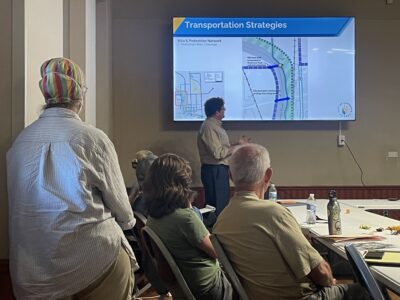
Transit surveys to help guide coordination effort between KU on Wheels and the T
Consultants hired to help boost coordination of Lawrence’s two dominant transit systems are getting some free help.
Tuesday morning, officials working to coordinate both KU on Wheels and the city’s T transit service released results from public surveys conducted both in person and online.
The results will be used by a team of Kansas University and municipal leaders as they consider changes to the two systems. They already have hired transit consultants to review the two systems, consider public input and then make recommendations for changes, including creation of joint route maps and schedules.
The consultants’ first round of recommendations is due by March 1, in time for officials to consider implementing them by spring break, a time when KU students generally start making decisions about where to live for the next academic year.
The transit surveys — covering everything from the systems’ missions to their respective strengths and weaknesses — received a variety of responses, depending on the topics covered.
Surveys looking at the systems’ strengths and weaknesses, and at locations and schedules, each received 131 responses, while a survey aimed at the T’s door-to-door paratransit service drew 25 responses.
The top five destinations identified by surveys:
1. Downtown
2. Kansas University campus.
3. Lawrence Memorial Hospital.
4. Lawrence Public Library.
5. Neighborhoods (various).
Rating sixth was the Social Security office, while finishing in a tie for seventh were South Iowa Street, the Lawrence Senior Center and a variety of apartment complexes.
A survey looking at establishing a mission for coordinating the two systems identified a top three: “Efficient service,” followed by “frequent service” and “seamless service between two systems.”
In terms of strengths and weaknesses of the systems, four times as many respondents identified “frequency” a strength for KU on Wheels as they did for the T’s fixed-route bus service. Respondents described routes as a strength for KU on Wheels twice as often as they did for the T.
The top strength for KU of Wheels: a tie between fares and comfort of rides; the biggest weakness was comfort of bus stops.
For the T’s fixed-route service, the biggest strength was customer assistance provided by riders, while the top weakness was frequency.
For the T’s paratransit service, accessibility scored highest while providing commuter transit ranked lowest.
City Government

Developer seeks incentive from City of Lawrence to build 131 units of housing near Wakarusa and Queens

Lawrence city leaders will consider whether to keep Community Building open, make 2 other rec centers free to access
A STAR Bond application raises questions for city leaders about Costco and housing west of the SLT

Soccer gear honoring Lawrence history’s all-star team is now on sale as part of city’s public art exhibition
To honor public servants, Lawrence’s July 4 celebration will have a whole gallery of their photos on display; submissions open now