Federal Reserve slashes interest rates in an effort to prop up faltering economy
Washington ? The Federal Reserve and six other major central banks from around the world slashed interest rates Wednesday in an attempt to prevent a mushrooming financial crisis from becoming a global economic meltdown.
The Fed reduced its key rate from 2 percent to 1.5 percent. In Europe, which also has been hard hit by the financial crisis, the Bank of England cut its rate by half a point to 4.5 percent and the European Central Bank sliced its rate by half a point to 3.75 percent.
Also cutting rates were the central banks of China, Canada, Sweden, and Switzerland. The Bank of Japan said it strongly supported the actions.
“The recent intensification of the financial crisis has augmented the downside risks to growth,” the Fed said in explaining the coordinated action.
The Fed action will reduce borrowing costs almost immediately for U.S. bank customers whose home equity and other floating-rate loans are tied to the prime interest rate. Bank of America, Wells Fargo and other banks cut their prime rate by half a point to 4.5 percent after the Fed announcement.
White House spokesman Tony Fratto welcomed the cooperation among the Fed and other countries central banks to battle the crisis. “It’s important and helpful that central banks are working in a coordinated way to deal with stress in the financial system,” Fratto said.
But analysts were cautious about the impact of the central banks’ coordinated action.
“At first blush, while this is an big step, it is unlikely to prove sufficient to stem the rot. Additional rate cuts are likely and further measures to inject liquidity and re-capitalize banks are needed,” said Marc Chandler, global head of currency strategy at the investment firm Brown Brothers Harriman.
The rate cuts came against a backdrop of increasing anxiety in global financial markets. Investors have been fleeing shares on worries that neither the Fed, nor other central banks, could move fast enough to stop the rising turmoil.
In earlier trading Wednesday, European stocks fell about 5 percent and Asian stock indexes skidded more than 8 percent. Japan’s stock market plummeted 9.4 percent – its biggest one-day drop in 21 years. Trading on both Russian stock markets was suspended – on one until Friday and the other until further notice – after shares plunged within the first hour of trading.
The worldwide gloom follows a sell-off in U.S. markets late Tuesday, where major stock indexes slid 5 percent. The rout brought the Dow Jones industrials’ losses to more than 875 points in two days, and its close was the lowest close in five years. The blue chip index is now a stunning 33.3 percent below its record close of 14,164.53 a year ago.
The Fed’s action Wednesday was the latest in a long series of actions over the last several weeks that the Fed has taken in coordination with other federal agencies, Congress and the White House to shore up a financial industry stung by bad loans, mounting losses and – in many cases – collapse. President Bush signed a $700 billion financial bailout bill into law on Friday.
The Fed’s action reversed its current policy on interest rates, which had been to hold them steady out of concern that more cuts would fuel inflation. Since Fed Chairman Ben Bernanke and his colleagues put a stop to interest-rate cuts in June, economic and financial conditions have deteriorated significantly.
“The pace of economic activity has slowed markedly in recent months,” the Fed said. “Moreover, the intensification of financial market turmoil is likely to exert additional restraint on spending, partly by further reducing the ability of households and businesses to obtain credit.”
Although inflation has been high, the Fed believes the recent drop in energy prices and the weaker prospects for economic activity have reduced this threat to the economy.
In addition, the Fed reduced its emergency lending rate to banks by half a percentage point to 1.75 percent. Given the intense credit crisis, banks have been ramping up their borrowing from the Fed’s emergency “discount” window.
The fact that the Fed felt it couldn’t wait until its regularly scheduled meeting on Oct. 28-29, underscored the urgency of the situation.
The Fed also reduced its emergency lending rate to banks by half a percentage point to 1.75 percent. Given the intense credit crisis, banks have been ramping up their borrowing from the Fed’s emergency “discount” window.
One of the goals of the coordinated rate cuts is to spur nervous consumers and businesses to spend more freely again. They clamped down as housing, credit and financial problems intensified last month, throwing Wall Street into chaos. Many believe the United States is on the brink of, or already in, its first recession since 2001, one that could quickly spread to other countries around the globe.
The Fed’s last rate cut was in late April, capping one of the most aggressive rate-cutting campaigns in decades as it scrambled to shore up the faltering economy. After that, the Fed moved to the sidelines, holding rates steady as zooming food and energy prices during that period threatened to ignite inflation. In the past few months, energy prices have retreated from record highs reached in mid-July, giving the Fed more leeway to drop rates again.
At its last meeting in September, the Fed struck a more dire tone about the economy, hinting that a rate reduction once again could be in the offing.
Even with the unprecedented $700 billion financial bailout plan, the failing economy and the jobs market probably will get worse. Many believe the economy will jolt into reverse later this year – if it hasn’t already- and will stay sickly well into next year.
One of the most crucial pillars of the economy – the jobs market – has cracked, and wage growth is slowing. This means that consumers will be even more hard-pressed to spend in the fashion that helps grow the economy.
Increasingly skittish employers slashed payrolls by 159,000 in September, the most in more than five years. A staggering 760,000 jobs have disappeared so far this year. The unemployment rate is 6.1 percent, up sharply from 4.7 percent a year ago.
The unemployment rate could hit 7 or 7.5 percent by late 2009. If that happens, it would mark the highest rate of joblessness since the months immediately following the 1990-91 recession. Some economists say the jobless rate could rise even more before the situation starts to get better.
Mounting job losses, shrinking paychecks, shriveling nest eggs and rising foreclosures all have weighed heavily on American voters, who will be electing a new president in about four weeks. The economy is their No. 1 concern, polls have shown.
The crisis was only mentioned in passing by the presidential candidates in a debate Tuesday night.
Republican John McCain called for a program to stem foreclosures by requiring the federal government to renegotiate the mortgages of individual homeowners and make them more affordable, a proposal he has been promoting on the campaign trail.
Democrat Barack Obama claimed the crisis was the “final verdict on the failed economic policies of the last eight years” that President Bush pursued and were “supported by Sen. McCain,” a charge he has made before.
Spooked consumers and businesses have pulled back so much that some analysts fear the economy stalled – or even worse, shrank – in the July-to-September quarter. Many predict the economy will contract in both the final quarter of this year and the first quarter of next year, meeting the classic definition of a recession.
The financial crisis that intensified in September is forcing a seismic shake-up on Wall Street.
Lehman Brothers, the country’s fourth-largest investment bank, filed for bankruptcy protection. A weakened Merrill Lynch, deciding it couldn’t go it alone anymore, found help in the arms of Bank of America. American International Group was thrown a financial lifeline. And, the last two investment houses – Goldman Sachs and Morgan Stanley – decided to convert themselves into commercial banks to better weather the financial storm.
City Government
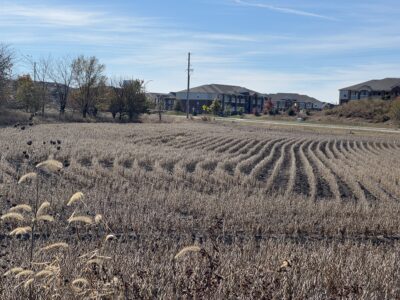
Developer seeks incentive from City of Lawrence to build 131 units of housing near Wakarusa and Queens

Lawrence city leaders will consider whether to keep Community Building open, make 2 other rec centers free to access
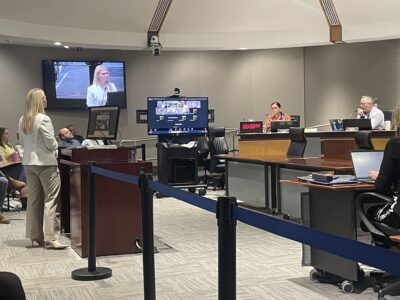
A STAR Bond application raises questions for city leaders about Costco and housing west of the SLT

Soccer gear honoring Lawrence history’s all-star team is now on sale as part of city’s public art exhibition
To honor public servants, Lawrence’s July 4 celebration will have a whole gallery of their photos on display; submissions open now