W. Virginia town shrugs at poorest health ranking
Huntington, W. Va. ? As a portly woman plodded ahead of him on the sidewalk, the obese mayor of America’s fattest and unhealthiest city explained why health is not a big local issue.
“It doesn’t come up,” said David Felinton, 5-foot-9 and 233 pounds, as he walked toward City Hall one recent morning. “We’ve got a lot of economic challenges here in Huntington. That’s usually the focus.”
Huntington’s economy has withered, its poverty rate is worse than the national average, and vagrants haunt a downtown riverfront park. But this city’s financial woes are not nearly as bad as its health.
Nearly half the adults in Huntington’s five-county metropolitan area are obese – an astounding percentage, far bigger than the national average in a country with a well-known weight problem.
Huntington leads in a half-dozen other illness measures, too, including heart disease and diabetes. It’s even tops in the percentage of elderly people who have lost all their teeth (half of them have).
It’s a sad situation, and a potential harbinger of what will happen to other U.S. communities, said Ken Thorpe, an Emory University health policy professor who is working with West Virginia officials on health reform legislation.
“They may be at the very top, but obesity and diabetes trends are very similar” in many other communities, particularly in the South, Thorpe said.
Cultural, historical roots
The Huntington area’s health problems, cited in a U.S. health report, are a terrible distinction for the city, but the locals barely talk about it. Many don’t even know how poorly the city ranks.
Culture and history are at least part of the problem, health officials say.
This city on the Ohio River is surrounded by App-alachia’s thinly populated hills. It has long been a blue-collar, white-skinned community – overwhelmingly people of English, Irish and German ancestry.
For decades, Huntington thrived with the coal mines to its south, as barges, trucks and trains loaded with the black fuel continually chugged into and past the city. There were plenty of manufacturing jobs in the chemical industry and in glassworks, steel and locomotive parts. Nearly 90,000 people lived in the city in 1950.
The traditional diet was heavy with fried foods, salt, gravy, sauces, and fattier meats – dense with calories burnt off through manual labor. Obesity was not a worry then. Workplace injuries were.
But as the coal industry modernized and the economy changed, manufacturing jobs left. The city’s population is now fewer than 50,000, and chronic diseases – many of them connected to obesity – seem much more common.
Shari Wiley is a nurse at St. Mary’s Regional Heart Institute in Huntington. She runs a program that identifies heavy school children and tries to teach them better eating and exercise habits. The effort began because of an alarming trend.
“A lot of the patients we were seeing were getting heart attacks in their 30s. They were requiring open heart surgery in their 30s. And we were concerned because it used to be you wouldn’t see heart patients come in until they were in their 50s,” Wiley said.
Chronic problems
The Huntington area is essentially tied with a few other metro areas for proportion of people who don’t exercise (31 percent), have heart disease (22 percent) and diabetes (13 percent). The smoking rate is pretty high, too, although not the worst.
However, the region is a clear-cut leader in dental problems, with nearly half the people age 65 and older saying they have lost all their natural teeth. And no other metro area comes close to Huntington’s adult obesity rate, according to the report by the U.S. Centers for Disease Control and Prevention, based on data from 2006.
Poverty hovers, with the area rate at 19 percent, much higher than the national average. In the hilly coal fields to the South, people still live in houses or trailers with drooping, battered roofs. They stare hard at any stranger in a new car. In Huntington and its outskirts, many people think of exercise and healthy eating as luxuries.
The economy needs to pick up “so people can afford to get healthy,” said Ronnie Adkins, 67, a retired policeman, as he sat one recent morning on the smoking porch of the Jolly Pirate Donuts shop on U.S. 60.
Local politicians tend to share the prevailing apathy about improving health, said Dr. Harry Tweel, director of the Cabell-Huntington Health Department.
“People here have an attitude of ‘You’re not going to tell me what I can eat.’ The cultural attitude is ‘My parents ate that and my grandparents ate that,'” he said.
Mayor Felinton echoed Tweel. Felinton had stomach surgery last year to help him lose weight and has been walking to work about three days a week. He has shed nearly 80 pounds and became sort of a local poster boy for weight loss. But in the midst of a re-election campaign last month, he said he had no plans to plunge into a fight over fat in restaurants.
National
US tells states to deal with unemployment fraud or face penalties
The U.S. Labor Department told all 50 states on Wednesday that they need to get serious about fighting fraud and ...
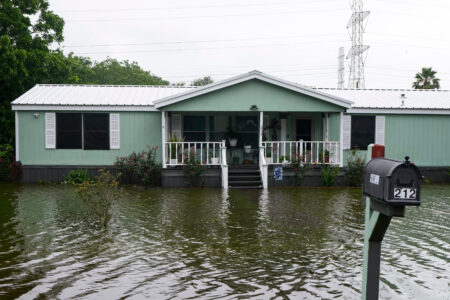
Dangerous flooding from Tropical Storm Arthur, first of the Atlantic season, threatens Gulf Coast

‘A million years isn’t enough’: Victims’ relatives confront Gilgo Beach serial killer at sentencing

Authorities disrupt planned drone, gun attack on White House UFC cage-fight
Rain along the Gulf Coast could become the first named storm of the Atlantic hurricane season
MIAMI (AP) — A cluster of storms along the Gulf Coast could become the first named tropical storm of the 2026 ...