Lack of insurance haunts victims of floods

Kansas Insurance commissioner Sandy Praeger expects some areas of the state may be susceptible to flooding because of the wet winter and the already saturated ground. Praeger was photographed on the Kansas River levee in North Lawrence near the dam.

Krista Appleton, right, who now lives in Lawrence, and her daughter, Stacy Neuerburg, 19, watch TV in their new home, after floods ruined their home last July in Osawatomie.

It's not just those who live right beside the river who fall in the 100-year flood plain (a designation given to areas that a have 1 percent chance of flooding every year). Check out this map to see where your property lies.
At night, the images return.
Surreal and Dr. Seuss-like, a couch is stacked on a glass table that’s propped on a snow globe. The front door opens, and a bag of Doritos drifts by in waist-high water. An aloe vera plant follows. A table floats with an empty wine glass from the night before still in place.
“It is always going to be there in my brain,” Krista Appleton said. “That there was this bizarre stacking of stuff.”
Count Appleton among survivors of last summer’s flood in Osawatomie. Her home wasn’t so lucky. On July 1 – after a levee across town failed – Appleton’s home was submerged to the roof in floodwater.
It was a four-bedroom, two-bath, two-car garage home. One she’d owned for eight years, raised her family in and worked long hours to cover the mortgage.
Like nearly all of the town’s 4,500-plus residents, Appleton didn’t have flood insurance. In all, she and her three children lost about $250,000 worth of property.
“It’s your home, it’s your memories, it’s where (my children) grew up and it’s gone. Like in a day, it’s just gone,” she said.
Appleton isn’t alone.
Underwater and underinsured
Compared with other areas in the United States, Kansas homeowners are less likely to buy flood insurance, even if they live in high-risk areas, said Tom Morey, the state’s coordinator for the National Flood Insurance Program.
The Associated Press reported that only 1.3 percent of Kansas homeowners had flood insurance in 2007.
The trend leaves many people struggling, long after floodwaters recede.
Federal Emergency Management Agency spokesman Brian Bowman said FEMA didn’t track how many homeowners in southeast Kansas suffered damages last July and didn’t have flood insurance to cover them.
But anecdotal evidence from state agencies would say many were in that situation. In some communities, it seemed to be the vast majority of people whose homes were flooded.
No more than six of the 200 to 300 homes that were damaged in Osawatomie had flood insurance, according to the Kansas Insurance Department.
“These people really just lost everything,” Insurance Commissioner Sandy Praeger said.
Last week, flooding again was on the minds of a few national and state officials.
Along with a St. Patrick’s Day downpour and news of flooded towns elsewhere in the Midwest, it was National Flood Safety Awareness Week. So FEMA’s flood insurance administrator, David Maurstad, and Praeger toured Kansas City’s flood-prone Brush Creek.
Before leaving Kansas City on Wednesday morning, Maurstad predicted a spring ripe for flooding. Repeated winter storms left the ground saturated. Streams and rivers are close to overflowing. Ponds are near capacity.
“In the Midwest, we are seeing a lot of the same conditions that we did in 1993,” Maurstad said referring to a year that racked up more than $15 billion worth of flood damage in nine Midwestern states.
Flood zone
When Appleton built her house a few hundred yards from a levee, no one warned her about flooding – not her mortgage company and not the U.S. Army Corps of Engineers, which said it was OK to build there.
The Wyoming native didn’t think to ask. And until the day the water rose so high it covered the roof of her house, there hadn’t been so much as a puddle on her property in eight years.
When she was told floodwaters were coming, Appleton started putting valuables on countertops. That was laughable optimism in hindsight.
“I don’t know how many people could ever be prepared for seeing the water go up over their roof,” Appleton said.
Flood insurance – despite what a third of U.S. heads of households believe – is not included in a standard homeowners insurance policy.
For people living in high-risk flood areas, flood insurance is required to obtain a home loan. Many homes sitting behind levees – built to hold back floodwater – aren’t considered high-risk, according to FEMA floodplain maps. This is true even in Lawrence.
But as nature proved first in New Orleans and later in Osawatomie and Coffeyville, that isn’t always the case.
In the real world, floodwaters don’t stop at a line on a map. One in every four claims to FEMA are from people in low- to moderate-risk flood zones.
FEMA spokesman Bowman believes both homeowners inside and outside the high-risk flood zone have a false sense of security.
“The floodplain is not necessarily a line drawn to show who is going to flood and who is not,” Bowman said.
The recovery
After the flood, Appleton salvaged family keepsakes – quilts made by a great-grandmother, photo albums, china dishes – but not much else.
FEMA gave her about 10 cents for every dollar she lost. She had the option to use a low-interest loan through the U.S. Small Business Administration to help rebuild her home.
The loans are to help where insurance doesn’t. About 130 homeowners in southeast Kansas have borrowed $28.5 million.
After looking at what it would cost to continue to pay the mortgage and tear down and rebuild the house, Appleton decided to walk away. She’s filing bankruptcy.
“It seems insane to me that people are building in the same spot,” she said.
Today she lives in Lawrence. A friend offered her low rent at a house that was on the market but not selling. Her 19-year-old daughter shares the home, and Appleton has continued working at her job managing benefits for Yellow Transportation in Kansas City.
Many homeowners have the misconception that during times of federally declared disaster, the government will pick up the tab, Bowman said.
Yes, short-term assistance is given and low-interest loans are made, but it’s a far cry from a flood-insurance policy designed to cover the full cost of the damage.
“FEMA isn’t designed to make you whole. Insurance is designed to make it the way it was before it happened,” Bowman said.
It’s not easy losing your home, but Appleton says worse things can happen. Sitting on a newly purchased couch (compliments of FEMA) in her southeast Lawrence townhouse, Appleton’s flood stories are filled more with laughter than despair. Her sense of humor didn’t wash away.
However, when the topic of flood insurance comes up, her tone turns as serious as a public service announcement.
“For yourself and your family, make sure that you are insured,” she said. “Because you don’t want to be left where we are.”
Some questions about flood insurance coverage
Q: Doesn’t my standard homeowners insurance policy cover flooding?
A: No. While your homeowners insurance is good for recovering losses from fires and windstorms, most policies don’t cover damage from floods. A flood policy backed by the Federal Emergency Management Agency is needed for that. By definition, flood insurance covers damage from when surface water inundates a normally dry area of land. So, it’s good for when the Kansas River overflows its banks or a heavy downpour spurs a flash flood and the city’s drainage system backs up. The flood insurance policy doesn’t cover sump pump failure or sewage backup (an additional rider is needed for that).
I don’t live on a hill, but I don’t live next to the river either. Do I still need flood insurance?
FEMA claims that everyone lives in a flood zone.
Nicole Madril, a licensed agency specialist for American Family Insurance, said the decision depends on what kind of risks the homeowner is willing to take.
According to FEMA, the average homeowner is five times more likely to see flood damage than fire damage.
To best determine your home’s risk, look at FEMA’s flood plain maps, which define what areas are likely to see rising water during a storm that would come once every 100 years. In those zones, homeowners can’t get a mortgage without a flood-insurance policy. The maps also designate areas with moderate and low risks of flooding.
FEMA’s maps can be found at the Lawrence Public Library, City Hall, or go to FEMA’s Web site, www.floodsmart.gov.
If I am outside a high-risk area, am I safe?
Close to 30 percent of all insurance claims come from those who live in low- to moderate-risk flood areas.
While FEMA maps designate where water should go during the storms that come once every 100 years, nature doesn’t always stay within those boundaries. It might be a good idea for those bordering high-risk flood zones to consider flood insurance. Also, as the floods from Osawatomie to New Orleans showed, levees don’t always hold. So those living close by one might want to evaluate their risks.
I’ve heard that not everyone can purchase flood insurance. Is that true?
As long as your community follows the National Flood Insurance Program, you can purchase flood insurance. Lawrence, like most cities in the state, follows that plan.
How much does flood insurance cost and what does it cover?
For those living within the high-risk flood zone, it could mean a $600 to $800 annual payment. For those who live in moderate- to low-risk areas, it could be as little as $150 a year. FEMA’s flood insurance policy does have its limits. The policy covers structural damage of a home up to $250,000. An additional insurance policy can be purchased to cover belongings for up to $100,000. Also, the policy doesn’t cover many of the contents that sit in a basement.
During times of major flooding, I thought the U.S. government offered aid?
It does, but much of the money given to flooded-out homeowners comes in the form of loans. Those loans come with a 3 percent interest rate and have to be paid back in 30 years.
Can I wait until floodwaters are lapping at my door before signing up for flood insurance?
No. It takes about 30 days before a flood-insurance policy goes into effect.
City Government
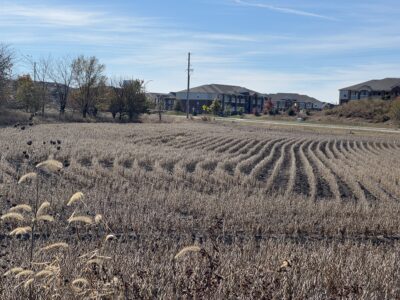
Developer seeks incentive from City of Lawrence to build 131 units of housing near Wakarusa and Queens

Lawrence city leaders will consider whether to keep Community Building open, make 2 other rec centers free to access
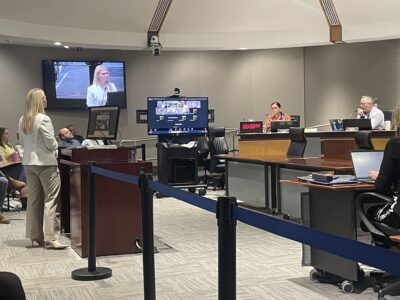
A STAR Bond application raises questions for city leaders about Costco and housing west of the SLT
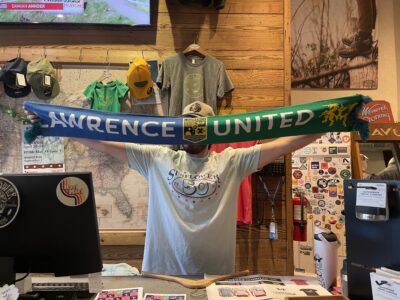
Soccer gear honoring Lawrence history’s all-star team is now on sale as part of city’s public art exhibition
To honor public servants, Lawrence’s July 4 celebration will have a whole gallery of their photos on display; submissions open now